The new U.S.-brokered memorandum of understanding between Israel and Lebanon has the weaknesses of its predecessors.
The recent memorandum of understanding between Israel and Lebanon is not the first time the U.S. has placed itself at the center of Lebanese affairs. Serial interventions, both military and diplomatic, have been undertaken by Democrats and Republicans alike in Washington over close to a century. These efforts attest to Lebanon’s outsized ability to engage Washington at the highest level, and highlight the at best limited, short-term effectiveness of that involvement.
The story of American engagement is a long one.
On July 14, 1958 Iraqi army officers overthrew Iraq’s pro-Western Hashemite monarchy. Fearing Lebanon would also join an anti-American Arab orbit dominated by Egypt’s President Gamal Nasser, U.S. President Dwight D. Eisenhower approved an immediate military deployment after Lebanon’s President Camile Chamoun formally requested American assistance.
About 1,700 U.S. Marines from the Sixth Fleet landed south of Beirut, the deployment of what eventually numbered 14,000 American “boots on the ground.”
The landing encountered virtually no resistance. The marines were an instrument supporting a domestic political solution rather than an offensive military force.
The crisis ended, and U.S. forces withdrew when Chamoun agreed to leave office when his term expired. He was succeeded by the widely respected General Fouad Chehab.
The environment was far different in the summer of 1982, when in the first months after Israel’s occupation of Beirut, U.S. Marines deployed to the airport and other positions in the city.
By September, 22,000 PLO fighters were evacuated from Beirut under international supervision, signaling an end to Palestinian attacks on Israel from Lebanese territory that precipitated the war.
On 14 September 1982, Lebanon’s President-elect Bachir Gemayel, the key interlocutor with both Israel and the U.S., was assassinated, precipitating the massacre of Palestinians in the Sabra and Shatilla refugee camps. Heated confrontation between American and Israeli forces outside Beirut resulted in Israel’s withdrawal from Beirut, and the multinational force led by the U.S. returned to the city.
Gemayal’s assassination effectively ended efforts—highlighted by the stillborn May 17 agreement between Israel and Lebanon and the bloody attack on Marines barrack in late 1983—to promote a complete Israeli withdrawal. Instead Israel unilaterally established a “security zone” in the south similar to its current deployment.
The PLO disappeared as a security factor in the confrontation with Israel after 1982, but Israel’s assault sparked the creation of a militant Shia revivalist movement—Hezbollah—which has proven a far more effective enemy.
The Reagan administration, blindsided by its historic losses, “redeployed offshore”—a prelude to Washington’s complete disappearance from the scene and the end of meaningful American engagement.
In May 2000, Israel retreated unilaterally from Lebanon, a key factor in the election of Ehud Barak and the (temporary) defeat of Benjamin Netanyahu, ending Israel’s 18-year military presence in southern Lebanon.
Today Israel has once again embraced the notion of forward defence, highlighting the advantages of Israel’s military deployment beyond its border—in this case Lebanon—to enable the safe return of its citizens and the destruction of Arab opponents.
One of the striking historical contrasts with the current negotiations is that Israel withdrew from Beirut -- but not its self-defined security zone -- in 1982 under US pressure without first obtaining a peace treaty or the disarmament of emerging Lebanese militias. And while Washington has today once again inserted itself as a key diplomatic factor, there is absolutely no discussion or interest in a US military presence in anything but an advisory form.
Instead, the current 2026 framework links Israeli withdrawal from occupied areas in southern Lebanon to phased implementation of security measures, especially the disarmament of Hezbollah and the expanding deployment of the Lebanese Armed Forces, the former of which has grown and prospered as both the key Lebanese political and security factor during the last decades.
Hezbollah’s expansive role in Lebanon today reflects the political and military mobilization of Lebanon’s historically underserved Shia community, especially in the south. The attack on US forces in 1982 marked its debut as a political and security factor. It remains the principal Lebanese enemy of Israel in the south and the principal Lebanese obstacle to an extension of state control in the south—now the key objectives of U.S.-supported diplomacy reflected in the MOU.
According to Israel’s prime minister,
Under these understandings, the US and Lebanon have recognized Israel's right to maintain the security zone inside Lebanon for as long as it is required for our security. We will continue to hold it until Hezbollah and the rest of the terrorist organizations are disarmed, and until no further threat to Israel is posed from Lebanon.
I want you to know – this is a massive blow to Iran and Hezbollah. Iran tried to force a withdrawal from southern Lebanon upon us. You heard these demands all the time, and you also heard their disappointment and their criticism of the agreement – both theirs and Hezbollah's. I stood firm on our vital interests and forcefully opposed the notion of forcing a withdrawal upon us.
Lebanon, Israel, and the US are essentially saying to Iran: This is none of your business. You have no status here. You have no involvement and no role, not you, not Hezbollah, and not any terrorist organization.
Israel and Lebanon have agreed on two adjacent areas near the Yellow Line, recommended by the IDF, where there will be a pilot program for disarming Hezbollah and transferring the territory to the control of the Lebanese army.
This is a tremendous achievement, because what were they trying to do? They tried to get us out of there through all kinds of means and pressures. That, of course, will not happen.
The MOU has excited the opposition of Lebanese factors closely associated with opposition to the May 17 agreement.
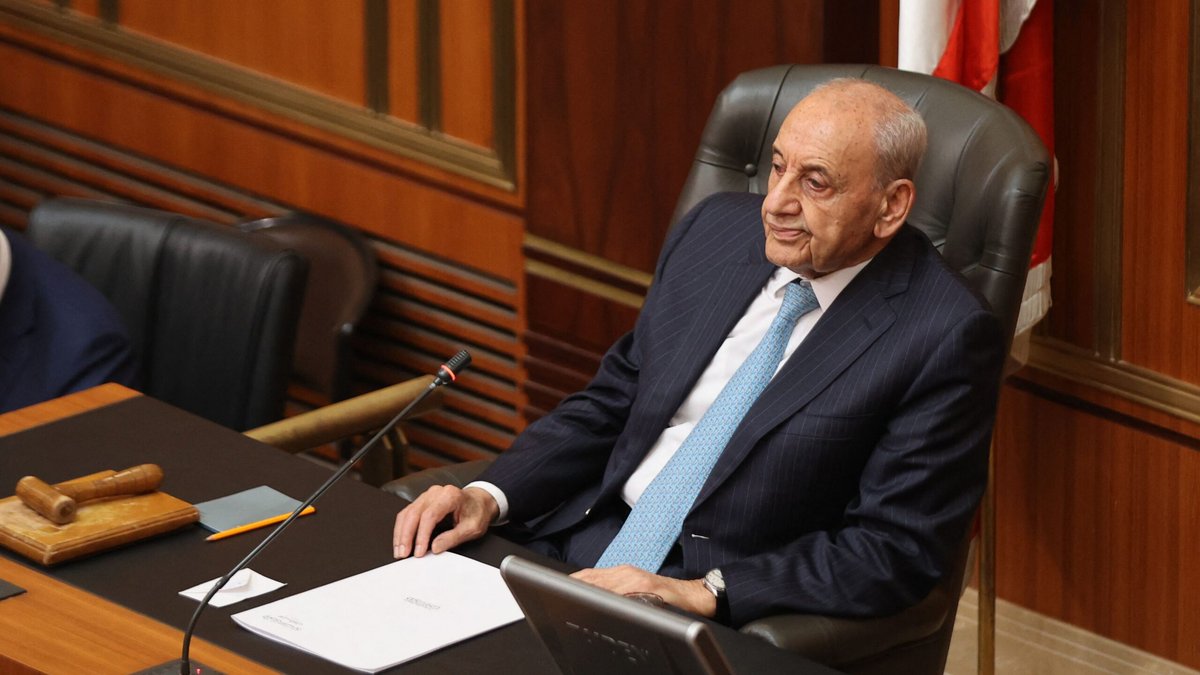
Parliament Speaker Nabih Berri, whose Amal Movement is closely associated with Hezbollah, opposes the MOU, as Amal opposed the May 17 agreement, for the very reasons Netanyahu supports it.
Subscribe Today
Get daily emails in your inbox
The MOU, he argues, is politically suspect because it is imposed and unworkable. In security terms enforcement could trigger internal conflict. He said the U.S.-brokered framework—which allows for Israeli forces to maintain a security zone in southern Lebanon until Hezbollah is removed from the area—is “10 times worse” than the May 17 agreement.
For all of its shortcomings, the May 17 agreement did not have to accommodate the presence and power of Hezbollah, which today are the principal focus of diplomatic efforts detailed in the MOU. Notwithstanding these real advantages, the agreement failed.
The MOU aspires to a more limited agenda of compromise and Israeli military deployment objectives which nonetheless require greater domestic political resilience than Lebanon’s domestic political system has on offer—a conundrum which will continue to confound US efforts.
Sentinel — Human
The text reads like an analytical piece that synthesizes historical context to critique a current diplomatic agreement, displaying a human-like engagement with complexity and argument structure.