Global EV sales topped 2 million in June, but the headline numbers hide a widening split between the world’s biggest markets.
Europe is on a tear, thanks to government incentives, high gas prices, and a growing lineup of affordable EVs. North America, on the other hand, has continued to lose ground since the Trump administration ended the US federal EV tax credit last September. And in China, automakers are increasingly looking overseas as domestic demand cools.
According to Benchmark Mineral Intelligence, 2 million EVs were sold globally in June 2026, bringing year-to-date sales to 9.6 million. That’s up 7% year over year and 11% from May.
“Europe remains the main engine of growth after another record month for EV sales,” said Benchmark Mineral Intelligence Senior EV Analyst George Whitcombe.
Whitcombe also pointed to a wave of new small electric cars that’s starting to push Europeans toward EVs. That’s a big deal because affordable EVs have long been a missing piece in Europe’s transition. Carmakers are finally bringing small EVs to market that can actually turn a profit, which means buyers should start seeing more choice at lower prices.
And the rest of the world? It’s up a cool 98% year over year in EV sales, or 1.4 million YTD.
| Region | Jun-26, million | y-o-y | m-o-m | YTD, millions | YTD-26 vs YTD-25 |
|---|---|---|---|---|---|
| China | 1.0 | -11% | 5% | 4.9 | -14% |
| Europe | 0.53 | 31% | 28% | 2.5 | 27% |
| North America | 0.13 | -13% | -9% | 0.73 | -20% |
| RoW | 0.30 | 98% | 16% | 1.4 | 91% |
| Global | 2.0 | 7% | 11% | 9.6 | 2% |
Europe is setting the pace
Europe had its strongest EV month on record in June, with sales jumping 28% month over month and 31% year over year.
France, Denmark, Spain, and Portugal all set new monthly sales records.
French buyers are sticking with homegrown brands. Renault captured a 20% share of France’s EV market in June, with four of the country’s five best-selling EVs wearing Renault badges. Its new Twingo, which began arriving in meaningful numbers only this spring, was already France’s third-best-selling EV.
Volkswagen Group also started delivering its new family of affordable EVs across Europe in June. Production of the Volkswagen ID.Polo, Cupra Raval, and Skoda Epiq are underway, giving European buyers more lower-cost options.
US sales are weak thanks to federal policy changes
Meanwhile, the picture looks very different in North America.
Benchmark says regional EV sales are down 20% so far this year, a decline it attributes largely to weaker policy support following the end of the US federal EV tax credit.
That’s consistent with what we’ve been seeing for months. US EV sales haven’t collapsed, but they’ve clearly lost momentum since Congress eliminated the consumer tax credit.
Benchmark also says all-electric vehicle sales at both GM and Ford have fallen further than the overall US EV market, as both companies continue to rework their EV strategies.
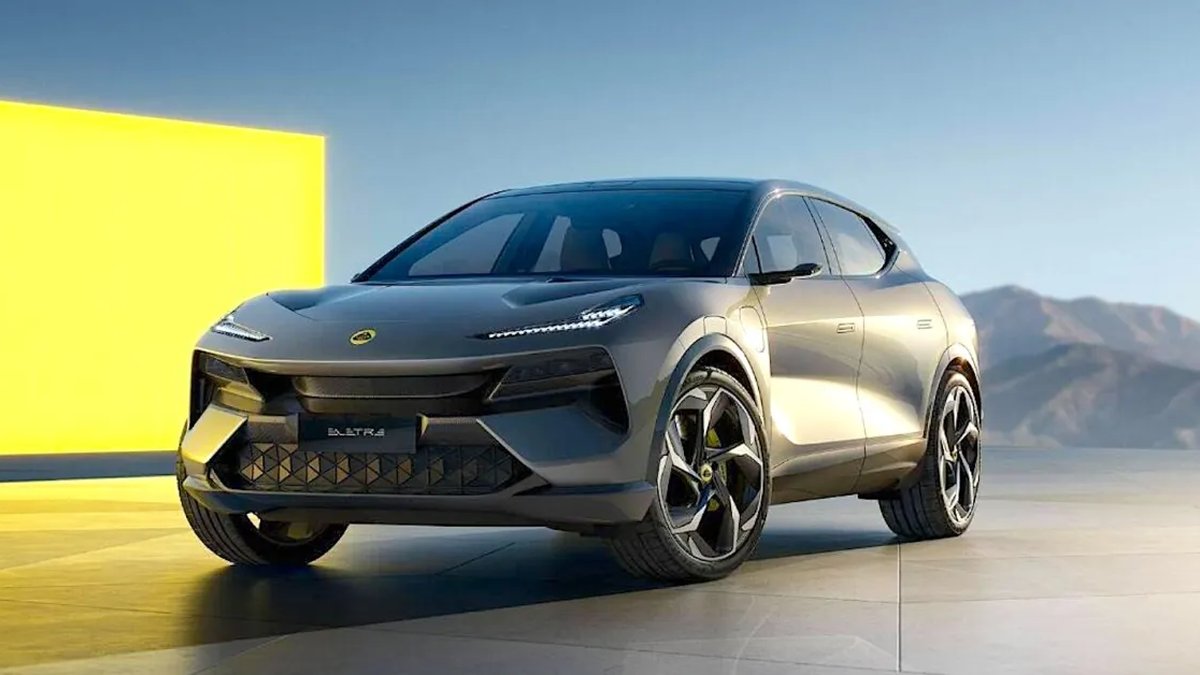
Canada, however, saw a notable milestone: Lotus shipped its first Chinese-built Eletre SUVs (pictured above) to the country in early July under Canada’s tariff quota agreement, which allows up to 49,000 Chinese-built EVs to enter at a reduced tariff of 6.1%, down from the previous 100% surtax.
China is exporting its way through a slowdown
China’s domestic EV market remains weaker than last year, with June sales down 11% year over year and year-to-date sales down 14%.
Instead, Chinese automakers are doubling down on exports.
They shipped nearly 500,000 new energy vehicles (NEVs) in June, setting another monthly record as manufacturers look beyond China’s softer home market.
Europe remains one of their biggest opportunities. After the European Union imposed tariffs on Chinese battery EVs in 2024, many automakers shifted their focus to plug-in hybrids instead.
That strategy has worked. Sales of Chinese-built PHEVs in Europe have continued to climb, though that could change if the European Commission decides to extend tariffs to those vehicles as well.
The latest Benchmark numbers continue a trend we’ve been tracking throughout 2026: Europe is pulling further ahead as the fastest-growing major EV market, China is increasingly relying on exports, and the US is paying the price for rolling back EV incentives.
Read more: IEA: Global EV sales headed for another record year despite the early stumble
If you’re looking to replace your old HVAC equipment, it’s always a good idea to get quotes from a few installers. To make sure you’re finding a trusted, reliable HVAC installer near you that offers competitive pricing on heat pumps, check out EnergySage. EnergySage is a free service that makes it easy for you to get a heat pump. They have pre-vetted heat pump installers competing for your business, ensuring you get high quality solutions. Plus, it’s free to use!
Your personalized heat pump quotes are easy to compare online and you’ll get access to unbiased Energy Advisors to help you every step of the way. Get started here. – *ad
FTC: We use income earning auto affiliate links. More.
Comments
Facts Only
* Global EV sales in June 2026 totaled 2 million.
* Year-to-date global sales reached 9.6 million EVs.
* Year-to-date sales showed a 7% increase year-over-year and a 11% increase from May.
* Europe's EV sales month-over-month in June jumped by 28%.
* Europe's EV sales year-over-year in June jumped by 31%.
* China’s June EV sales were 1.0 million.
* North America's June EV sales were 0.13 million.
* The region-to-region breakdown shows China at 1.0 million, Europe at 0.53 million, North America at 0.13 million, RoW at 0.30 million, and Global at 2.0 million for June 2026.
* Year-to-date sales reached 9.6 million globally.
* North America regional EV sales are down 20% year-to-date.
* China's year-to-date sales are down 14%.
* Chinese automakers shipped 500,000 new energy vehicles in June.
Executive Summary
Global electric vehicle sales reached 2 million in June 2026, with year-to-date sales reaching 9.6 million, representing a 7% increase year-over-year and a 11% increase from May. Growth is highly uneven across major markets; Europe is the primary engine of growth, benefiting from government incentives, high gas prices, and the introduction of affordable small electric cars. In contrast, North America has seen a decline in EV sales due to the end of the US federal EV tax credit, with regional sales down 20% year-to-date. China’s domestic market is cooling, prompting automakers to focus on exports, as indicated by a 11% year-over-year decline in June sales and year-to-date decline of 14%.
Europe demonstrated the strongest monthly performance in June, with sales increasing 28% month-over-month and 31% year-over-year, driven by strong performance from countries like France, Denmark, Spain, and Portugal. This growth is supported by the introduction of more affordable options, such as new small electric cars entering the market. Meanwhile, Chinese automakers are exporting nearly 500,000 new energy vehicles monthly, seeking opportunities in Europe, even as domestic demand weakens.
Full Take
The data illustrates a fundamental shift where localized policy environments and market maturity dictate the trajectory of EV adoption rather than global aggregate figures. The pattern shows that growth acceleration is heavily concentrated in regions with supportive regulatory frameworks, specifically Europe, which benefits from incentives and market needs for affordable options. This creates a divergence where the overall positive global trend masks significant regional struggles: North America is experiencing deceleration due to policy reversals, while China's momentum is shifting toward an export-led strategy as domestic demand wanes. The narrative concerning China’s shift to exporting highlights how external political decisions (tariffs) can force strategic reallocations among manufacturers, demonstrating that supply chain dynamics are now as critical as consumer demand curves.
This pattern suggests that future growth will be characterized by fragmentation rather than unified expansion. If the cost factor—driven by incentives and manufacturing scale—is successfully resolved, adoption could equalize; however, until major geopolitical and policy shifts stabilize, the current trend indicates a structural divergence where regional performance is being dictated more by localized regulatory friction and supply chain negotiation than by pure technological momentum. What factors remain unaddressed in this divergence—specifically regarding the long-term viability of subsidized versus market-driven growth models in different jurisdictions?
Sentinel — Human
The text reads like a human-authored journalistic analysis that synthesizes quantitative sales data with contextual explanations regarding regional policy impacts and industry shifts.