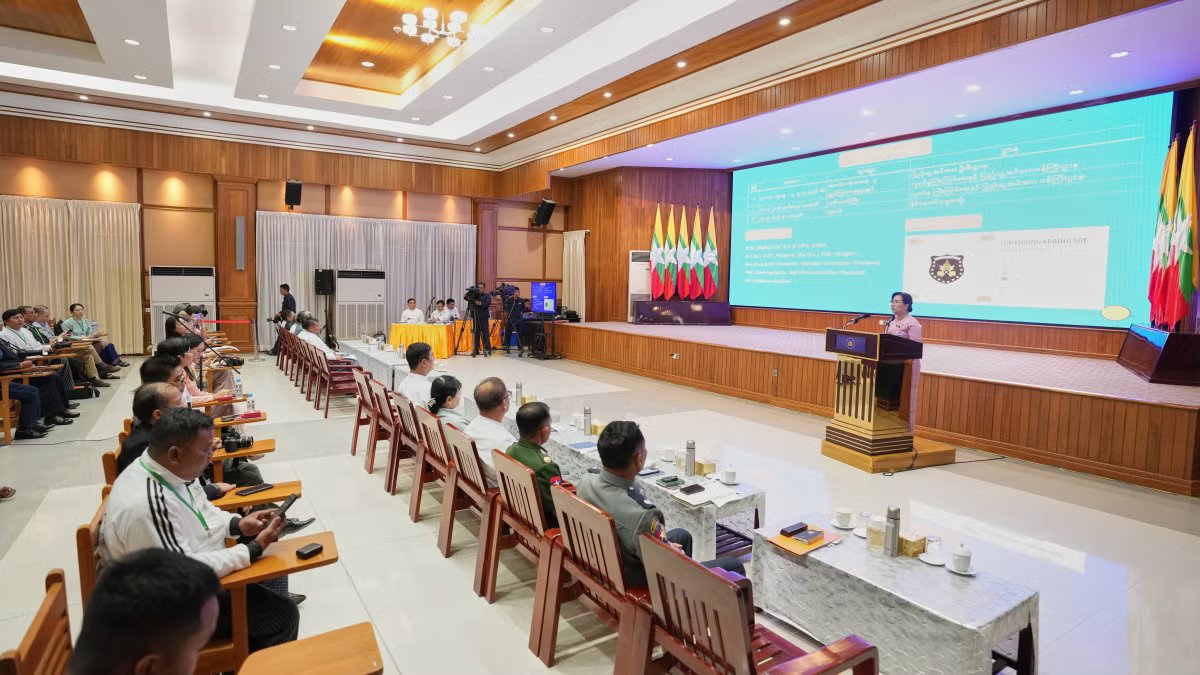
Khin Khin Soe, the spokesperson for Myanmar’s military-controlled parliament, urged the Japanese government on June 30 to resume development aid to the country. At a news conference in Naypyidaw, Myanmar’s capital, the spokesperson said “ordinary citizens will suffer” from Japan’s continued suspension of new aid.
Japan suspended development assistance—support for long-term government projects, not urgent humanitarian aid—to Myanmar after the February 2021 military coup.
The spokesperson’s expressed concern for the wellbeing of Myanmar’s people bears no relation to the junta’s actions. Since the coup, the junta has committed widespread and systematic human rights abuses, including extrajudicial killings, torture, and attacks on civilians that amount to crimes against humanity and war crimes. Myanmar’s military misused Japan-funded civilian vessels in 2022 to transport soldiers and weapons in embattled Rakhine State. Human Rights Watch research also found that a military-owned conglomerate benefited financially through Japan’s Bago River Bridge Construction Project.
At the same time, Myanmar’s junta has repeatedly obstructed the flow of humanitarian aid following natural disasters.
The junta-organized sham elections in December 2025 and January 2026 sought to obtain international legitimacy for the military-controlled state and allow the parliament to install junta leader Min Aung Hlaing as president. The Japanese government previously expressed “serious concern” about the elections and said they “will only invite more resistance from the Myanmar people and make a peaceful resolution difficult.”
The Japanese government should not resume new development assistance while Myanmar’s military continues to commit widespread atrocities with impunity, represses the rights of Myanmar’s people, and interferes with the delivery of humanitarian aid. Instead, Tokyo should increase pressure on Myanmar’s military by working with other governments to tighten targeted sanctions against junta leaders and military-owned conglomerates.
Myanmar military leaders should recognize that if they are genuinely concerned about the suffering of Myanmar’s people, they need to immediately stop unlawful attacks on civilians, unconditionally release all those arbitrarily detained, respect basic liberties, and allow the unfettered flow of humanitarian aid.
Sentinel — Human
The text exhibits characteristics of human policy writing or synthesized journalism, grounded by specific details and structured around a coherent argumentative chain.