Usually, the worst thrillers are the ones that keep asking for serious attention while giving the audience nothing solid to hold. You sit there waiting for tension, for danger, for a nasty little turn of the knife, for one character choice that makes the whole thing click, and instead the movie keeps handing you famous actors trapped inside lifeless suspicion.
These six hail from that line of thrillers. They come from the exact kind of material thriller fans usually love: murder investigations, serial-killer psychology, erotic danger, ticking clocks, icy landscapes, damaged cops, famous horror mythology, and stories built around obsession. So the ingredients are there but the failure is in the handling. They make suspense feel like a chore.
6
'Twisted' (2004)
Twisted is especially frustrating because Jessica Shepard (Ashley Judd) is exactly the kind of glossy adult-thriller role Judd had already proved she could carry better than most actors of her era. Jessica is a San Francisco homicide inspector with alcohol problems, blackouts, childhood trauma, and a terrifying pattern forming around her: men she has slept with keep turning up dead. That is a blunt, nasty setup for a police thriller, and with Judd, John Mills (Samuel L. Jackson), and Mike (Andy Garcia) involved, the movie should at least have some electricity.
Instead, everything feels strangely sedated. Jessica’s blackouts should make the viewer anxious about memory, guilt, and self-destruction, but the film treats them like a cheap mystery switch. Jackson’s mentor figure has authority, Garcia’s partner has suspicion, and Judd keeps trying to give Jessica damage that feels real, yet the script keeps pushing everyone toward obvious, joyless turns. Even the San Francisco setting feels underused. A city with fog, hills, water, bars, apartments, and police politics should feed the atmosphere. Here, the whole investigation feels flattened into procedural gestures. For an R-rated thriller about sex, murder, and fractured trust, Twisted is shockingly bloodless.
5
'Hannibal Rising' (2007)
Explaining Hannibal Lecter (Gaspard Ulliel) was already a dangerous idea. The character’s power comes partly from his refinement, appetite, intelligence, and mystery. Hannibal Rising decides that what viewers really needed was a young-Hannibal origin story built from wartime trauma, family tragedy, revenge, and the step-by-step creation of a monster. That approach is not automatically doomed, but the movie handles it with so little psychological danger that Hannibal becomes less frightening the more we learn.
Ulliel has the face and composure for a colder, stranger version of the film. Lady Murasaki (Gong Li) brings grace. The World War II material has horror built into it, especially the death of Hannibal’s sister Mischa (Helena-Lia Tachovska). The problem is that the movie keeps reducing legendary evil into revenge mechanics. Hannibal hunting the men responsible for his childhood trauma should be disturbing, yet too much of it plays like a grim origin checklist. Mask imagery, knives, training, memory, punishment, taste, identity; the film touches all of it without making the transformation feel profound. It turns one of cinema’s most terrifying minds into backstory, and backstory is exactly what he never needed.
COLLIDER
Collider · Quiz
Collider Exclusive · Horror Survival QuizWhich Horror Villain Do You Have the Best Chance of Surviving?Jason Voorhees · Michael Myers · Freddy Krueger · Pennywise · Chucky
Five killers. Five completely different ways to die — if you're not smart enough, fast enough, or self-aware enough to avoid it. Only one of them is the villain your particular set of instincts gives you a fighting chance against. Eight questions will figure out which one.
🏕️Jason
🔪Michael
💤Freddy
🎈Pennywise
🪆Chucky
QUESTION 1 / 8INSTINCT
01
Something feels wrong. You can't explain it — you just know. What do you do?First instincts are the difference between the survivor and the first act casualty.
QUESTION 2 / 8ENVIRONMENT
02
Where are you most likely to find yourself when things go wrong?Setting is everything in horror. Where you are determines which rules apply.
QUESTION 3 / 8STRENGTH
03
What is your most reliable survival asset?Every survivor has a quality the villain didn't account for. What's yours?
QUESTION 4 / 8FEAR
04
What kind of fear is hardest for you to fight through?Knowing your weakness is the first step to not dying because of it.
QUESTION 5 / 8GROUP
05
You're with a group when things start going wrong. What's your role?Horror movies are brutally clear about who survives group situations and who doesn't.
QUESTION 6 / 8MISTAKE
06
What's the horror movie mistake you're most likely to make?Honest self-assessment is a survival skill. Denial is not.
QUESTION 7 / 8ADVANTAGE
07
What's your best weapon against something that can't be stopped by conventional means?Every horror villain has a weakness. The survivors are always the ones who find it.
QUESTION 8 / 8FINAL SCENE
08
It's the final scene. You're the last one standing. How did you make it?The final survivor always has a reason. What's yours?
Your Survival Odds Have Been CalculatedYour Best Chance Is Against…
Your instincts, your strengths, and your particular way of thinking under pressure point to one villain you actually have a fighting chance against. Everyone else — good luck.
Camp Crystal Lake · Friday the 13th
Jason Voorhees
Jason is relentless, but he is also predictable — and that is the gap you would exploit.
He moves in straight lines toward his target. He doesn't strategise, doesn't adapt, doesn't outsmart. He simply pursues.
Your ability to keep moving, use the environment, and resist the panic that freezes most victims gives you a genuine edge.
The Crystal Lake survivors were always the ones who stopped running in circles and started thinking about terrain, water, and distance.
You think like that. Which means Jason, for all his indestructibility, would face someone who simply refused to be where he expected.
Haddonfield, Illinois · Halloween
Michael Myers
Michael watches before he moves. He is patient, methodical, and almost impossible to detect — until it's too late for anyone who isn't paying close enough attention.
But you are paying attention. You notice the shape in the window, the car parked slightly wrong, the silence where there should be sound.
Michael's power lies in the invisibility of ordinary suburbia — the fact that nothing ever looks wrong until it already is.
Your spatial awareness and instinct to map every room, every exit, and every shadow before you need them is precisely the quality Laurie Strode had.
You are not a victim waiting to happen. You are someone who already suspects something is wrong — and acts on it.
Elm Street · A Nightmare on Elm Street
Freddy Krueger
Freddy wins by getting inside your head — using your own fears, your own memories, your own subconscious as weapons against you. That strategy requires a target who can be destabilised.
You are harder to destabilise than most. You've faced uncomfortable truths about yourself and you haven't looked away.
The survivors on Elm Street were always the ones who understood what was happening and chose to face it rather than flee from it.
Freddy's greatest weakness is that his power evaporates in the presence of someone who refuses to give him the fear he feeds on.
Your psychological resilience — the ability to stay grounded when reality itself becomes unreliable — is exactly the quality that keeps you alive here.
Derry, Maine · It
Pennywise
Pennywise is ancient, shapeshifting, and feeds on terror — but it has one critical vulnerability: it cannot function against someone who genuinely stops being afraid of it.
The Losers Club didn't survive because they were braver than everyone else. They survived because they faced their fears together, and faced them honestly.
You ask the questions others avoid. You look directly at what frightens you rather than turning away.
That directness — the refusal to let fear fester in the dark — is Pennywise's worst nightmare.
It chose the wrong target when it chose you. You are exactly the kind of person whose fear tastes like nothing at all.
Chicago · Child's Play
Chucky
Chucky's greatest advantage is that nobody takes him seriously until it's already too late. He exploits the gap between how something looks and what it actually is.
You don't have that gap. You take threats seriously regardless of how they present — and you never make the mistake of underestimating something because of its size or appearance.
Chucky relies on surprise, on the delay between recognition and response. You close that delay faster than almost anyone.
Your instinct to treat every unfamiliar thing with appropriate scepticism — rather than dismissing it because it seems absurd — is the exact quality that keeps you breathing.
Against Chucky, not laughing is already winning. You are very good at not laughing.
4
'The Number 23' (2007)
The Number 23 should have been exciting because Walter Sparrow (Jim Carrey) is the kind of dark-thriller role that could have used the dramatic range Carrey had already shown. A story about a man becoming obsessed with a number that seems to control his life has the kind of paranoid hook that can mess with an audience if handled with discipline. Walter finds a mysterious book called The Number 23, begins seeing connections between the story and his own life, and slowly convinces himself that the number is tied to murder, fate, and his buried identity.
The movie’s problem is not that the premise is ridiculous. Plenty of great thrillers are ridiculous when summarized. The problem is that the obsession never becomes believable as human behavior. Walter keeps noticing 23 everywhere, but the film presents the pattern with such heavy emphasis that paranoia turns into arithmetic homework. The fictional book material, with Carrey as the hardboiled Fingerling, looks and sounds painfully forced. Agatha Sparrow (Virginia Madsen) is stuck reacting to a mystery that keeps mistaking darkness for depth. By the time the truth comes out, the movie has made the number less scary, not more. It wants to crawl inside obsession. It mostly counts at you.
3
'88 Minutes' (2007)
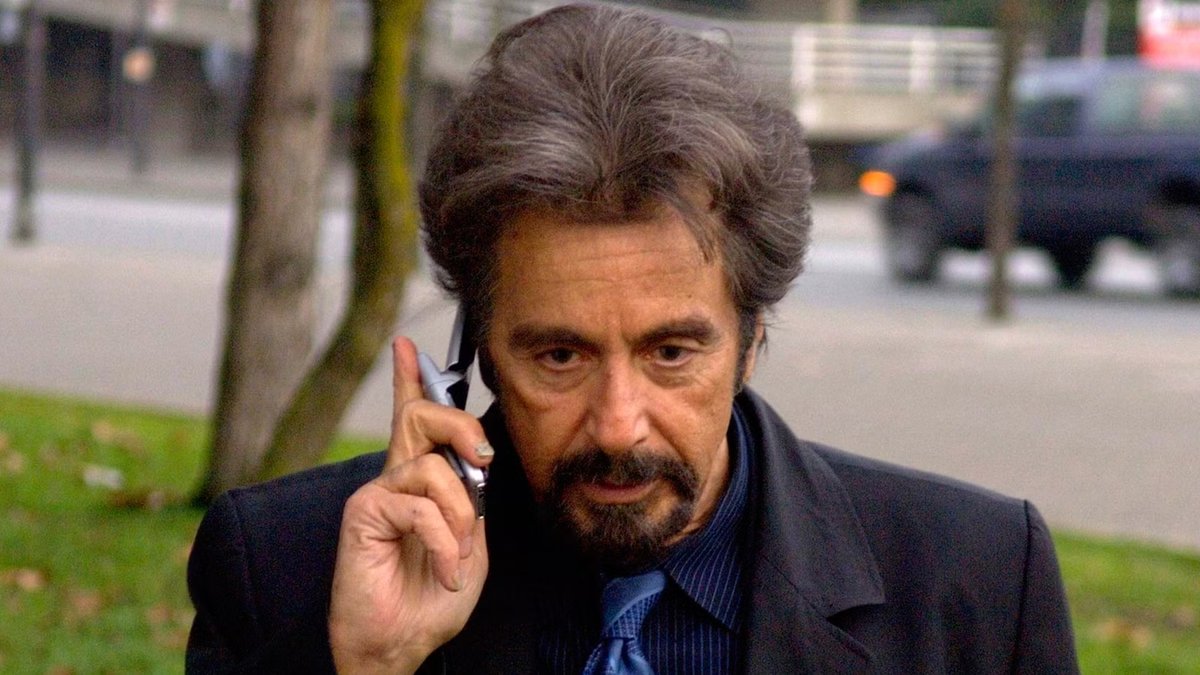
88 Minutes should have automatic tension. Jack Gramm (Al Pacino) is a forensic psychiatrist and college professor whose testimony helped convict serial killer Jon Forster (Neal McDonough). Then Jack receives a death threat with a ticking deadline, while a copycat case and multiple suspicious people around him make him question who is targeting him and why. That premise has built-in urgency, professional guilt, and room for nasty misdirection.
The actual film is a disaster of overheated dialogue and fake pressure. Pacino gives volume, movement, irritation, phone calls, accusations, and panic, but the movie never organizes the chaos into suspense. Everyone around Jack behaves like a red herring with a name tag. Students, colleagues, lovers, suspects, cops, and victims enter the story with the same artificial suspiciousness, so instead of tightening the mystery, the film makes every possibility feel equally silly. The ticking clock should make scenes sharper. Somehow, it makes them more annoying. Pacino can turn messy material into entertainment when a film has rhythm. 88 Minutes gives him noise, bad timing, and a thriller plot that seems to be racing without knowing where the finish line is.
2
'Basic Instinct 2' (2006)
The original Basic Instinct was trashy, manipulative, stylish, and genuinely confident about the kind of adult thriller it wanted to be. Basic Instinct 2 understands the brand name but almost none of the danger. Catherine Tramell (Sharon Stone) is now in London and once again linked to sex, death, manipulation, and professional men who think they can study her without becoming part of her game. On paper, that should be enough for at least a nasty late-career erotic thriller.
The film is dead on contact. Stone still has the stare, the voice, and the ability to make Catherine feel amused by everyone’s weakness, but the movie around her has no pulse. Michael Glass (David Morrissey) never becomes a compelling match for her. Their sessions lack genuine intellectual threat. The erotic material feels staged for reputation rather than desire. The murder mystery crawls through expected beats without the sharp, shameless energy that made the first film so watchable. Catherine should feel dangerous because she is smarter than the room and less afraid of herself than anyone else. Here, she feels trapped in a sequel that keeps reminding viewers of a better movie instead of creating its own heat.
1
'Whiteout' (2009)
Whiteout should have been almost impossible to make this dull. Really. Carrie Stetko (Kate Beckinsale) is a U.S. Marshal working at a research station in Antarctica, investigating a body discovered on the ice shortly before the base is set to shut down for winter. That is a fantastic thriller setup. The movie wastes it with almost impressive consistency.
The biggest failure is atmosphere. Antarctica should feel terrifyingly specific, but Whiteout keeps turning the setting into generic whiteness and loud wind. The mystery lacks bite, the supporting characters barely register, and Carrie’s traumatic backstory is handled with the most basic possible emotional language. The plane crash history, the ice axe violence, the storm danger, the hidden motives, the race against evacuation; all of it should build into a sharp survival thriller. It never does. Whiteout earns the bottom spot because it had the cleanest path to suspense and still chose the coldest, emptiest version of every idea.