Skip to content
Chimera readability score 61 out of 100, Academic reading level.

Smartphones are welcoming the agentic AI overlords.
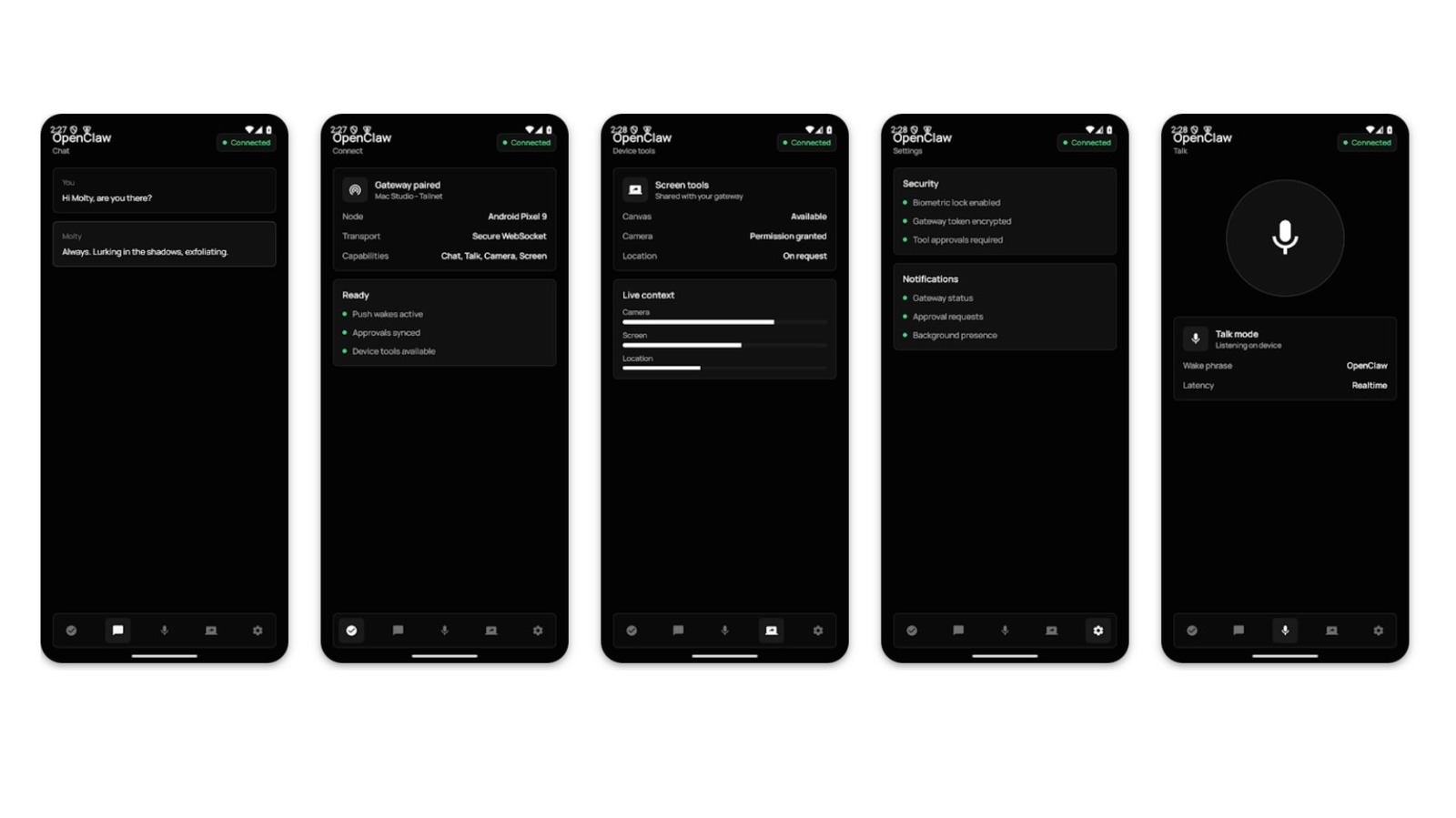
OpenClaw announced that it has released standalone apps for both iOS and Android devices. The move officially brings AI agents to the App Store and Play Store marketplaces. Users can now use their smartphones to chat with the AI assistant and to grant it access to different components of the device, including the camera, screen, location, photos, contacts, calendar and reminders.
OpenClaw rather abruptly transformed from a minor to major player in AI. It's currently an open-source project being run by a foundation following founder Peter Steinberger's move to join OpenAI earlier this year. The apps are published by the OpenClaw Foundation, although the announcement of Steinberger's hiring said that OpenAI would provide some unspecified form of support for the organization.
Agentic AI has been a particularly gnarly topic over at the Apple camp, where the official review process is more stringent. Apple had blocked many agentic tools due to broader fears around the security of vibe coding. iOS users had to use chat apps like Telegram or WhatsApp to communicate with their agents.

Sentinel — Human

Confidence

The text exhibits strong human narrative flow and contextual depth, suggesting it is likely a condensed piece of journalistic reporting rather than purely synthetic generation.

Signals Detected
low severity: Sentence length variance is uneven; language contains informal phrasing ('AI overlords', 'gnarly topic') which suggests human voice, despite overall clarity.
low severity: The text flows logically from specific announcement to background history (OpenClaw/Steinberger/Apple context) without excessive, formulaic hedging; the emphasis feels organic.
low severity: No obvious matching of talking points or vague attribution typical of pure LLM summarization. The specific reference to 'vibe coding' and the friction at the Apple camp feels like contextual background inserted by a journalist, not generalized AI knowledge.
low severity: Specific names (Peter Steinberger, OpenClaw Foundation) and named geopolitical/corporate friction points (Apple's blocking process) suggest grounded reporting, increasing the likelihood that this is derived from actual news sources, even if condensed.
Human Indicators
The use of slightly informal but evocative language ('agentic AI overlords,' 'gnarly topic') introduces a personal stylistic element absent in purely mechanistic summaries.
The integration of specific, context-heavy friction points (Apple's security stance, Telegram usage) suggests knowledge derived from deep reporting rather than generic data retrieval.