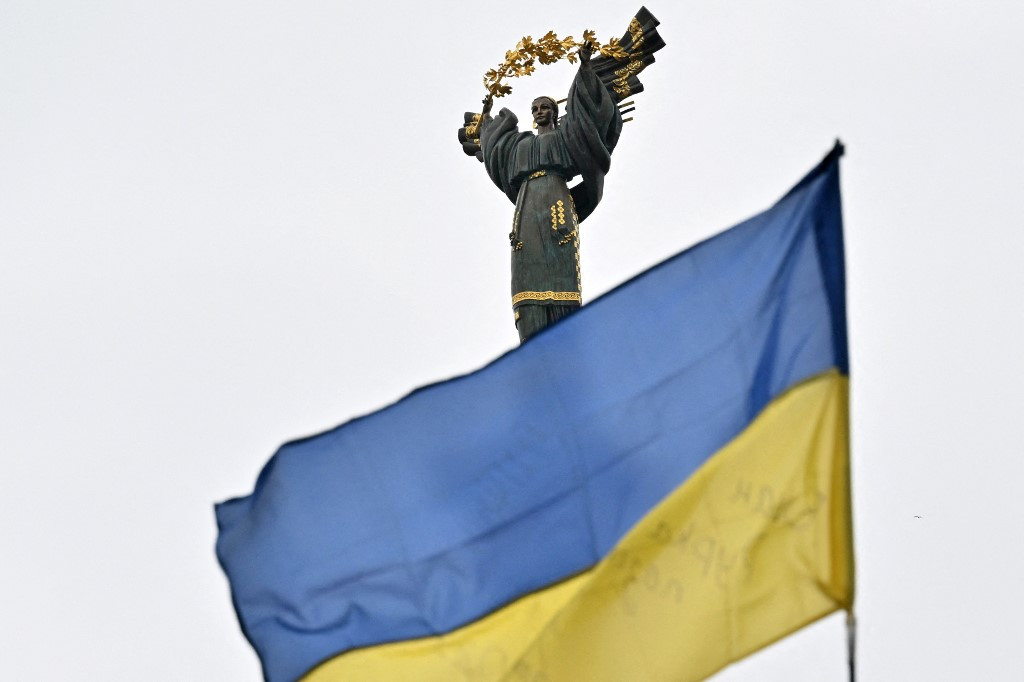
As Ukraine approaches its 35th anniversary of modern independent statehood, on Aug. 24, here’s an update from Kyiv on the general mood, hopes, and sense of frustration.
Ukrainians are living through a paradox. They’ve proven they can’t be defeated militarily. Russia has shown it won’t accept defeat diplomatically. So here they are – grinding each other down, testing who breaks first. Except the stakes aren’t remotely equal. For Putin, this is about restoring the empire; for Ukraine, it’s about what shape and condition Ukraine might emerge from the war in.
JOIN US ON TELEGRAM
Follow our coverage of the war on the @Kyivpost_official.
After more than four years of full-scale fighting, the battlefield tells one story while the diplomatic circus tells another. Russia holds about 18% of Ukrainian territory. Cost? Approaching half a million casualties. Ukraine has gone from desperately defending Kyiv to hitting oil refineries 800 kilometers (497 miles) inside Russia and virtually cutting off Russian-occupied Crimea.
So, the war has fundamentally changed. But the diplomatic landscape is more dangerous now than any Russian offensive: Western hesitation, Trump treating matters like a real estate deal, and Ukraine insisting that its sovereignty isn’t negotiable – those three factors create a tension that could damage Ukraine more than any missile strike.
This isn’t 2022, when Ukrainians were fighting for survival in Hostomel airport, Bucha, and Mariupol. It’s not 2024’s stalemate either. It’s something new. Ukraine has real agency now. It can strike back. But the country is also facing harder questions about what victory could look like and whether its Western support will back it to the end.
The New Line Kyiv Quietly Built Into NATO
What the West doesn’t always get
The biggest problem with Western coverage? The framing. The war is still often viewed as a frozen conflict. A border dispute. A regional power struggle where reasonable people can split the difference and move on.
Wrong. This is an imperial war of annihilation. Russia’s goal isn’t Donetsk or Luhansk. It’s erasing Ukraine both as an entity and a concept. Putin has said it explicitly – Ukraine isn’t a real nation, Ukrainians aren’t a real people. Until Western journalists and politicians understand that distinction, they’ll keep proposing “solutions” that amount to rewarding genocide.
Western coverage has shifted to “war fatigue.” How much is this costing us? Can we afford it? What about our own problems? Fair questions, maybe. But they miss the point entirely. The question isn’t what it costs to support Ukraine. It’s what it costs when you don’t.
And what’s so often missing from Western media – life in the occupied territories. The torture chambers in Kherson. The Ukrainian children deported to Russia and put through re-education camps. The systematic erasure of Ukrainian identity. If Western audiences saw that regularly – really saw it – the whole “compromise” conversation would sound obscene.
You can’t compromise with genocide. You can’t split the difference with extermination.
Russia’s strategy: throwing bodies at villages nobody’s heard of
On the ground, Russia is losing over 1,000 soldiers a day for villages that don’t appear on most maps. This isn’t a strategy. It’s inertia pretending to be a resolve. Putin can’t afford to stop the offensive without admitting failure, so he just keeps going. The cost doesn’t matter. The Russian military has gone full Tsarist and Soviet – mass infantry assaults, minimal coordination, treating soldiers like expendable ammunition for gains that exist mainly for propaganda.
The increasingly frequent massive Russian strikes on Kyiv, Odesa, Kharkiv, Dnipro, and other major and smaller cities look terrifying on paper, and indeed, they bring death and destruction. In practice? Ukrainian air defenses are now shooting down most of the drones and missiles, and the spirit of the Ukrainian population remains as unbreakable as ever.
The real audience for these strikes isn’t Kyiv. It’s Washington and Brussels. Putin wants them to think he’s not exhausted, that Ukrainian infrastructure is still vulnerable, and that they should pressure Ukraine to accept terms.
It’s theater. Expensive, deadly theater.
Bringing the war home to Russia
Here’s what’s changed: Ukraine is finally hitting back where it hurts.
Ukrainian strikes on Russian oil infrastructure have knocked out about 40% of their refining capacity. That’s not just revenue – that’s domestic fuel supplies. Russians are feeling it at the pump. Ukraine is hitting defense plants, disrupting production of the missiles and drones Russia is using to kill Ukrainian civilians.
Putin admitted it recently. That’s significant. He never admits vulnerability. For the first time, ordinary Russians are experiencing consequences for their government’s war. Not Ukrainian consequences – their own. That’s not escalation. That’s accountability.
Western colleagues ask if Ukrainians are worried about provoking Russia. Provoking them? They invaded Ukraine. They’re bombing Ukrainian cities. They’re torturing Ukrainian people in occupied territories. Are Ukrainians, fighting for their right to exist and in defense of the values of the free world, supposed to worry about their feelings?
The diplomatic trap
Here’s the irony: America’s distraction with Iran has helped Ukraine. With Washington focused elsewhere, Ukraine has had more room to expand its deep-strike campaign and accelerate domestic weapons production. The country is maturing from a dependent client into an independent actor. That’s good.
But it’s also dangerous. Trump’s proposed peace frameworks have treated Ukrainian territory like a bargaining chip. He expected Ukraine to cede roughly 1,800 square miles (4,660 square kilometers) – including areas Russia hasn’t even captured yet. That’s a non-starter. Over 70% of Ukrainians oppose territorial concessions without ironclad security guarantees. The polls are consistent.
Could Ukraine accept a territorial compromise? Maybe. But only with NATO membership, sustained military support, massive reconstruction funding, and mechanisms to hold Russia accountable for war crimes. Without those elements, it’s just a surrender with paperwork. A temporary pause before Russia regroups and comes back for the rest.
EU membership is also important. For Ukraine, EU integration isn’t some future aspiration. It’s the anchor that guarantees Ukrainian sovereignty and prevents the country from falling back into a Russian sphere of influence. Remember what triggered Ukraine’s Maidan protests in late 2013 – Russia forcing the Viktor Yanukovych administration to back away from a preliminary accession treaty with the EU.
A “deal” that trades territory for peace while leaving Ukraine outside the EU? That’s not peace. That’s a frozen conflict where Ukraine stays vulnerable to Russian pressure forever, perpetually dependent on Western goodwill instead of institutional protection.
So, the prevailing view in Ukraine is that any real settlement must include an ironclad path to EU membership alongside NATO accession. Without it, Ukraine becomes a buffer zone. A permanent hostage.
An alternative security architecture has not been proposed, and Ukrainians remember all too well how the Budapest Memorandum of December 1994 proved to be nothing more than security assurances on paper.
The war Ukraine is fighting against itself
Ukraine is fighting two wars. The second one – against corruption and the old ways of flawed governance – is less visible but just as critical.
The recent embezzlement scandal at one of Ukraine’s largest energy companies led to the resignation of Andriy Yermak, the presidential chief of staff, proving that accountability can and should be imposed with the help of civic society and “conditionality” pressure from outside, even at the highest levels.
Wartime corruption isn’t just morally wrong. It’s strategically catastrophic. It undermines military effectiveness. It gives skeptics in Washington and Brussels ammunition to cut aid. Every scandal makes it harder to keep Western support, which remains conditional on reform. Ukraine can win every battle and still lose the war if it loses Western backing because it couldn’t clean up its own house.
Yermak’s resignation, though just the tip of the iceberg, showed that the system can and should be made to self-correct. That matters. To take another example, Ukraine has risen in press freedom rankings – from 106th in 2022 to 55th in 2026. The country’s best ranking since independence. And this is during a war where 130 journalists have been killed, and 26 are still in Russian captivity.
The biggest threat to press freedom in Ukraine isn’t the Ukrainian government. It’s Russian missiles and occupation.
Internally, apart from the obvious need to remove residual deficiencies in the legal system, another major challenge is the acute problems arising from the botched approach to conscription.
The clumsy, often crude way in which men are being seized off the streets and sent to the front is hardly worthy of a country that wants its heroic fight for survival to be understood and supported. But here, too, there are signs that the issue has been recognized and will be addressed.
What happens if Russia wins territorial concessions
A negotiated settlement that leaves Russia in control of Ukrainian territory would be a victory for imperialism and a catastrophe for the international order.
For Ukrainian democracy, it would be a profound test. National trauma. Millions of displaced people. Economic devastation. Embittered soldiers returning from the battle zones.
But also a population that’s proven its commitment to democratic values under fire. What’s important to note is that this war has strengthened Ukraine’s sense of nationhood, not weakened it. Even a bad peace wouldn’t reverse that, though it could provoke serious political divisions.
Everything depends on what comes with any settlement. Without security guarantees, EU and NATO membership, and reconstruction funding, Ukraine becomes a frozen conflict zone. Perpetually vulnerable to renewed Russian aggression. With them, the country could still emerge as a successful European democracy. Smaller. Scarred. But free.
The broader stakes extend far beyond Ukraine. If the West allows Russia to keep its conquered territory, it signals that imperial aggression works if you’re willing to pay the price in blood. The post-World War II principle that borders can’t be changed by force will be dead. The world will be back to 19th-century great power politics, where might makes right and small nations exist at the sufferance of large ones.
The choice
NATO is already involved unofficially. Intelligence. Training. Weapons. Russian drones are crashing in Romania. Air alerts in Lithuania. The conflict is spilling over alliance borders. The alliance is closer to direct involvement than most people realize. Accidents and miscalculations become more likely every day as hundreds of drones and missiles fly near NATO territory.
Ukraine didn’t choose this war. But Ukrainians have chosen to fight it with democratic institutions and sovereignty as their non-negotiable principle. They’ve demonstrated their society can self-correct under existential threat.
The West’s choice is starker: Do the principles of sovereignty and the rules-based international order matter enough to defend? Or were they always just convenient rhetoric, abandoned when defense becomes costly?
Or, closer to home: Will Ukraine’s neighbors, like Poland and Hungary, end up blocking its integration into the EU because they fear that its potential might overshadow them?
These choices will define not just Ukraine’s future, but the entire 21st-century security architecture. The answer will reverberate far beyond the borders of Ukraine, shaping the world in which the next generation will find itself.
But generally, the mood in Kyiv, despite the obvious grueling impact of such a long war, which started back in 2014 with Russia’s seizure of Crimea and parts of eastern Ukraine’s Donbas region, is now once again one of cautious optimism and pride that the country has held its own and has now taken the fight into the very heart of Russia.
Ukraine is no longer a subordinate actor but an autonomous one on the international stage, bringing combat knowledge far beyond that of its European neighbors.
The views expressed in this opinion article are the author’s and not necessarily those of Kyiv Post.
You can also highlight the text and press Ctrl + Enter