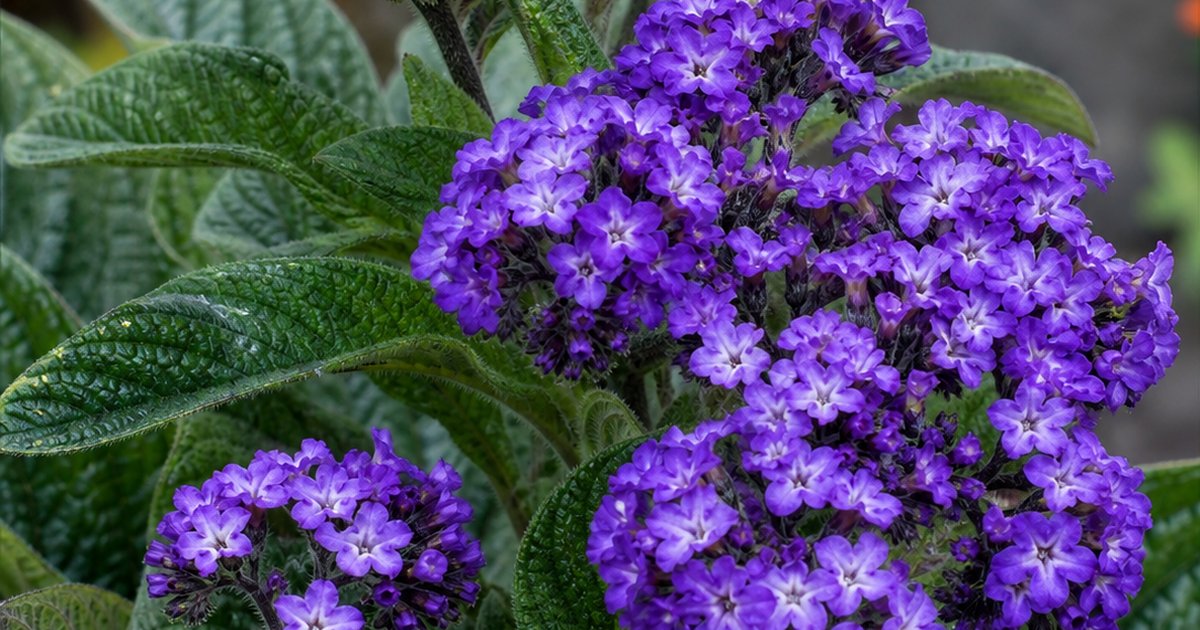
Some flowers announce themselves with dazzling color. Others reveal their magic more quietly, through fragrance carried on the evening air. Heliotropium — often called Heliotrope or Cherry Pie Plant — belongs to the latter tradition, offering one of the most unforgettable scents in the summer garden.
In Fort Collins and across the Front Range, where outdoor living stretches long into warm twilight evenings, Heliotropium earns its place not merely through beauty, but through atmosphere. Its rich clusters of violet, lavender, or creamy white blooms release a sweet vanilla-and-cherry fragrance that drifts across patios and garden paths just as the heat of the day begins to soften.
It is a flower that invites lingering.
The Elegance of Heliotrope
Heliotropium carries a distinctly old-world charm. Its dense flower clusters resemble miniature hydrangeas, while its dark green leaves provide a lush backdrop that feels almost tropical against Colorado’s sunlit landscapes.
Unlike louder annuals that dominate a container, Heliotrope contributes refinement. It softens edges, enriches evening spaces, and creates gardens that feel designed for conversation and quiet summer dinners outdoors.
- Best Use: Patio containers, porch planters, cottage gardens, and seating areas where fragrance can be appreciated up close.
- Fort Collins Tip: Morning sun with afternoon shade helps preserve bloom quality during intense Front Range heat.
- Maintenance: Remove faded flower clusters regularly to encourage continuous blooming throughout summer.
A Plant Designed for Outdoor Living
In many ways, Heliotropium is less about daytime spectacle and more about creating mood.
Placed near a garden bench, beside a front entryway, or along a patio border, it transforms outdoor spaces into something softer and more intimate. As evening temperatures cool, the fragrance becomes more pronounced — rich but never overpowering.
For homeowners designing outdoor entertaining areas in Fort Collins, few flowers contribute more sensory richness.
The Color Palette of Sophisticated Gardens
Traditional Heliotrope varieties feature deep royal purple blooms, often accented by tiny white centers that shimmer in evening light. Newer cultivars also offer pale lavender and creamy white selections that pair beautifully with modern container designs.
These cool-toned flowers work especially well against natural stone, weathered wood, and black metal planters common throughout Front Range landscapes. The effect feels polished without becoming formal.
Because Heliotropium blooms continuously through much of the growing season, it also serves as an excellent “anchor plant” in mixed containers.
Perfect Pairings for a Better Homes Display
Heliotrope combines best with plants that complement its romantic softness and richly colored flowers.
Companion Plants That Shine Alongside Heliotrope
- Bacopa: The delicate trailing flowers of Bacopa soften container edges and enhance Heliotrope’s lush appearance.
- Sweet Alyssum: Alyssum’s airy white blooms create an elegant contrast beneath deep purple flower clusters.
- Calibrachoa (Million Bells): Cascading blooms add movement and extended color around upright Heliotrope mounds.
- Dusty Miller: Its silvery foliage beautifully offsets the saturated violet tones of traditional Heliotrope.
- Coleus: Deep burgundy or lime-toned Coleus foliage creates dramatic texture contrasts in shaded patio containers.
Thriving in Colorado Conditions
Though Heliotropium appears delicate, it adapts surprisingly well to Front Range conditions when given moderate moisture and protection from the harshest afternoon sun.
Because Colorado air is so dry, consistent watering is essential — particularly for container-grown plants. Unlike drought-loving annuals, Heliotrope prefers evenly moist soil, though good drainage remains important.
- Water deeply when the top inch of soil becomes dry.
- Feed lightly every few weeks during peak blooming season.
- Shelter from strong drying winds whenever possible.
With proper care, Heliotropium blooms steadily from late spring until autumn frost.
A Flower Meant to Be Experienced
Some plants are admired in passing. Heliotropium encourages people to stop.
Guests lean closer to identify the fragrance. Evening conversations drift toward the garden edge. Pollinators linger among the blossoms while twilight settles over the yard.
In a Fort Collins landscape often defined by bold sunlight and rugged textures, Heliotrope introduces something softer and more atmospheric — a reminder that gardens are not merely visual spaces, but emotional ones as well.
And on warm Colorado evenings, few flowers feel more quietly luxurious.
Facts Only
Heliotropium, also called Heliotrope or Cherry Pie Plant, is a flowering plant known for its strong vanilla-and-cherry fragrance.
It grows well in Fort Collins and the Front Range region of Colorado.
The plant produces clusters of violet, lavender, or creamy white flowers.
Its fragrance is most noticeable in the evening.
Heliotropium is often used in patio containers, porch planters, and cottage gardens.
It thrives with morning sun and afternoon shade in Colorado’s climate.
Regular removal of faded flowers encourages continuous blooming.
Companion plants include Bacopa, Sweet Alyssum, Calibrachoa, Dusty Miller, and Coleus.
It requires consistent watering, especially in containers, and prefers evenly moist soil.
Heliotropium blooms from late spring until autumn frost with proper care.
The plant is valued for its ability to create intimate, fragrant outdoor spaces.
Executive Summary
Full Take
This piece presents Heliotropium as a sensory and aesthetic asset for gardens, particularly in Colorado’s Front Range. The strongest version of this narrative highlights the plant’s unique fragrance, adaptability, and role in enhancing outdoor living spaces. The article avoids overt manipulation, focusing instead on practical gardening advice and the plant’s appeal. However, it leans into a romanticized view of gardening as an emotional experience, which may resonate with readers seeking atmospheric beauty but could overlook practical challenges like water requirements or pest susceptibility.
The underlying paradigm assumes that gardens are extensions of personal expression and comfort, prioritizing sensory richness over utility. This aligns with broader trends in horticulture that emphasize "experience" over mere visual appeal. The implications are largely positive—encouraging mindfulness and connection to nature—but the narrative could benefit from acknowledging trade-offs, such as the plant’s need for consistent care in arid climates.
Bridge questions: How might Heliotropium’s water needs conflict with Colorado’s drought-conscious gardening practices? What alternative fragrant plants could offer similar benefits with lower maintenance? Would the plant’s appeal hold in urban settings with limited outdoor space?
Patterns detected: none
Sentinel — Human
The text is expertly written, blending evocative lifestyle descriptions with practical horticultural tips, suggesting human expertise, though the polished structure warrants forensic review.