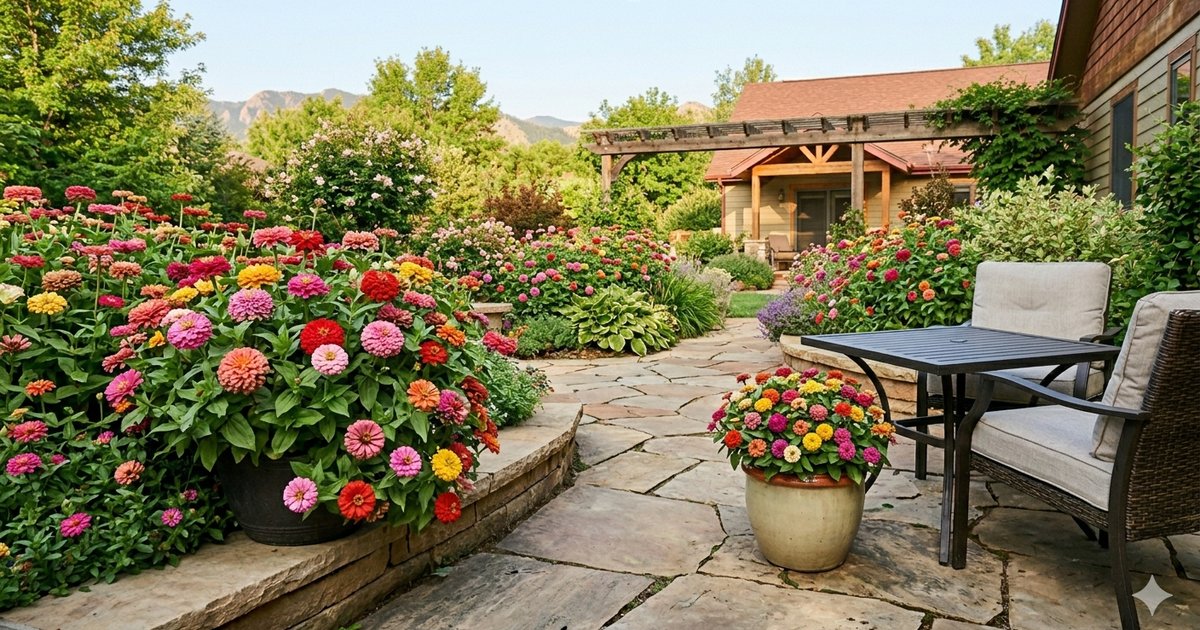
Zinnias are the definition of summer optimism in the garden. Bright, bold, and relentlessly floriferous, they turn heat and sunlight into an uninterrupted display of color. In Fort Collins and across the Front Range, where summer conditions are intense and long, zinnias are one of the most reliable ways to keep gardens visually active from early summer straight through the first frost.
They are also among the most forgiving annuals—fast-growing, easy to establish, and highly responsive to sun and heat.
At [Plantorium.com](https://plantorium.com?utm_source=chatgpt.com zinnias are a cornerstone summer annual, especially for pollinator gardens, cut flower plantings, and high-impact landscape color.
Why Zinnias Perform So Well in Northern Colorado
Zinnias are native to warm, dry regions, which makes them exceptionally well suited to Colorado’s Front Range climate. They don’t just tolerate heat—they thrive in it.
They perform well because:
- They love full sun and high temperatures
- They bloom continuously with regular deadheading
- They establish quickly from seed or transplants
- They handle dry air and heat stress well
Flower forms vary widely and include:
- Single blooms
- Double blooms
- Cactus-flowered types
- Dahlia-flowered types
- Compact border varieties
- Tall cutting varieties
Color options are equally diverse:
- Bright red
- Orange
- Yellow
- Pink
- Purple
- White
- Bi-color blends
When to Plant Zinnias in Fort Collins
Zinnias are true warm-season annuals and should only be planted after the last frost date, typically mid-May in Northern Colorado.
They grow quickly once soil warms and often begin blooming within weeks of planting, making them one of the fastest ways to achieve summer color.
For continuous blooms, some gardeners also sow seeds in succession every few weeks into early summer.
Sunlight Requirements
Full sun is essential for best performance.
In the Front Range:
- Provide at least 6–8 hours of direct sunlight daily
- Avoid shaded areas, which reduce flowering and encourage weak stems
- Ensure good airflow to reduce disease risk
In full sun, zinnias produce strong stems, vivid colors, and abundant blooms.
Soil and Growing Conditions
Zinnias prefer well-draining soil and perform best in moderately fertile conditions.
For best results:
- Amend soil with compost before planting
- Avoid overly rich soil, which can lead to excessive foliage
- Use quality potting mix in containers
Good drainage is important, especially during occasional summer storms in Colorado.
Watering in a Front Range Climate
Zinnias prefer moderate, consistent moisture but are relatively drought tolerant once established.
Recommended watering approach:
- Water deeply during establishment
- Allow soil to dry slightly between waterings
- Avoid overhead watering when possible to reduce mildew risk
- Increase watering during extended heat waves
In containers, they may need more frequent watering during peak summer conditions.
Fertilizing for Continuous Bloom
Zinnias are heavy bloomers and benefit from regular feeding.
A balanced fertilizer every few weeks supports:
- Continuous flower production
- Strong stem development
- Long bloom duration
Avoid high nitrogen fertilizers, which can produce leafy plants with fewer flowers.
Garden Role and Design Use
Zinnias are primarily used for bold seasonal color and cutting gardens.
They work especially well in:
- Mass planting beds
- Pollinator gardens
- Cut flower gardens
- Sunny borders
- Large containers and patio displays
In Fort Collins landscapes, zinnias are often used to create vibrant summer color blocks that hold their intensity through heat and sun.
Pollinator and Wildlife Value
Zinnias are extremely attractive to pollinators and are a favorite in ecological gardens.
They support:
- Bees
- Butterflies
- Beneficial insects
Their long bloom season makes them a consistent nectar source throughout summer and early fall.
Handling Colorado Weather
Zinnias are well adapted to Front Range summer conditions but benefit from thoughtful placement.
They tolerate:
- Heat
- Strong sunlight
- Dry air
- Wind exposure (with support for taller varieties)
They are sensitive to:
- Frost (not cold hardy)
- Prolonged leaf wetness
- Poor drainage
In humid conditions, powdery mildew can occur, but Colorado’s dry climate generally reduces this risk.
Companion Planting
Zinnias pair well with other sun-loving, heat-tolerant annuals.
Excellent companions include:
- Salvia
- Verbena
- Lantana
- Rudbeckia
- Cosmos
- Marigolds
- Ornamental grasses
Their bold colors make them ideal focal points in mixed summer compositions.
A True Summer Workhorse
Zinnias are one of the most rewarding annuals for gardeners who want immediate, high-impact color with minimal complexity. They thrive on sunlight, respond quickly to care, and continue blooming long after many other plants begin to fade.
In Fort Collins and across the Front Range, they remain a staple of summer gardening—bright, resilient, and endlessly productive.
Explore seasonal availability and additional annuals at [Plantorium.com’s full plant catalog](https://plantorium.com/all-plants/?utm_source=chatgpt.com
Facts Only
Zinnias are annual flowers that thrive in warm, dry climates, including Northern Colorado’s Front Range.
They require full sun, with at least 6–8 hours of direct sunlight daily for optimal growth.
Zinnias can be planted after the last frost date, typically mid-May in Northern Colorado.
They grow quickly and often begin blooming within weeks of planting.
Flower forms include single, double, cactus-flowered, and dahlia-flowered types, with colors ranging from red, orange, and yellow to pink, purple, white, and bi-color blends.
They prefer well-draining, moderately fertile soil and benefit from compost amendment before planting.
Zinnias are drought-tolerant once established but require deep watering during establishment and consistent moisture during heat waves.
They respond well to balanced fertilizers, which support continuous blooming and strong stem development.
Zinnias are attractive to pollinators, including bees, butterflies, and beneficial insects.
They are sensitive to frost, prolonged leaf wetness, and poor drainage, which can lead to powdery mildew.
Companion plants include salvia, verbena, lantana, rudbeckia, cosmos, marigolds, and ornamental grasses.
Zinnias are commonly used in mass plantings, pollinator gardens, cut flower gardens, and containers.
Executive Summary
Zinnias are a highly adaptable and vibrant annual flower that thrive in the intense summer conditions of Northern Colorado, particularly in Fort Collins and along the Front Range. These plants are well-suited to the region’s heat, dry air, and strong sunlight, making them a reliable choice for continuous color from early summer until the first frost. They grow quickly from seed or transplants, bloom prolifically with regular deadheading, and require minimal maintenance, making them ideal for pollinator gardens, cut flower arrangements, and high-impact landscape designs. Zinnias prefer full sun, well-draining soil, and moderate watering, with some drought tolerance once established. They are also highly attractive to pollinators like bees and butterflies, providing a consistent nectar source throughout the season. While they excel in Colorado’s climate, they are sensitive to frost and prolonged leaf wetness, which can lead to powdery mildew. Companion planting with other sun-loving annuals like salvia, verbena, and cosmos enhances their visual appeal and ecological benefits. Overall, zinnias are a resilient and rewarding choice for gardeners seeking bold, long-lasting summer color with minimal effort.
The article highlights their versatility in various garden roles, from mass plantings to containers, and emphasizes their ability to withstand the challenges of Colorado’s summer weather, including heat, wind, and occasional storms. Their rapid growth and continuous blooming make them a staple for both aesthetic and functional gardening purposes.
Full Take
This article presents zinnias as an ideal summer flower for Northern Colorado, emphasizing their resilience, low maintenance, and ecological benefits. The narrative is straightforward and practical, focusing on the plant’s adaptability to the region’s climate and its role in supporting pollinators. However, it’s worth considering the broader context of why certain plants are promoted in gardening discourse. The emphasis on zinnias’ ease of growth and visual impact aligns with a cultural preference for low-effort, high-reward gardening—a trend that may reflect broader societal shifts toward efficiency and instant gratification. While the article provides useful information, it doesn’t explore potential drawbacks, such as the environmental impact of non-native species or the long-term sustainability of relying on annuals in drought-prone regions.
The piece also assumes a universal desire for vibrant, continuous blooms, which may not align with all gardeners’ aesthetic or ecological goals. For example, some may prioritize native plants or perennial systems that require less seasonal replanting. Additionally, the focus on zinnias’ pollinator benefits, while valid, could be expanded to discuss how they fit into larger ecological networks or whether they might compete with native species for resources.
Patterns detected: none
Root cause: The narrative reflects a broader gardening culture that values convenience, visual impact, and pollinator support, often without critiquing the underlying assumptions about what makes a "good" garden plant.
Implications: While zinnias are undeniably useful, their promotion could inadvertently discourage experimentation with less flashy but potentially more sustainable options. Gardeners might benefit from considering how their choices fit into local ecosystems and long-term climate resilience.
Bridge questions: How might zinnias’ role in pollinator gardens compare to that of native perennials in terms of long-term ecological benefits? What trade-offs exist between annuals like zinnias and more sustainable gardening practices? Would a focus on drought-resistant perennials better serve Colorado’s water conservation goals?
Sentinel — Human
The text exhibits the clear structure of expert instructional writing, likely human-authored or heavily vetted, providing specific, grounded advice rather than generalized information.