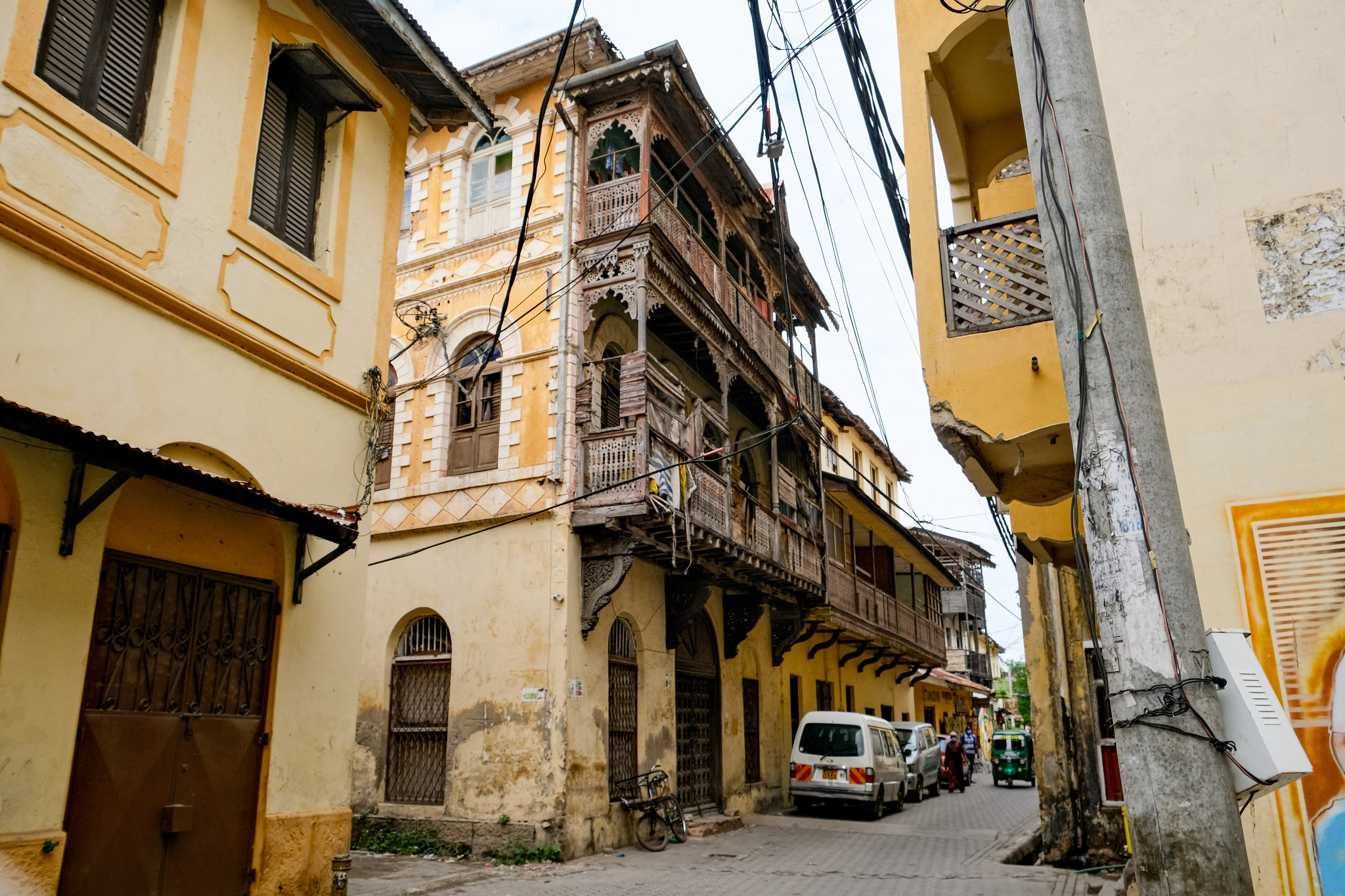
A new history of Mombasa shows how street food, colonial labor migration, and urban capitalism reshaped what—and how—Kenya eats.
Mombasa is a tapestry of rich history, vibrant culture, and renowned cuisine. The latter draws notably from Swahili, Indian, and Arab inspirations. Its famed gastronomy, displayed largely in the informal setting of street food, tells a charming story of the city’s evolution and its people. This is the setting that Devin Smart passionately illuminates in his 2025 book Preparing the Modern Meal: Urban Capitalism and Working-Class Food in Kenya’s Port City.
From the title, one could almost expect an account of the progression of the modern cuisine in Mombasa (with some few coastal recipes inside). However, the book is more: It is a rich elaboration of how colonization and labor migration radically shaped the Kenyan modern meal, and consequently how the resulting food culture became a key tool in the urbanization of the coastal town of Mombasa. Critically, the author aims to place food systems at the center of two of the dominant processes of modern world history: proletarianization and urbanization. Certainly, Smart contributes to the global story about how modern urban life changed the way people access, prepare, and consume food.
Fundamentally, the author explores how rural migrants—moving to Mombasa for work at the turn of and throughout the 20th century—adapted to urban working-class food systems. This required their shift from seasonal and self-sufficient food practices to reliance on a cash-based, commercialized food system. They then became market consumers dependent on cash to acquire their daily meal—a practice previously not indigenous to them. This transformation, driven by urban capitalism, consequently introduced new foods, altered meal routines—such as the midday meal which was spurred by the rise of street food—and also reshaped urban household dynamics, particularly gender roles in cooking.
Smart pays a great amount of attention to exploring Mombasa’s street food industry, from its origins in Mombasa town to its importance in shaping its political economy; so much so that it prompted enduring tensions between the street food vendors and the colonial and postcolonial state’s visions of modernity. Finally, he connects these historical developments to Mombasa’s present-day urban political economy (characterized by the tourism and hospitality industry), suburbanization in the neoliberal era, as well as Kenya’s continuing expansion of food retailing corporatization.
The centrality of the street food culture to Mombasa’s growth and political economy stands out, as well as its administration’s conflicting formal positions on the informal sector; a scenario that has always played out in Kenyan urban spaces. On this he writes: “Consequently, there was no resolution to the contradiction between the desire for a city without the informal economy and the reality that street food was essential to social reproduction.” Through such statements, he further brings out the tensions between proletarianization and urbanization.
Social reproduction, gender, and the lingering influence of colonialism and labor migration on Kenya’s cuisine emerge as intersecting themes. Intriguingly, the subsequent social and economic dynamics of street food labor birthed new gendered divisions in commercial kitchen labor, which was predominantly male. These new gendered structures have proved enduring across space and time.
Food systems were also altered by the colonial economy, which flattened the traditionally diverse and seasonally changing agrarian cuisine familiar to our pre- and early colonial-period ancestors; this was also due to the temporal regularity of capitalist supply chains that still dominate Kenyan food and its dialogues today.
Importantly, the author prompts readers to reconsider how historians have understood the history of taste in Africa. He disputes a common argument that “the sensation of fullness was prized above taste.” Through key evidence, he shows that African food was not in any way monotonous in taste but rather offered “pleasurable combinations of different smells, tastes, and textures.” He also reflects the influence of Africans on the cuisines of the Atlantic world, which shaped the cuisines of both the Americas and Afro-Eurasia. Not exempt from this effect, Mombasa became (and still is) a renowned center for novel flavors shaped by an Indian Ocean culture that drew from both coastal communities and the food ways that were opened up by up-country migrants.
I deeply appreciate Devin’s demonstration of how Mombasa’s street food vendors have been the biggest drivers of this impact. This corresponds with the research I have done in Nairobi, where primary data reveals street food as having a positive impact on the international image of Kenya, and consequently a powerful tool of Kenya’s public and culinary diplomacy. Yet beyond street food feeding the working masses within the tourism industry, I feel that Smart’s discussion could have been amplified by drawing a vital parallel between Mombasa’s street food vendors and their enrichment of the tourism economy, especially to support his argument that they form part of a crucial sector shaping Mombasa’s political economy.
As a labor chronicle of Mombasa’s informal economy, Devin does lay out (and well) a business chronology of Mombasa’s street food vendors. He acknowledges their history, struggles, aspirations, successes, and unexpected sway on governance and the politics of urbanization in Mombasa. This is a most commendable recognition given the significance of the street vending economy globally. Above providing the readers with the voice of individual street food vendors themselves, exploring the presence, development and views of street vendors’ associations in Mombasa would have given a deeper perspective into the capacity of their worker organizations; their activities geared towards addressing inequalities within and without the industry, and in pushing for inclusion in the city’s urban planning.
The author’s heartfelt appreciation for Mombasa and its proletariat, and, above all, the informal economy, is undeniably evident and praiseworthy. Through the extensive discussion of the informal street food industry, he clearly exhibits the tension between Africa’s “modern” needs versus wants. Smart’s work is a quiet yet sober protest, a call to decolonize Kenyan urban development, to appreciate potentials and diversities present in our urban spaces, and also to advocate for “a new labor history that accounts for the reality and importance of the large percentage of the African workers operating in the informal sector.”
Facts Only
Devin Smart is the author of Preparing the Modern Meal: Urban Capitalism and Working-Class Food in Kenya’s Port City, published in 2025
Mombasa is a city in Kenya known for its rich history, vibrant culture, and renowned cuisine
The cuisine in Mombasa has influences from Swahili, Indian, and Arab cultures
Street food plays a significant role in showcasing Mombasa’s gastronomy and telling the story of the city's evolution
Rural migrants moved to Mombasa for work at the turn of and throughout the 20th century
These rural migrants adapted to urban working-class food systems, shifting from seasonal and self-sufficient food practices to a cash-based, commercialized system
The transformation introduced new foods, altered meal routines, and reshaped urban household dynamics, particularly gender roles in cooking
Mombasa's street food industry has a long history dating back to its origins in Mombasa town
Street food vendors have been essential to social reproduction but have faced tensions with the colonial and postcolonial state's visions of modernity
Food systems were altered by the colonial economy, leading to the flattening of traditionally diverse agrarian cuisine
Executive Summary
Title: Cooking up the city
Devin Smart's book Preparing the Modern Meal: Urban Capitalism and Working-Class Food in Kenya’s Port City explores how colonization, labor migration, and urban capitalism shaped Mombasa's cuisine and food culture. The focus is on rural migrants' adaptation to urban working-class food systems, the rise of street food, and its impact on urban politics and gender roles. The book also discusses the tensions between formal policies regarding the informal sector and the essential role of street food vendors in Mombasa's growth and political economy.
Full Take
Smart's work provides a comprehensive account of how Mombasa's food culture has been shaped by colonization, labor migration, and urban capitalism. The book sheds light on the transformation rural migrants underwent when adapting to urban working-class food systems, the impact of street food on urban politics, and the enduring gender roles in cooking.
The author's focus on Mombasa's street food industry highlights its importance in shaping the city's political economy and the tensions that have arisen between street food vendors and the state's visions of modernity. Smart also challenges common assumptions about African cuisine, arguing that it was not monotonous but offered pleasurable combinations of different smells, tastes, and textures.
Smart's work invites readers to reconsider how historians have understood the history of taste in Africa. By emphasizing the role of Africans in shaping cuisines across the Atlantic world, Smart provides a fresh perspective on Mombasa's unique culinary landscape.
Questions for further inquiry: What are the current challenges faced by street food vendors in Mombasa? How have their associations evolved over time, and what impact have they had on addressing inequalities within and outside the industry? How can Mombasa's rich culinary heritage be leveraged for sustainable urban development and public diplomacy?
Sentinel — Human
The article appears to be written by a human. The text demonstrates variation in sentence length, personal voice, and stylistic fingerprint. Additionally, it lacks argumentative skeletons typically associated with synthetic content.