- ⁄
- Destinations
- ⁄
- USA
- ⁄
- Travel Tips
The ultimate USA Bucket List.
As the United States approaches its 250th anniversary, events examining and celebrating our history abound, but we’re focused firmly on the present and where a traveler should go today to see the absolute best this country has to offer. From national parks and gorgeous beaches to history trails and iconic landmarks, here is the best of what each of the 50 states (and Washington D.C.) has to offer.
And for even more of the best to see, do, and eat in each state, be sure to check out our Bucket List USA guidebook, available everywhere books are sold.
Edited by Amanda Sadlowski.
Montgomery’s Civil Rights History
WHERE: Alabama
Few places in the United States have done a better job of laying out the stakes of the civil rights movement than Montgomery, the city where the movement was born and a place that is still reckoning with its role in the slave trade and the era of slavery that followed. The Legacy Museum explores the Atlantic slave trade and enduring damage wrought by slavery, with exhibits focusing on lynching, racial segregation (“Jim Crow”) laws, and mass incarceration. The National Memorial for Peace and Justice documents and memorializes the thousands of lynchings that occurred since the Civil War through 1950. Finally, the Freedom Monument Sculpture Park honors the resilience and contributions of Black Americans through powerful sculptures and public art.
Denali National Park
WHERE: Alaska
America’s third-largest national park is also Alaska’s most visited attraction, and for good reason. The 6-million-acre park and preserve offers spectacular mountain views, amazing wildlife (including the “Big Five” of Alaska animals: the moose, grizzly bear, wolf, Dall sheep, and caribou), and unforgettable landscapes. The keystone is Denali itself (aka the Great One), whose peak measures in at 20,310 feet. It’s often hidden behind clouds—your odds of viewing it increase the farther you travel along the 92-mile park road. Flightseeing tours are offered from Healy, Talkeetna, and Denali Park; they get you up close to the mountain, and many even include a glacier walk.
Recommended Fodor’s Video
Grand Canyon National Park
WHERE: Arizona
It’s the big one, the bucket list topper, and what President Teddy Roosevelt called “the one great sight every American should see.” The Grand Canyon draws millions each year, to river raft, camp, ride a mule, take a ranger-led tour, and see wildlife, but most of all, to be awed at one heck of a canvas Mother Nature has crafted. The statistics—the canyon measures an average width of 10 miles, length of 277 river miles, and depth of 1 mile—don’t truly prepare you for that first impression.
Hot Springs National Park
WHERE: Arkansas
You haven’t really lived life to the fullest until you’ve soaked in the thermal waters of Hot Springs, melting your muscle aches away with soothing heat. The water here has been reputed to have medicinal properties for thousands of years, when Indigenous peoples came to the springs. Congress created what is now Hot Springs National Park in 1832, setting aside land for the first time as a recreation area. Nine historic bathhouses dating from the early 20th century recall the days when high-society types—and, during Prohibition, gangsters and other shady figures—strolled down these streets.
The Golden Gate Bridge
WHERE: California
With its simple but powerful Art Deco design, the 1.7-mile suspension bridge that connects San Francisco to Marin County ranks among the world’s most recognizable man-made structures. Drive or bike across to fulfill all your wildest California dreams, setting aside time to explore the many cool sites on both sides. That includes the 1,400-acre Presidio park and the wild hills of the Marin Headlands, which has several viewing areas with phenomenal skyline vistas.
Rocky Mountain National Park
WHERE: Colorado
With more than 350 miles of trails, 30 miles of the Continental Divide, and 77 peaks jutting above 12,000 feet—including Longs Peak, the 14,259-foot flat-top monarch of the Front Range—Rocky Mountain National Park abounds with spectacular adventures for hardcore mountaineers and incredible scenery for nature and wildlife lovers. Hike to high-alpine lakes, picnic in wide-open meadows of wildflowers, or just drive along Trail Ridge Road, viewing the abundant wildlife along the way. The gateway to the park’s East Entrance is charming Estes Park, a quintessential mountain town with an abundance of souvenir shops and eateries.
Mystic Seaport
WHERE: Connecticut
The largest maritime museum in the United States, Mystic Seaport encompasses 19 acres of indoor and outdoor exhibits, and includes a re-created New England coastal village, a working shipyard, and more than 2 million artifacts that provide a fascinating look at the area’s rich shipbuilding and seafaring heritage. In narrow streets and historic homes and buildings, craftspeople give demonstrations of open-hearth cooking, weaving, and other skills. The museum’s more than 500 vessels include the Charles W. Morgan, the last remaining wooden whaling ship afloat (which you can climb aboard to explore).
Rehoboth Beach
WHERE: Delaware
With its mile-long boardwalk featuring family-friendly attractions like the Funland Amusement Park, Rehoboth Beach is a beloved destination for families. It’s also been a gay-friendly getaway for years, drawing members of the LGBTQ+ community from Baltimore and Washington, D.C. The popular Dogfish Head Brewery has a brewpub here, and there are plenty of other food and drink options facing the beach and on nearby streets.
Walt Disney World
WHERE: Florida
The beloved characters of Magic Kingdom, the countries of EPCOT, the out-of-this-world Star Wars adventures at Hollywood Studios, and the live animals of Animal Kingdom make Disney World a favorite. A magical evening in Orlando should include fireworks after dinner in Cinderella’s Castle and a ride on Space Mountain, one of the world’s most imaginative roller coasters that takes you on a trip into the depths of outer space—in the dark.
Historic Savannah
WHERE: Georgia
Dripping with Southern charm, Savannah beckons with stately architecture, rich history, and a culinary scene that spans classic down-home cooking to James Beard Award nominees. This is the place to appreciate art in lauded museums, people-watch in flower-filled squares, and imagine the past as you walk under canopies of live oaks draped in Spanish moss in Forsyth Park. The SCAD Museum of Art, an architectural marvel that rose from the ruins of one of the oldest surviving railroad buildings in the United States, covers fashion and African American arts and culture.
Waikiki Beach
WHERE: Hawaii
Hawaii’s most famous 2-mile stretch of sand has an undeniable appeal, and it’s a must when you visit Oahu. Waikiki’s beach, capped at one end by the volcanic peak of Diamond Head, is gorgeous. You can visit historic palaces like the Moana Surfrider and the Royal Hawaiian, sip mai tais and nosh on pupu platters at a slew of waterfront restaurants, take surfing lessons or ride in an outrigger canoe, or curl up on a beach blanket with that someone special (and thousands of others) while you enjoy the sunshine and soft ocean breezes. Waikiki is known for its wealth of nightspots, including the majority of Hawaii’s LGBTQ+ hangouts.
Craters of the Moon National Monument and Preserve
WHERE: Idaho
Like the more famous calderas and geysers next door at Yellowstone National Park, much of Southern Idaho sits on a great volcanic rift. But the explosive activity here was much more recent: 2,000 years ago compared to the more than 600,000 for Yellowstone. The lava from these flows remains frozen in what was described by the presidential order that preserved them as a “weird and scenic landscape, peculiar to itself.” Today you can hike and camp in the more than 1,000 square miles of jet-black flows, crags, and caves that make up Craters of the Moon National Monument and Preserve. Life, of course, can find a foothold in even the most extreme environments, and in early to mid-June each year, dozens of species of wildflowers bloom throughout the preserve, drawing photographers and visitors from all over.
The Skydeck at Willis Tower
WHERE: Illinois
At 110 stories and 1,451 feet high, the tallest building in Chicago’s skyline—and third-tallest building in the Western Hemisphere—is the Willis Tower (formerly known as the Sears Tower). The tower mostly houses offices, but you can visit the Skydeck on the 103rd floor to take in a 360-degree view of the city and its architecture. If you’re feeling especially brave, go out onto the Ledge, an observation deck—the highest one in the United States—with a glass floor to walk out onto, and peer below. In addition to an unparalleled bird’s-eye view of Chicago, you’ll see three states besides Illinois from the Skydeck: Indiana, Wisconsin, and Michigan.
Indianapolis Motor Speedway
WHERE: Indiana
The Indianapolis 500, the largest one-day sporting event in the world, takes place at Indianapolis Motor Speedway at the end of May. But the 500 isn’t the only time to soak up the excitement of the race and learn about its history. Throughout the month of May, you can check out practices, qualifications, and concerts. You can even attend other races throughout the year. Visit the grounds for free on non-event days to take in the museum or a guided tour.
The Iowa State Fair
WHERE: Iowa
The Iowa State Fair is the biggest annual event in the state and one of the oldest and largest agricultural and industrial expositions in the United States. The annual event held over 11 days each August attracts more than a million people. Besides serious exhibits, it’s famous for serving more than 60 foods on a stick. There are the traditional favorites, like deep-fried desserts, corn dogs, and caramel apples, and more unusual options, including key lime pie, caprese salad, and peanut butter and jelly sandwiches. There are always great concerts in the grandstand, as well as tons of free entertainment.
Dodge City
WHERE: Kansas
Few towns evoke the Wild West like Dodge City, Kansas. Stroll along the wooden sidewalks of the Boot Hill Museum, a historic street that keeps the 1800s alive in the “Queen of Cowtowns.” Learn about the town’s unique characters like Wyatt Earp, Doc Holliday, and Bat Masterson. During summer, you can experience Dodge City’s heyday through historical reenactments, including the famous gunfight at the O.K. Corral. You’ve seen shootouts in the movies, but this one makes you want to kick up your heels with Miss Kitty and the Can-Can Girls in the Long Branch Saloon.
The Kentucky Bourbon Trail
WHERE: Kentucky
Kentucky, where bourbon was first commercially produced, still makes close to 95% of the world’s bourbon (and more than 2 million barrels a year!), making it the definitive home of the spirit. Visit the country’s top distilleries in Central Kentucky, a picturesque area full of rolling hills of the lush bluish grass that earns the state its nickname. Big-name distilleries include Maker’s Mark, Jim Beam, and Evan Williams, but just as worthy are exciting newcomers like Castle & Key and Black-owned distillery Fresh Bourbon Distillery.
The French Quarter
WHERE: Louisiana
New Orleans’s oldest neighborhood is visually stunning, with Creole cottages, Spanish colonial architecture, and cobblestoned streets steeped in legends of brothels and pirates, ghosts and fires, and more packed with activity than anywhere else in the city. You must take a romp down rowdy Bourbon Street at least once (perhaps with a to-go drink in hand which is famously legal in the city); stroll the French Market; window-shop the galleries and antiques stores on Royal Street; get your fortune told at Jackson Square overlooking iconic St. Louis Cathedral; and eat a po’boy or two.
Acadia National Park
WHERE: Maine
At 1,530 feet, Cadillac Mountain dominates New England’s only national park, Acadia, a rugged 49,000-acre tract of surf-pounded granite coastline and an interior graced by sculpted mountains, sheer cliffs, quiet ponds, and lush, deciduous forests. The park also has graceful stone bridges, miles of carriage roads, and a 27-mile Park Loop Road, which you can drive to Cadillac’s summit. But the most memorable way to access the summit is to hike to the top via the 4-mile round-trip North Ridge Trail.
Baltimore’s Inner Harbor
WHERE: Maryland
One of Baltimore’s most-visited destinations is the Inner Harbor, a waterfront neighborhood that’s just as popular with locals as it is with out-of-towners. The area was once known for its steel mills and shipyards, and today you can learn about its seafaring past while you board some of the centuries-old vessels, including a three-masted beauty called the USS Constellation. There are also world-class museums, waterfront restaurants, and spectacular views. The sprawling National Aquarium is home to more than 750 species of underwater creatures.
The Freedom Trail
WHERE: Massachusetts
Walk in the footsteps of America’s forefathers and pay tribute to renowned figures like Paul Revere, John Hancock, and Ben Franklin as you follow the red stripe marking the 2½-mile Freedom Trail through Boston’s most historic neighborhoods. The pedestrian trail connects 16 of the city’s most historic sites related to the American Revolution, laying out Boston’s colonial history on the very streets where some of the country’s most important events unfolded several hundred years ago. In one day, you can visit Faneuil Hall; the site of the incendiary Boston Massacre; and the Old North Church, where lanterns hung to signal Paul Revere on his thrilling midnight ride. Faneuil Hall adjoins Quincy Market, a good spot to grab a bite to eat, with its three block-long annexes filled with international food stalls and souvenirs.
Glacier National Park
WHERE: Montana
With its 1 million acres of glacier-carved peaks and valleys, pristine turquoise lakes and streams, and dense ancient forests, Glacier National Park—a designated UNESCO Biosphere Reserve and World Heritage site—is a true ecological wonder. It’s also one of the few national parks that still offers a true wilderness experience, with more than 700 miles of hiking trails and the chance to spot grizzly bears, cougars, gray wolves, moose, and bighorn sheep, among many other animals. The Going-to-the-Sun Road, one of the nation’s most beautiful drives, connects Lake McDonald on the western side of Glacier with St. Mary Lake on the east.
Mackinac Island
WHERE: Michigan
Located in Lake Huron in northern Michigan, Mackinac Island is a classic Midwest summertime destination. Cars aren’t allowed, so the island has a leisurely pace. Spend your days biking around the island, riding horses, eating fudge, or exploring Mackinac Island State Park. With striking limestone bluffs and Arch Rock (a natural rock bridge), the park is a beautiful spot to hit the beach, go hiking, kayaking, or sailing.
Voyageurs National Park
WHERE: Minnesota
Choose your own aquatic adventure at Voyageurs National Park, located at the very top of Minnesota near the Canadian border. With 84,000 acres of water, there’s no shortage of enjoyment on and offshore with options for boating, paddling, fishing, swimming, camping, stargazing, birding, hiking, and more. Named for the French Canadians who traveled the waterways to trade furs, the park has no roads but does have 30 lakes and 1,200 miles of canoe routes, which you can explore with your own vehicle or on a tour through Recreation.gov.
Clarkesdale and the Mississippi Blues Trail
WHERE: Mississippi
At an intersection of Highways 61 and 49 in Clarkesdale, marked by a blue pole affixed with electric guitars called the “Crossroads,” musician Robert Johnson sold his soul to the devil so he could play guitar. It’s no surprise then that this Mississippi Delta town is home to several iconic blues landmarks commemorating area musicians like Ike Turner, Muddy Waters, and Sam Cooke. Today’s Clarksdale is a mix of commemorative Blues Trail plaques, small museums, sleepy streets, “eat places” (casual traditional Delta restaurants), and a few still-active music joints. The Delta Blues Museum provides a deep understanding of the blues and is home to some impressive pieces of music history, including the remnants of the cabin where Muddy Waters lived when he was a sharecropper at Stovall Farms.
The Gateway Arch
WHERE: Missouri
The 630-foot-tall Gateway Arch broke several records the day it opened in 1965. The St. Louis landmark instantly became the world’s biggest arch, easily beating the 220-foot-tall Monumento a la Revolución in Mexico City. It’s the tallest monument in the Western Hemisphere, and the tallest building in Missouri. Once you reach the top via the four-minute tram ride, you’re treated to views that stretch up to 30 miles to the east and west. The Gateway Arch was built to celebrate Thomas Jefferson and his idea of Manifest Destiny, since St. Louis was a major point of departure for settlers headed west. Since the arch’s 50th anniversary, its story has broadened to include the Indigenous peoples who were displaced by westward expansion.
The Henry Doorly Zoo and Aquarium
WHERE: Nebraska
The 130-acre Henry Doorly Zoo in Omaha showcases animals and ecosystems from around the globe. It includes the world’s largest indoor desert representing vegetation and wildlife from deserts in the United States, Africa, and Australia, all contained within an 80,000-square-foot dome; America’s largest indoor rain forest and the jungle creatures that inhabit them, from monkeys and macaws to gibbons and hippopotamuses; and an outdoor orangutan forest with a 20-foot waterfall.
The Las Vegas Strip
WHERE: Nevada
A neon glow electrifies the 4.2 miles of 24/7 entertainment in the Las Vegas strip, the center of action for the 40 million people a year who come for glittering casinos, theaters, restaurants, rides, shows, shops, and everything over-the-top. The Strip disorients and delights; when you’re here, you’re all-in, and the “real world” seems far out. More than a dozen hotel-casinos are on the strip, including the MGM Grand, Caesars Palace, and the Bellagio. Professional football, hockey, and women’s basketball franchises now play on the Strip alongside big-name concert acts, but there are still resident performers of all kinds, including acrobats, magicians, and comedians.
Mount Washington
WHERE: New Hampshire
At 6,288 feet, Mt. Washington is a land of superlatives. It’s the tallest peak in the northeastern United States, and some of the world’s strongest winds, 231 mph, were recorded here in 1934. You can take a guided van tour, a drive, or a hike to the summit—a number of challenging trails circle the mountain and access other peaks in the adjoining Presidential Range. The drive to the top, along narrow, curving Mt. Washington Auto Road—which climbs 4,600 feet in about 7 miles—is truly memorable.
Liberty State Park
WHERE: New Jersey
The 1,212-acre Liberty State Park has one of the most spectacular views anywhere. Located along the mouth of the Hudson River in Jersey City, it offers unobstructed views of the Manhattan skyline, the Statue of Liberty, and Ellis Island. The waterfront walking paths through the park wind through the picnic areas, playgrounds, and moving memorials. On the western edge of the park is Liberty Science Center, which has plenty of hands-on exhibits that will keep kids occupied for hours. Oh, and any real NJ-er will tell you that the Statue of Liberty is technically in New Jersey. To get there or Ellis Island, take a ferry operated by Statue Cruises. They depart from Liberty State Park and usually are less crowded than their counterparts in New York City.
Santa Fe
WHERE: New Mexico
On an inclined plateau at the base of the Sangre de Cristo Mountains—at an elevation of 7,000 feet—Santa Fe is both the highest and oldest capital city in the country. Its streets brim with reminders of four centuries of Spanish and Mexican rule, and of the Pueblo cultures that have thrived in the area for many centuries. The town is perhaps best known for its adobe homes and art. Artists and writers—from Willa Cather to George R. R. Martin—have been drawn to the rugged beauty and dry air of Santa Fe for generations. Compact though it is, the so-called City Different contains an astounding trove of museums that celebrate its creative traditions, including the Georgia O’Keeffe Museum, Museum of International Folk Art, Museum of Indian Arts & Culture, and contemporary SITE Santa Fe.
Central Park
WHERE: New York
Upward of 42 million people visit New York City’s iconic Central Park every year, but with its 843 acres of wide-open spaces, you can usually find a spot all to yourself. Designed by Frederick Law Olmsted and Calvert Vaux in 1858, Central Park was created to give city dwellers lots of fresh air. The park is now home to major attractions including the Central Park Zoo, with more than 130 species of animals; Sheep Meadow and its sunbathers; and Conservatory Water and its regatta of model boats. Wollman Rink is a wintertime destination for ice-skaters while the open-air Delacorte Theater is the summertime home to Shakespeare in the Park.
Great Smoky Mountains National Park
WHERE: North Carolina
Great Smoky may be the most visited national park in the United States, but that doesn’t mean there’s no peace or wonder to be found. The park straddles the state line between North Carolina and Tennessee, and the Carolina side is far less visited than Gatlinburg and Pigeon Forge in Tennessee. The area provides boundless opportunities for off-the-beaten-path outdoor adventures such as hiking and fishing, and you will almost always spot elk in the evening and early morning, as well as wild turkeys, deer, and perhaps bears.
Theodore Roosevelt National Park
WHERE: North Dakota
Theodore Roosevelt first came to the Badlands in 1883 to hunt bison. He fell in love with the untamed landscape, and it inspired him to later create the U.S. Forest Service to protect wildlife on public lands. Today, part of Theodore Roosevelt National Park’s allure is its utter lack of people. Its size (110 square miles) and remote location make it one of the least visited—but most spectacular—national parks. Composed of three parts (a North Unit, South Unit, and Elkhorn Ranch Unit, where Roosevelt lived), this tranquil park is perfect for birding, wildlife viewing, hiking, camping, stargazing, and scenic drives.
Rock & Roll Hall of Fame
WHERE: Ohio
A must-visit for music fans, the Rock & Roll Hall of Fame in Cleveland is loaded with memorabilia, photographs, costumes, instruments, and much more from artists like Elvis Presley, Whitney Houston, and the Beatles. As you’d expect from a museum dedicated to music, the exhibits are packed with films, interactive kiosks, and videos, so you can watch and listen to iconic performances. The museum includes the main exhibit hall, which traces the beginnings and evolution of rock and roll, and the Hall of Fame level, with panels honoring each inductee. The architecture of the building itself is worth a look: designed by world-renowned architect I. M. Pei, it features pyramids and a tower and is meant to look like a record player from above.
Tulsa’s Historic Greenwood District
WHERE: Oklahoma
Known as “Black Wall Street” for the wealth flowing through the community, Greenwood was created by the African-American community in Tulsa in the early 1900s. Home to restaurants, hotels, movie theaters, and more, Greenwood was the site of a deadly racially motivated attack in 1921, when up to 300 people were killed and a staggering amount of homes and businesses were destroyed. Today, Greenwood is undergoing a resurgence, with a focus on community initiatives. Though much smaller today, the area is home to restaurants, stores, and more. Greenwood Rising tells the story of the Tulsa Race Massacre through powerful and moving exhibits, storytelling, and artifacts.
The Columbia River Gorge
WHERE: Oregon
Completed in 1922, the Historic Columbia River Highway was the first planned scenic road in the country built expressly for automotive sightseers. Serpentine U.S. 30 climbs to wooded bluffs, passes half a dozen waterfalls, and provides access to hiking trails leading to still more falls and gorgeous overlooks. Technically, it extends the entire 74-mile length of the beautiful Columbia Gorge, but much of that is along the modern interstate. It’s the 22-mile western segment that’s the real draw. The most famous attraction here is Multnomah Falls, a 620-foot-high double-decker torrent, the second-highest year-round waterfall in the nation.
Independence National Historic Park
WHERE: Pennsylvania
Much of America’s origin story can be traced back to a few blocks in downtown Philadelphia now known as Independence National Historical Park, home to Independence Hall and the Liberty Bell. They may not have the same instant name recognition, but other attractions like the Second Bank of the United States, Congress Hall, and the National Constitution Center are all well worth a visit. Throughout the area you’ll find actors dressed in 18th-century garb, horse-drawn carriages, and cobblestone streets—the pull of history is undeniable.
Newport Mansions
WHERE: Rhode Island
The Gilded Age mansions of Bellevue Avenue, including the likes of The Breakers, Marble House, and The Elms, are the go-to attraction for many Newport visitors. These ornately detailed late 19th-century homes, designed with a determined one-upmanship by the very wealthy, are almost obscenely grand. Their owners—Vanderbilts, Astors, Belmonts, and other budding aristocrats who made the city their playground for a mere six to eight summer weeks each year—helped establish the best young American architects and precipitated the arrival of the New York Yacht Club, which turned Newport into one of the sailing capitals of the world. See the backyards of the mansions as well as dramatic views of Easton’s Beach and Narragansett Bay while strolling along the 3½-mile Cliff Walk.
Historic Downtown Charleston
WHERE: South Carolina
In Charleston, dozens of church steeples punctuate the low skyline, and horse-drawn carriages pass centuries-old mansions, their stately salons offering a crystal-laden and parquet-floored version of Southern comfort. Outside, magnolia-filled gardens overflow with carefully tended heirloom plants. The city may resemble a 19th-century etching come to life, but look closer and you’ll see that block after block of old structures have been restored, making this one of the South’s best-preserved cities. Get a great city introduction with a history, food, or ghost tour. You’ll learn about Charleston’s layers, its Revolutionary and Civil War history, and get the lay of the land, including East Bay Street’s famous Rainbow Row, with 13 pastel row houses built between 1748 and 1845.
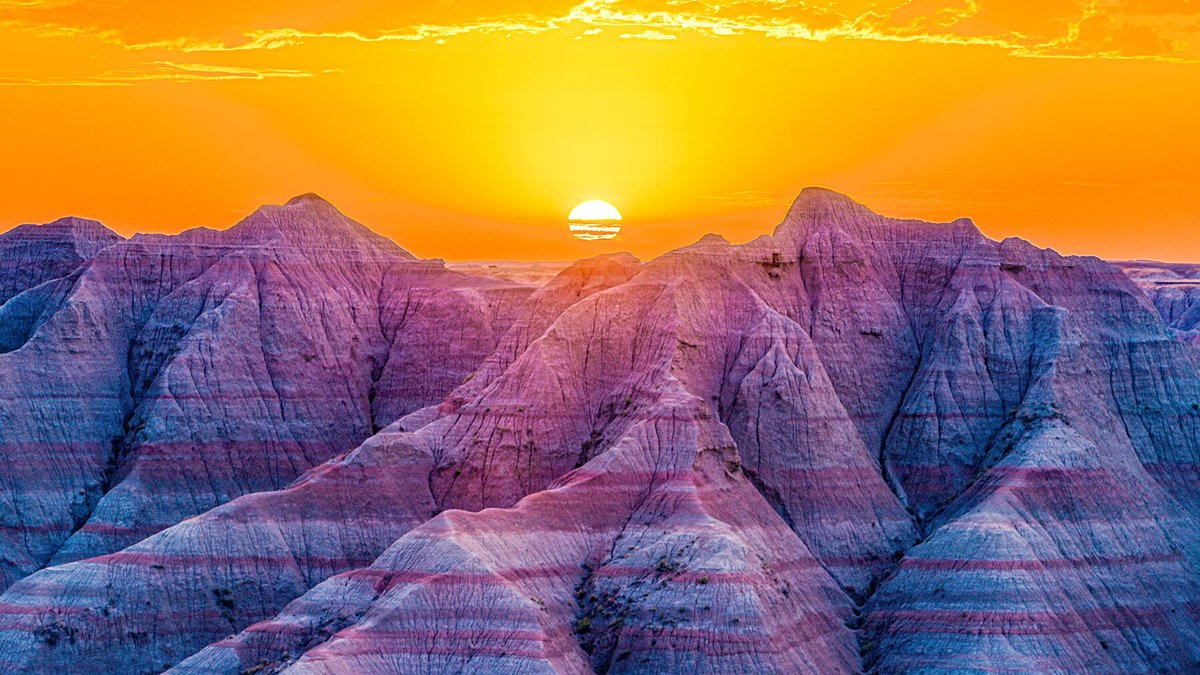
Badlands National Park
WHERE: South Dakota
Until the moon opens up to tourism, a hike through the stunning landscape of Badlands National Park is about as close as you can get to taking “one small step for man, one giant leap for mankind.” Because of the park’s open hike policy, visitors are free to roam the entire 379 square miles of protected mixed-grass prairie. It’s a great way to examine the rugged terrain that holds some of the best fossil beds anywhere in the world. Besides remnants of South Dakota’s prehistoric past, the park’s current residents include bighorn sheep, bison, prairie dogs, pronghorn antelope, and black-footed ferrets.
Nashville’s Honky Tonk Highway
WHERE: Tennessee
The crown jewel of Nashville entertainment and a place that really embodies the city’s soul is Lower Broadway, located right in the middle of downtown. This stretch of road is called the Honky Tonk Highway, where live country and rock music pour out of nearly every window while beer flows out of every tap. Surrounding Broadway is a growing fine-arts scene with multiple galleries and plenty of restaurants cooking up Southern food (including the city’s must-try Nashville hot chicken). Just a few blocks away are world-class museums and the symphony, not to mention the famous Ryman Auditorium.
The Alamo
WHERE: Texas
An icon of Texas freedom fighting, this mission church turned military fort in San Antonio is the most celebrated building in Texas history. In 1836, Texas lost a major battle here against Mexico, and all inside died at the hands of Santa Anna’s troops. Those slain included James Bowie, William B. Travis, and Davy Crockett. The defeat at the Alamo spurred Texans fighting in future battles for their independence to make sure they did not suffer the same fate. “Remember the Alamo” became the battle cry at San Jacinto, where Texas won its independence from Mexico with Sam Houston leading the charge.
Zion National Park
WHERE: Utah
The walls of Zion Canyon soar more than 2,000 feet above the valley below, but it’s the character, not the size, of the sandstone forms that defines the park’s splendor. Throughout the park, fantastically colored bands of limestone, sandstone, and lava in the strata point to the distant past. Stripes and spots of greenery high in the cliff walls create a “hanging garden” effect, and invariably indicate the presence of water seepage or a spring. Erosion has left behind a collection of domes, fins, and blocky massifs bearing the names and likenesses of cathedrals and temples, prophets and angels. Trails lead deep into side canyons and up narrow ledges to waterfalls, serene spring-fed pools, and shaded spots.
Stowe Mountain Resort
WHERE: Vermont
The name of the village is Stowe and the name of the 4,393-foot mountain is Mt. Mansfield—but to generations of winter sports enthusiasts, it’s all just plain “Stowe.” The area’s mystique attracts as many serious skiers as social ones. Stowe is a giant among eastern ski mountains thanks to its intimidating expert runs, but riders of all abilities enjoy the long, satisfying runs from the summit. Improved snowmaking capacity, new lifts, and free shuttle buses that gather skiers along Mountain Road have made it all much more convenient. Yet the traditions remain, like the Winter Carnival in January and the Sugar Slalom in April.
Shenandoah National Park
WHERE: Virginia
Shenandoah National Park may look like just a narrow stretch on the map, winding for 70 miles through the Blue Ridge Mountains, but it’s one of Virginia’s most stunning natural treasures. The park spans over 200,000 acres and is split down the middle by Skyline Drive, a 105-mile scenic route that’s often ranked among the most beautiful road trips in the United States. Along the way, you might spot bears, deer, and other wildlife crossing the road, so it’s worth taking it slow and soaking in the views. For hikers, adventure is never far, as some of the park’s 500 miles of trails (many part of the Appalachian Trail) are just steps from the road, leading to breathtaking overlooks and peaceful forest paths.
Mount Rainier National Park
WHERE: Washington
Some say Mt. Rainier is the most magical mountain in America. At 14,411 feet, it is a popular peak for climbing, with close to 10,000 attempts per year—nearly half of which are successful. But this land of superlatives also includes about 35 square miles of glaciers and snowfields, more than 100 species of wildflowers that bloom in the park’s high meadows all summer, and absolutely dazzling hiking along 260 miles of trails through old-growth forest, river valleys, lakes, waterfalls, and rugged ridges.
The National Mall
WHERE: Washington, D.C.
Fondly known as “America’s front yard,” Washington, D.C.’s National Mall is a 2-mile-long green expanse in the heart of the city. Bordered by the U.S. Capitol to the east and the Lincoln Memorial to the west, it’s home to the country’s most iconic monuments and memorials, including the Washington Monument, Vietnam Veterans Memorial, Korean War Veterans Memorial, World War I Memorial, and World War II Memorial. Park rangers are often on hand to share insights, and many of the Smithsonian museums line its edges east of 14th Street. The top of the Washington Monument is perhaps the best, most breathtaking place to see the city and get a good idea of its layout.
New River Gorge National Park and Preserve
WHERE: West Virginia
One of the country’s newest national parks, West Virginia’s New River Gorge runs through a particularly gorgeous stretch of the Appalachian Mountains. The park includes 70,000 acres of land along the New River, which, contrary to its name, is one of the country’s oldest rivers. To take it all in, be sure to visit Grandview Visitor Center, situated 1,400 feet above the river. Already one of the most popular climbing areas in the country, New River Gorge has sheer sandstone cliffs that provide a challenge for even pro climbers.
Door County
WHERE: Wisconsin
Door County, the long, narrow peninsula that juts out from Green Bay into Lake Michigan, is a year-round destination for exploring the outdoors, whether that’s hiking to take in the foliage at Peninsula State Park or visiting beaches (and quaint ice-cream shops) during the summer. The small towns that dot the peninsula, like Sister Bay and Ephraim, each have their own feel, and there’s a growing food and drink scene led by places like Thyme and Island Orchard Cider.
Yellowstone National Park
WHERE: Wyoming
The country’s first designated national park, the 2.2-million-acre Yellowstone National Park is home to more geysers and hot springs than any other place on earth with about 10,000 hydrothermal features, including active geysers like Old Faithful and many far less famous gushers. More than 1,000 miles of trails offer plenty of opportunities to see (from a mandatory distance away) bison, bighorn sheep, elk, grizzly and black bears, moose, wolves, pronghorn, and trumpeter swans; wildlife is everywhere here, especially in the less-trafficked parts of the park. You can reach Grand Prismatic Spring, Yellowstone’s largest hot spring (third-largest in the world), by following a ⅓-mile boardwalk loop.