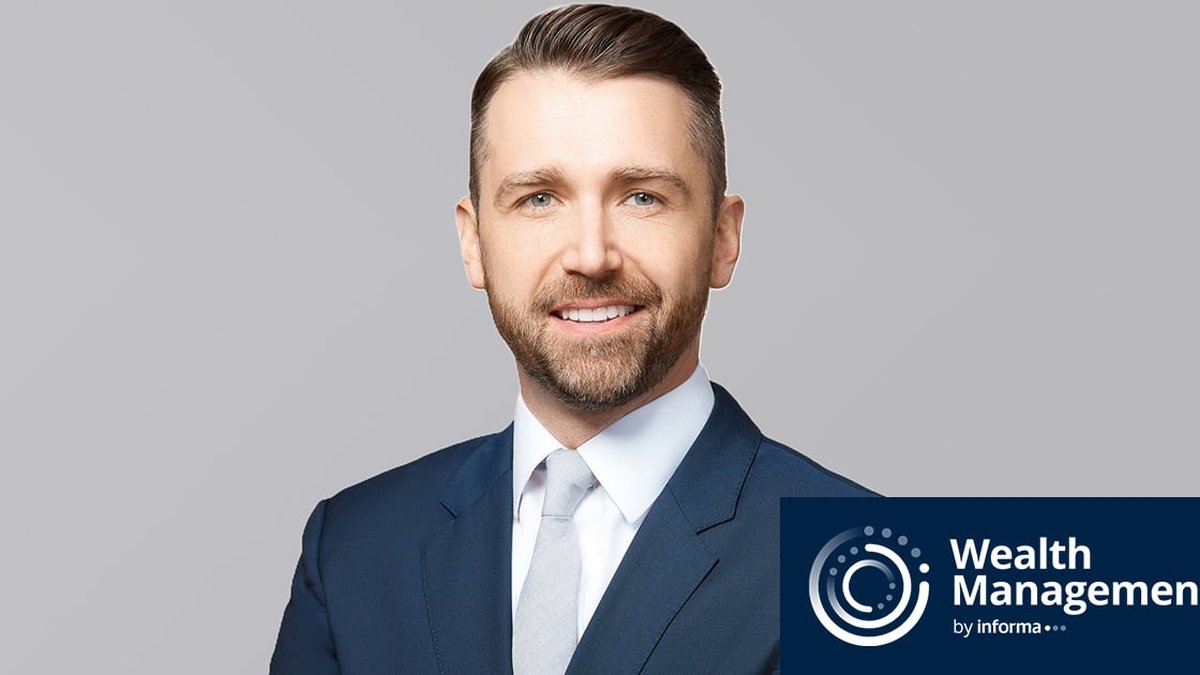
The founder and CIO of SGH Wealth Management talks about market timing, the role of psychology in investing and the best times to get alpha.
When SGH Wealth Management, a Lathrup Village, Mich.-based independent RIA with $617 million in AUM, got its start in 2005, its main clientele were executives from Detroit's auto-manufacturing companies. Since then, the firm has expanded to include business owners and private equity executives, with its bread-and-butter clients being sophisticated high-net-worth investors who are at or nearing retirement—the 60-plus-year-olds who suddenly discover they would like the help of a financial advisor to navigate a new phase of life.
With that in mind, Sam Huszczo, the firm’s founder, is very aware of how market timing will impact SGH clients’ net worth. A traditional downturn—the kind the U.S. market hasn’t seen in a while, Huszczo notes—lasts approximately 2 1/2 years. SGH wants to ensure that the holdings in its clients’ portfolios will allow them to weather that period without having to sell stocks at a loss and possibly buy discounted assets.
Wealth Management recently spoke to Huszczo about the unique needs of retirement-age clients, how SGH tries to avoid making emotional decisions during periods of market stress, and his views on whether alternatives have a place in retail investors’ portfolios.
This Q&A has been edited for length, style and clarity.
Wealth Management: Can you describe your firm’s typical client to me—what is their average net worth, what goals are they most focused on when it comes to their investments?
Sam Huszczo: Age-wise, our average client is around 63 years old. We are generally catering to people who are two years away from retirement or recently retired. Most of the time, we take over accounts not from other firms, but from people who are self-directed investors. A lot of people find that during the accumulation phase, they can figure it out on their own; there are a lot of resources out there. But once you turn that switch into having it become an income-producing portfolio, it’s much higher stakes. You don’t have contributions helping to [temper] down the waves in market downturns.
Also, I think tax planning is the biggest gap in most retail investors’ wealth management and financial planning. That’s where we engage people.
Our sweet spot, net worth-wise, is $3 (million) to $10 million. We are in Detroit, so the business was founded on [serving] automotive executives. But we’ve since expanded out of that. Our staples today are former business owners. We partner with private equity companies, with M&A people, and we are a part of the process when a business owner sells their business to help them pick up the pieces from there. That’s one of our key areas of focus in terms of clients. So, we are very well-versed in taking those types of financial projections, turning them into easy-to-digest plans, so they understand the lifestyle that they have on the back end.
WM: With self-directed investors who come to you, what usually changes their minds about needing a financial advisor?
SH: One common thing is they are about to have to pay required minimum distributions, and tax planning becomes more fluid once their income turns off. There was a recent study that showed 70% of retirees don’t believe they have a proper tax planning strategy.
From a pure investment standpoint, it’s higher stakes. Once they don’t have time on their side, if there is a 20% market downturn and they are taking 5% off their asset base without a proper income-producing and distribution strategy, that could have a bigger net impact on their accounts than just a 25% loss. That can hurt things for years to come. So, a lot of people who feel comfortable doing it [themselves] when they’ve got time on their side, all of a sudden [find] time is year to year, and they would prefer to have a professional in place.
WM: How would you describe your investment philosophy in a few sentences?
SH: No. 1 in being an RIA instead of one of the big model portfolio players is that it allows us to customize our models to people’s goals. So, there is no correct allocation in our eyes—it has to be in the context of the client’s goals, risk tolerance, taxes and spending needs.
This industry is always chasing the next shiny object. It’s always looking for that silver bullet product. I just don’t believe there ever will be or ever has been that product, and I’d also argue that if it existed, we’d all be out of a job because everybody would just use it.
I am strong in my conviction that behavior, especially behavior and adaptability in markets’ extreme moments, are the way that you outperform the most. One thing I find fascinating is that Peter Lynch, one of the best mutual fund managers ever, averaged 29% a year for 13 years. But the average investor in his fund lost money. What that tells you is that you can have a great product—the product wasn’t the problem, the behavior was. People got in and out of it at the wrong time and didn’t make money because of it.
Overall, [our investing philosophy] is a blend of simplicity and sophistication. We want simplicity so that when a market does have a big downturn, we want to be able to move when everybody else is frozen. So, that’s where we pre-plan all these trades. Obviously, we do factor-based investing, value vs. growth, but you’ve got to do something that’s against the grain, and this push to just chase the shiny object gets people to all do the exact same thing. The sophistication of factor-based investing gives us more than one way to win.
WM: Can you give us a sense of the typical asset ranges within your clients’ portfolios?
SH: How we approach it is this: the average bear market to get back to even is roughly 21 to 30 months. The goal that we are trying to customize for clients is “How do we ensure that if that full cycle recovery happens, that we are never putting ourselves in a position to have to sell things at a loss?” What we want is at least enough conservative assets to withstand a real bear market, not the kind we’ve recently seen with a V-shaped recovery, for 2 1/2 years without being forced to sell stocks at a loss. That’s mainly because then we can be opportunistic and way more like a shark taking advantage of a big market downturn.
If the markets go down 30%, it will likely be because some of these really sought-after stocks, like Nvidia, went down 40% or 50%. We still believe in the future of those stocks over the next 10 years. We just would prefer to buy them at a cheaper price than today.
But let’s say somebody needed 5% to fund their spending. We’d need to know that we have at least 40% to 50% of their portfolio in a bond-type position to be able to fund that need and allow the stocks to fully recover. Then we can do a rebalance, re-fund the cash position and continue to move forward. So, it’s not so much a static percentage. That’s what the big-box model portfolios do. For us, it’s: “Let’s dial in to the exact spending needs you have to handle a full bear market cycle, and then maybe a little bit more to be opportunistic and create a buffer.”
WM: On the equities side, do you have some international allocations?
SH: We are diversified. Diversification means you always have something available to be opportunistic with, so I believe in that. I would say we have an underweight compared to traditional international holdings, but we do have a holding.
I would also make the point that foreign investors now own roughly 18% to 20% of the U.S. equity market, which is near record highs, and S&P 500 companies are global. They get most of their revenue worldwide. So, with the international world being so dependent on the U.S. market and then U.S. stocks doing business globally, there is a lot of bleedover in that stuff. The difficulty of being a great international investor is that you have to account for government changes, for politics, you have to account for currency. There are just so many factors.
We just wouldn’t bet against the U.S. stocks. From a valuation perspective, Europe is interesting. That said, they don’t have huge tech holdings. We believe if you have a long-term strategy, you need to have some money in tech. So, regardless of valuations, I do believe that an overweight in the U.S. still makes the most sense.
WM: From your previous interviews, we know you are not a fan of private credit allocations for retail investors. Do you feel the same way about all alternative assets?
SH: Private credit, I am certainly not high on. But private equity obviously has a place in the ecosystem. It’s just that we haven’t seen a prolonged down market. I would argue a short, intense down market is easier to handle than a shallow, long down market. A shallow, long down market tests your endurance, and I don’t think that in this short attention span age we live in, that people have a lot of endurance anymore.
The negatives of marking to market, meaning you can’t get your money when you want it, really magnify when there is a prolonged market downturn. I just don’t think that everybody can hold to that. We are 100% ETFs. The reason we love ETFs is that they tell you exactly what you own, you know exactly what you are paying, they don’t bury stuff in fine print. It’s a straightforward investment vehicle, and that creates trust.
If we are talking about privates in an ETF, which is the new shiny object, to me it’s like, at one point, Colgate made lasagna. It’s not innovation, it’s just something new to chase the shiny object.
The only thing I would say for private equity, small-cap stocks as a factor haven’t held their weight in recent years. In 2026, that’s different. But it’s this thing, where SpaceX isn’t going public until it’s a mega cap. Historically, small caps may have outperformed because companies were traditionally going public at a smaller point. And then, you make the most money in that area when a stock goes from being a small-cap to a mid-cap. If the trend today is that companies don’t even go public until becoming a large cap, you don’t get the run-up. So, I would say, potentially, and I wouldn’t run with this, private equity could be kind of a replacement to that small-cap factor, given how the markets are changing.
But all finance people are creative communicators too. This whole “democratization” thing sounds so altruistic. To me, that industry has run out of institutional investors, and they are making a desperate reach to get retail money. And the problem with retail is that retail people want their money when they want it.
When you work for wealthy people, they like feeling like they are getting exclusive investments, and private equity feels exclusive. It’s easier to sell to people, with their blind spots. That does not make it a better product.
WM: Do you have any allocations to digital assets, including bitcoin ETFs? How do you feel about that asset allocation?
SH: It’s a hard thing to value. With a publicly-traded stock, we can analyze it in multiple ways that might give us multiple ways we could win. I don’t like investing in things that only have a singular reason why they could outperform. Bitcoin is just pure psychology. There is nothing to point toward that says, “This is a fundamental reason why we believe this is the next price target for it.”
On the flip side, I think some people get far too caught up in the math and fool themselves into thinking that stock market investing is all math. Stock market investing is not all math; it’s psychology as well. It’s just not purely psychology, and there are ways that we can push the chips in our favor with financial analysis.
WM: How do you decide which ETF issuers you feel comfortable working with?
SH: It’s highly dependent on the factor we are trying to squeeze. You take momentum as a factor. There are a hundred different ways to do momentum. Within that, you have to figure out the exact style of momentum, what their definition of quality is. All these places say they have a quality screen, but that’s pretty opaque. So, you have to do a lot of due diligence to understand what their definition of quality is.
Another thing we lean on a lot are companies that do stock buybacks, and the timeframe [for that] is very important as well. Did they do their highest amount 12 months ago, six months ago, currently?
Cost obviously is a big one for us. We try to stay on the lowest end of the expense ratios.
And then market value. We are not going to be day traders. If your investments don’t get off norms, you don’t have any alpha to seize. We are not trying to take on a ton more risk than everybody else, but when that market downturn happens, that’s when we are placing most of our trades. So, market breadth and market volume is really important to have tight spreads in moments when people are disagreeing on what the value of these things is. So, it does generally tilt toward the bigger companies—Invesco, Dimensional, Vanguard, iShares, WisdomTree.
WM: You’ve talked about the importance of tax management with your client base. What tax-saving strategies are you using for your clients?
SH: We certainly advise on tax-loss harvesting. But also, our philosophy is that investment strategy should trump tax strategy. If there is a good trade to make, we’ve got to put that first, even if it does have tax implications. If you are paying 15% a gain, a 5% swing in the markets could have a bigger impact on your net worth than trying to micro-dice the tax planning stuff.
The biggest element of tax planning we do is help people in retirement with their RMD strategies. We encourage people to look at Roth conversions and other vehicles similar to that in the earlier years of retirement. We think the biggest window is whenever you retire until age 65—if you can [do it then] with a very efficient plan, it can save you tons of money on the back end.
WM: When you look at the investment landscape today, what are you most worried about when it comes to your clients’ portfolios?
SH: We are not as overvalued as other timeframes in history. The problem is that we are so highly dependent on AI today. If you remember the 90s, tech was down, but tech wasn’t the biggest part of the S&P 500 and Nasdaq back then. Today, everything touches AI. If it has a hiccup, it will impact everything.
The biggest risk to the economy today is the increase in public debt. Fifty percent of new issuances today are AI-related, and another 40% of junk bond issuances are AI-related. One wrinkle within that, too, is when we printed all that money back in 2020, most of that was bought by central banks and institutions. Those are [investors] that have a long time horizon.
Who’s been buying this public debt? It’s been investors, hedge funds and others who are much shorter-term thinkers. They are mandated to make returns every single year. If something doesn’t work, they are going to cut bait at a much faster clip. So, the high concentration, the high dependency on AI and knowing that this really big increase in public debt is bought by people who could change their minds much more quickly, it creates a world that could shift much faster than it did in maybe other, worse [from a valuation standpoint] times in history. Maybe the cut won’t be as deep. However, the velocity of how the cut happens could turn on a dime much faster than people are prepared for.
WM: Where do you see the biggest investment opportunities?
SH: I’d probably go back to those other 493 stocks [outside the Magnificent Seven]. From a risk/return standpoint, they are going to be the ones that benefit from AI moving forward, and they are less risky too.
This is a pivot, but I always think the highest conviction investment is optionality. Can you make your portfolio durable enough in the next downturn to take advantage of lower prices? Because that’s really the only timeframe when you are going to outperform the markets—when things are extreme. In the extreme moments, when people are in group think mode, and are either fearful or greedy, and you can do slightly the opposite of them, that’s where behavior is the true alpha.
Sentinel — Human
The text reads like an interview where deep, specific professional experience has shaped the narrative, demonstrating strong personal philosophy rather than broad, synthesized reporting.