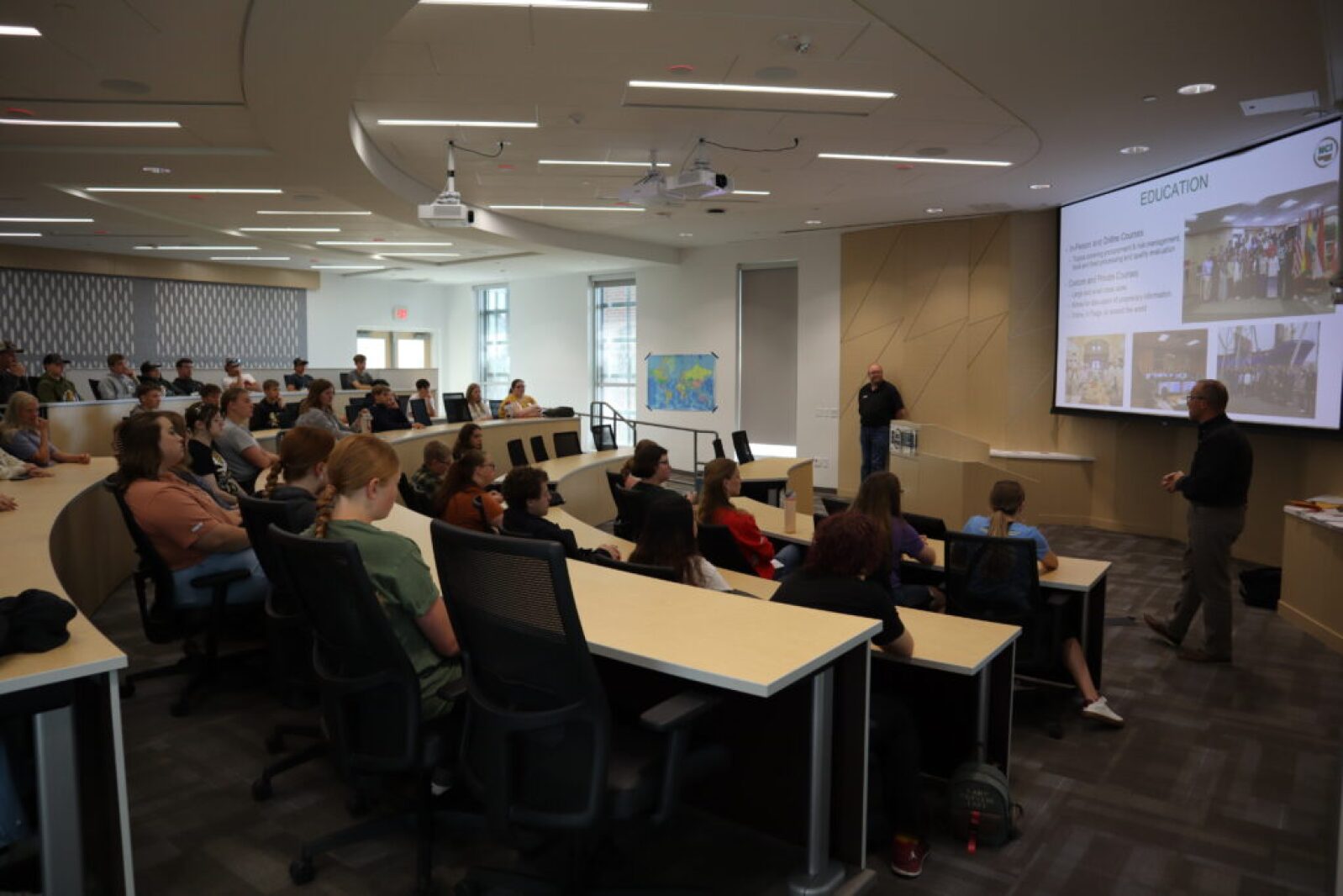
FARGO, N.D. — A growing need for the next generation of agriculture professionals is driving a summer program at North Dakota State University, designed to show students just how broad the industry has become.
The Northern Crops Institute is preparing to host its fourth annual Summer Ag Academy from June 22-26 in Fargo, offering high school students a hands-on introduction to careers in food science, animal agriculture, global trade and ag technology.
ADVERTISEMENT
The five-day program is free for students, with housing, meals and transportation covered through industry sponsorship.
Program organizers say the academy was created in response to workforce concerns across agriculture.
“(The Summer Ag Academy) came out of basically a need expressed by the industry where they’re just not seeing enough people coming up to replace the folks that they have,” said Casey Peterson, program development manager with the Northern Crops Institute.
The academy targets students currently in grades 9-11 and is open to those with or without an agricultural background.
Peterson said one of the biggest challenges is overcoming outdated perceptions of the industry.
“Most of them don’t know about these careers, and they think of agriculture as farming or ranching,” he said. “All of these careers are connected to agriculture.”
The program is designed to broaden that understanding by exposing students to roles across the food system — from product development to international markets.
ADVERTISEMENT
Participants will choose one of four tracks for the week: food science, animal science, international trade or agricultural technology.
Students in the food science track will work in Northern Crops Institute laboratories developing food products and learning how items reach grocery shelves.
The animal science track focuses on livestock nutrition and feed systems, while the international trade track explores how crops produced in the Upper Midwest are marketed globally. The ag technology track introduces tools such as drones, sensors and robotics that are increasingly used in modern farming.
The academy blends classroom instruction with hands-on experiences, facility tours and interaction with industry professionals. Students spend part of their time in focused track sessions and part in shared programming across disciplines.
“They do kind of a deep dive in their track, and we do some general sessions together,” Peterson said.
The program can accommodate up to 60 students, or about 15 per track. While most participants come from North Dakota, Minnesota, South Dakota and Montana, interest is expanding.
“Already this year, we've got students from Arizona, California, Texas on the list,” Peterson said.
ADVERTISEMENT
Industry-backed program
The academy is funded entirely by sponsors, including farm organizations, universities, ag lenders and agribusiness companies.
Supporters include groups such as the North Dakota Farmers Union, Compeer Financial, AgCountry Farm Credit Services and several universities and commodity organizations.
Peterson said industry involvement is critical not only to fund the program but to connect students with real-world career paths.
“It’s really anybody that’s connected to agriculture,” he said of potential sponsors.
Program leaders are continuing to seek additional sponsors to support future academies.
Organizers say introducing students to agriculture careers early is key to building the workforce needed across the industry.
“If they’re not wanting to stay on the farm or ranch, we try to show them how they can connect,” Peterson said. “Just the whole variety of jobs that there are in agriculture.”
ADVERTISEMENT
Applications for the 2026 Summer Ag Academy are now open , as well as sponsorship opportunity.
Facts Only
* The Northern Crops Institute is hosting the Summer Ag Academy.
* The program runs June 22-26 in Fargo, North Dakota.
* The program is for high school students in grades 9-11.
* The program offers four tracks: food science, animal science, international trade, and agricultural technology.
* The program is free, covering housing, meals, and transportation.
* Industry sponsorship funds the program.
* The academy was created in response to workforce concerns in agriculture.
* One of the goals is to combat misconceptions about agricultural careers.
* The program accommodates up to 60 students.
* Students will participate in focused track sessions and shared programming.
* The program has seen interest from students outside of North Dakota, Minnesota, South Dakota, and Montana.
* Applications for the 2026 Summer Ag Academy are open, along with sponsorship opportunities.
Executive Summary
Full Take
The Summer Ag Academy represents a strategic intervention – a carefully crafted initiative designed to plug a critical gap in the agricultural workforce. It's a sophisticated application of the “motte-and-bailey” fallacy, presenting a readily understandable problem (lack of agricultural talent) and offering a solution (a five-day academy) without fully interrogating the deeper systemic issues driving the shortage – issues like declining rural populations, consolidation of farms, and the alienation of younger generations from agriculture. The framing of the problem as simply “not enough people” is a deliberate simplification, avoiding a confrontation with the broader narrative surrounding the industrialization and increasingly capital-intensive nature of modern farming. The program's success hinges on the implicit assumption that simply exposing students to a wider range of agricultural careers will magically transform their perceptions – a rather naive projection given the deeply ingrained cultural and economic forces shaping attitudes.
Furthermore, the reliance on industry sponsorship raises questions about potential bias. While ostensibly a neutral educational experience, the program's funding model creates a dependency on agribusiness, which inherently has a vested interest in maintaining the status quo. This pattern echoes the broader issue of corporate influence in education, where narratives are often shaped to align with the financial interests of dominant players. The expansion of student interest from Arizona, California, and Texas, while impressive, could be interpreted as a sign of a broader disconnect – a migration of talent away from the core agricultural regions, potentially masking underlying structural problems. The ‘bridge questions’ posed at the end – “What perspectives are missing?” and “What would change your mind?” – are effectively a rhetorical device, designed to invite confirmation bias rather than genuine critical engagement. The academy is operating within a carefully constructed system of distraction, gently redirecting attention to a specific solution while obfuscating the more complex underlying causes.
Patterns detected: ARC-0043 Motte-and-Bailey, ARC-0024 Ambiguity, ARC-0018 False Framing.
Sentinel — Likely Human
This article reports on a summer agricultural academy designed to broaden students’ understanding of careers within the industry. The reporting style is descriptive and balanced, presenting the program's objectives and funding sources without apparent artificial constraints.