The industry shifts focus toward agentic AI and sovereign infrastructure, according to the GSMA
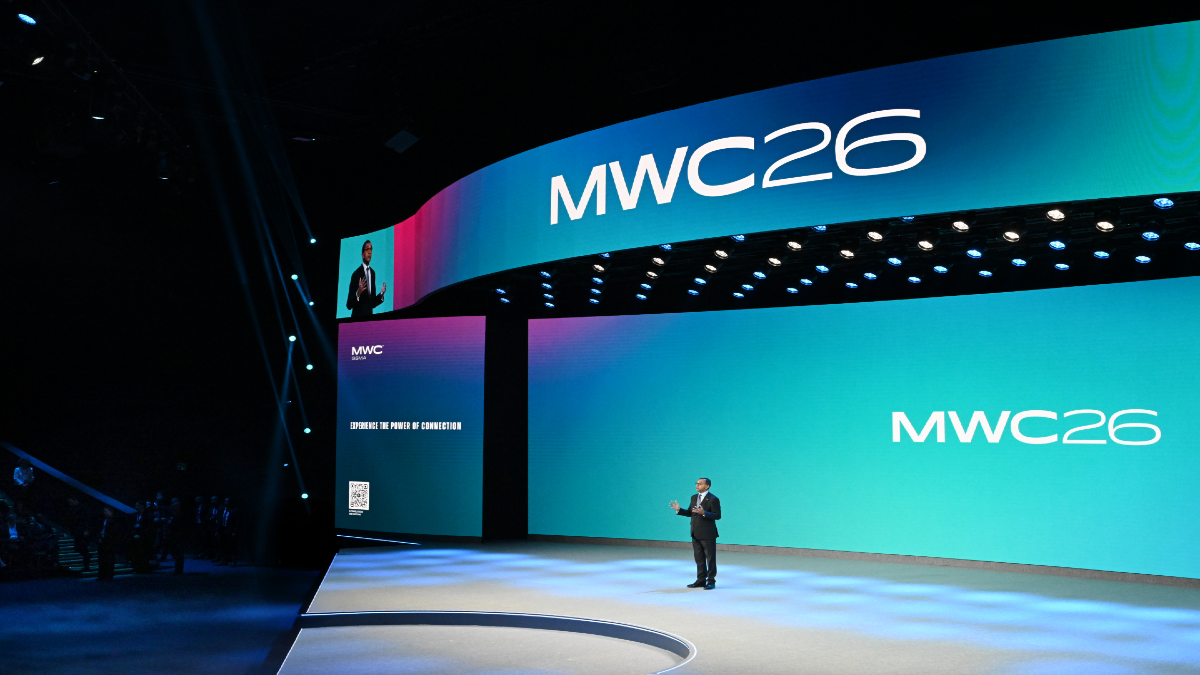
MWC 2026 was packed with AI messaging, which is no surprise. This time around however, things seem to be shifting a little — from concept to something a little more concrete. In a conversation with RCR Wireless Principal Analyst Sean Kinney, GSMA Intelligence Head Peter Jarich painted a picture of an industry that’s finally crossed over from the “art of the possible” to the “art of the practical.” The way Jarich sees it, the AI conversation at MWC has crystallized into three distinct lanes — agentic AI, sovereign AI, and AI-RAN. The danger, as he notes, is that the industry is pouring its energy into the flashiest thing — AI-RAN — while neglecting the stuff that’s already generating real returns, like agentic AI, AI applied to core network operations, and sovereign AI deployments.
Agentic AI moves from concept to deployment
Only a year ago, the telecom industry’s take on AI agents was, generously, aspirational. Jarich recalled how the conversation went back then. “You would hear some tech execs describe AI agents like drunk interns and it’s sort of you know, does it show up? Yes or no, maybe. If it does show up, do you really know what it’s doing? Does it know what it’s doing? Can it tell you what it’s doing? Would you trust it with anything?”
Fast forward to MWC 2026 and the picture looks completely different, according to the GSMA. The agentic AI summit was packed, and operators weren’t pitching hypotheticals anymore. They were sharing what they’d learned from actual deployments. Kinney, who was at the summit, put it simply: “this was all very much the art of the practical, not the art of the possible.” Jarich backed that up: “We’ve had a year of learnings and so over the last year people kind of figured how to put it to use.”
According to Jarich, though, the interesting part isn’t necessarily the tech itself — it’s about everything surrounding the tech. He drew a sharp line between two fundamentally different postures toward AI adoption. “Take an existing business process and how do you layer AI on top of it to make it better?” versus “What can AI do and what would I do starting with AI and building on top of AI as opposed to layering AI on top of what I’m doing.”
That first approach, which basically involves bolting AI onto existing workflows, gets you efficiency improvements. There’s nothing wrong with that, but it’s incremental. The second approach, however, involves designing entirely new processes and services, around AI. “There’s going to be a world of difference when you hear here’s what I’m doing and how do I make it better versus how do I build something new on top of AI, how do I rethink, create new services,” Jarich said.
He also acknowledged a more uncomfortable dynamic playing out at some companies, where dramatic workforce reductions are being used essentially as a forcing function to trigger that deeper organizational rethink. “Sometimes when you hear these big things where you’ve got people going I’m going to cut half my staff, they’re doing that because they want to force that function. Once I cut half my staff, everyone’s going to have to go oh I now need to rethink everything we do.” He was quick to add the caveat: “I’m not saying that’s the best idea, I definitely don’t recommend it to my boss. Don’t get rid of half my staff.” But the broader point stands — extracting real value from agentic AI demands a genuine rethinking of how operations and services are built, not just headcount optimization.
Sovereign AI as a geopolitical opportunity
While agentic AI is fundamentally an organizational readiness challenge, sovereign AI is rooted in geopolitical reality. Jarich flagged it as one of MWC 2026’s standout themes, describing a growing push by governments worldwide to take ownership of their AI and cloud infrastructure stacks. “How do governments want to deploy not just AI but cloud services, compute services. A lot of them have wanted to figure out how they put them to use for their own purposes, maybe develop language models other folks might not, develop their own communities, deliver services for governments,” he explained. “We also have to admit given where we are with geopolitical situations, they want to have some more control over their own destinies on that side of things.”
The examples are already stacking up. France is a particularly striking case. “Several weeks ago France decided that going forward 2027 and beyond government agencies won’t be able to use the coms solutions, like Teams, Zoom, they’ll need to use an in-country developed solution,” Jarich noted. Then, weeks later, France directed that a government-built consumer health data platform be migrated off Microsoft Azure. “I look at those as just examples of how governments are thinking about what sovereign means,” he said.
For telecom operators, this opens things up a little. Telcos carry a level of trust, they know local regulatory environments inside and out, and they already operate within national boundaries. But Kinney pushed on whether this opportunity has an expiration date — whether hyperscalers could eventually muscle into these markets and sort out the regulatory landscape themselves. Jarich conceded the window won’t be open indefinitely but challenged the assumption that hyperscalers will blanket every market: “It’s unclear if hyperscalers can go into every market, right? So I think some markets definitely, some workloads yes, but not necessarily all of them and that will depend market by market.”
Geography is the important variable here. Sovereign AI isn’t strictly a Western European phenomenon. “The value of these sovereign solutions aren’t just going to be a value to a Germany or a UK or a South Korea but also to a Pakistan or a Kyrgyzstan or a Somalia or markets where the hyperscalers may not see the opportunity or the value and even if they do, they’re probably not going to go and develop language models for all those countries,” Jarich said.
The AI-RAN definition problem
AI-RAN was still the big topic at MWC 2026. The expected players dropped a wave of announcements. But peel back the press releases and things get muddier fast. The industry, Jarich argued, can’t even settle on a common definition of what AI-RAN actually is — and that confusion is a real drag on coherent progress.
“For an Ericsson, who did a bunch of announcements before the show, for them some of AI-RAN might be I’m going to put AI in my radios to improve radio performance. And you could tell like from some of the analysts that I was talking to, they’re kind of like wait, when I think AI-RAN that’s not what NVIDIA was talking about, right?” Jarich said. “But it is still using AI in your RAN, it’s just not using AI processors to run baseband. It’s good because it shows the different ways you can apply AI. It’s bad because I think it doesn’t make it easy for telcos to totally wrap their head around it.”
But the bigger issue, in Jarich’s view, is what all the AI-RAN hype is drowning out. “What there aren’t questions about is how I can apply AI in the core, right? Because there’s a lot of core network workloads that you already can apply and people are applying AI to that can generate revenues, improve services, decrease OpEx,” he said. “I think as much as AI-RAN is kind of sexy and it’s all the attention, kind of want to see a little bit more attention to the AI in the core because it’s here now, and we can do this while we’re figuring out the rest.”
Sustainability and 6G sensing
Outside the three main AI lanes, Jarich called out two areas he felt deserved far more airtime than MWC 2026 gave them.
On the sustainability front, the conversation has narrowed in ways that clearly frustrate him. Green network discussions showed up at the show, but they were wrapped up in terms of OpEx reduction not in terms of sustainability. Jarich pointed to the GSMA Intelligence’s Green Network Index, which has grown from six participating operators at launch to 24 this year, as an attempt to push the frame wider. “We’d been looking at like energy efficiency for telcos for a while, right? And saying that’s one part of the story but you also have to look at power like data center power efficiency use of renewables. As well as just like actual network performance because I can run a super energy-efficient network which doesn’t deliver much in terms of performance.” Operator interest is clearly there; the industry’s public framing just hasn’t caught up yet.
On 6G, Jarich was genuinely surprised that Integrated Sensing and Communications (ISAC) didn’t command more of the spotlight. He noted that at a 3GPP 6G meeting in Korea shortly after last year’s MWC, ISAC and precision positioning ranked among the top priority areas for both operators and vendors. At this year’s show, GSMA Intelligence hosted a roundtable on the topic and “the interest was just off the charts.” What makes ISAC stand apart from a lot of 6G conversations is that it’s not just a 5G use case waiting for more bandwidth — it “feels definitely new,” as Jarich put it.
Facts Only
MWC 2026 was packed with AI messaging
Agentic AI, sovereign AI, and AI-RAN were the main topics
Operators shared learnings from actual agentic AI deployments
France is directing government agencies to use in-country developed solutions for communication services
Green network discussions focused on OpEx reduction, not sustainability
ISAC (Integrated Sensing and Communications) ranked among top priority areas for both operators and vendors at a 3GPP 6G meeting
Executive Summary
Full Take
The article highlights the shifting focus in the telecom industry towards practical AI applications. However, it raises concerns about the confusion surrounding AI-RAN, as well as the potential for geopolitical maneuvering in the deployment of sovereign AI and cloud infrastructure. The emphasis on agentic AI brings up questions about the implications for organizational processes and services, particularly in terms of efficiency and restructuring. The lack of attention given to sustainability and 6G sensing suggests potential blind spots in the industry's focus. It is crucial for readers to approach these developments with a skeptical yet open mind, questioning assumptions, recognizing patterns, and considering second-order consequences.
Patterns detected: ARC-0043 Motte-and-Bailey (the article presents a simplified narrative that may oversimplify complex issues), ARC-0024 Ambiguity (the article leaves room for interpretation in several areas)
Questions to consider: What are the potential costs and benefits of sovereign AI for different stakeholders? How can organizations effectively restructure around agentic AI to maximize efficiency while preserving human agency and dignity? What role should sustainability play in the development of future telecom technologies, and how can it be prioritized effectively?
Sentinel — Human
The article presents a likely human-written analysis of the focus on AI in the telecom industry at MWC 2026. The text offers a well-rounded perspective, presenting interviews with experts, discussing various AI trends, and providing personal insights.