Top U.S. and Chinese economic officials held 'remarkably stable' talks in Paris on Sunday that touched on potential areas of agreement in agriculture. The Chinese side showed openness to potential…
Lawmakers Eye War Funding Package for More Farm Aid
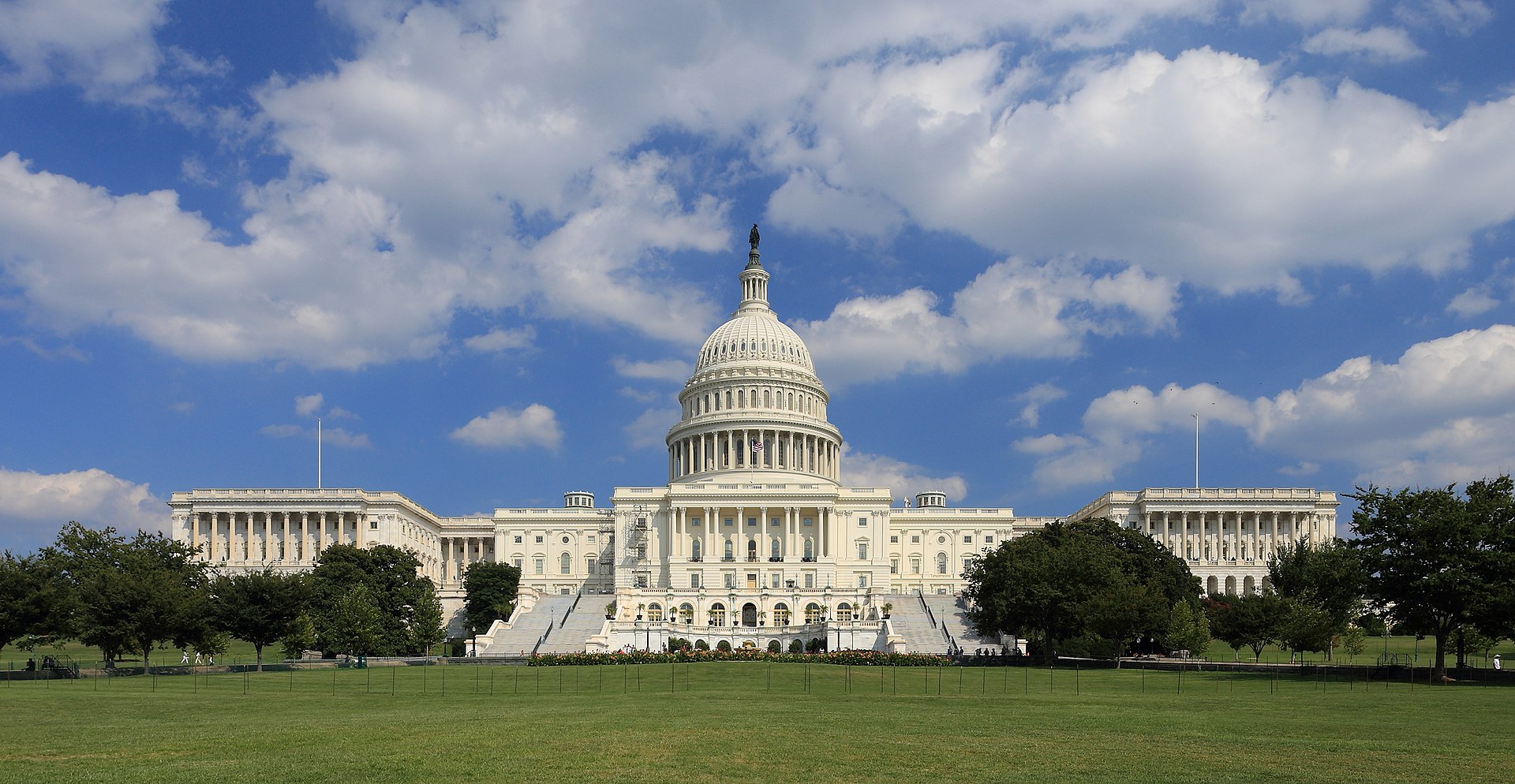
E&E News’ Meredith Lee Hill and Jennifer Scholtes reported that “Republicans are debating whether to attach wildfire aid and $15 billion in tariff relief for farmers to a military funding package President Donald Trump is expected to seek for the unfolding conflict in Iran, according to four people granted anonymity to share internal deliberations.”
“Senior congressional GOP aides caution that no decisions have been made, and House Republican leaders are particularly wary of the package growing too large,” Lee Hill and Scholtes reported. “GOP leaders have previously thwarted efforts by farm state Republicans to use unrelated government spending bills to advance billions of dollars in assistance to farmers still reeling from Trump’s tariffs, which the Supreme Court struck down last month.”
“There’s also anxiety about overstuffing the already-precarious emergency war funding package Trump is expected to submit to Congress in the coming weeks,” Lee Hill and Scholtes reported. “House GOP leaders are especially sensitive about the final price tag, which in military aid alone could be $50 billion at least.”
Agri-Pulse’s Oliver Ward, Philip Brasher, and Kim Chipman reported that “Republicans had been expected to propose $15 billion in additional assistance for farmers struggling with low crop prices and high production costs. The assistance would come on the heels of the $12 billion Farmer Bridge Assistance program that the Trump administration stood up in December.”
“(Sen. John) Hoeven said that discussions have been centered around the $15 billion number. However, both (Senator John) Boozman and Hoeven suggested that the figure could still be modified, particularly in light of recent spikes in fertilizer prices,” Ward, Brasher and Chipman reported. “Conversations are ‘ongoing,’ Hoeven said on Monday. ‘We’ve been having conversations and there will be more.’ The North Dakota senator said though that specialty crops will likely take up a larger share than they did in the December package.”
Senate Leaders Confirm More Farm Aid Needed
Bloomberg’s Steven T. Dennis reported that “in the US, Senate Republicans are facing mounting pressure from farmers in their states for a bailout to offset spiking fuel and fertilizer prices due to the war.”
“‘That’s a view that’s shared by my farmers in South Dakota,’ Senate Majority Leader John Thune told me earlier at the Capitol,” Dennis reported. “He noted the Trump administration has yet to send a supplemental war spending request to Congress, though he expects one to arrive. Thune added that a range of priorities, including disaster relief, could be folded into a single bill.”
Dennis reported in a different article that “the Republican Senate Agriculture Committee chair called for new federal aid to farmers in the wake of a spike in gasoline, diesel and fertilizer prices driven by the US military offensive against Iran. ‘I think very definitely that they’re going to need additional help,’ Senator John Boozman said in an interview at the Capitol Monday evening. ‘If you’re growing something in the ground right now, you’re losing money.'”
“Boozman said he was already seeing a need for Congress to pass a farm aid package before the war, noting winter storm damage as well as disaster relief needs in states like California and North Carolina,” Dennis reported.
Facts Only
Top U.S. and Chinese economic officials held talks in Paris on Sunday.
The talks included discussions on potential areas of agreement in agriculture.
Chinese officials showed openness to potential agreements.
U.S. lawmakers are debating attaching $15 billion in tariff relief for farmers to a military funding package for the conflict in Iran.
House Republican leaders are wary of the package growing too large.
Previous efforts to include farm aid in unrelated spending bills have been thwarted.
The proposed $15 billion aid follows a $12 billion Farmer Bridge Assistance program from December.
Discussions about the aid amount are ongoing, with potential adjustments due to rising fertilizer prices.
Senate Republicans, including John Boozman and John Hoeven, support additional farm aid.
Boozman cited spiking fuel, diesel, and fertilizer prices as reasons for the aid.
Thune noted that disaster relief and other priorities could be included in the war funding package.
The Trump administration has not yet submitted the supplemental war spending request to Congress.
Executive Summary
Full Take
The strongest version of this narrative highlights bipartisan recognition of the economic strain on U.S. farmers due to tariffs, rising input costs, and natural disasters, with lawmakers seeking pragmatic solutions by bundling aid into must-pass legislation. The inclusion of farm relief in a war funding package reflects political maneuvering to secure support for both priorities, though concerns about fiscal discipline and package size remain.
Patterns detected: ARC-0024 Ambiguity (vague framing of "potential areas of agreement" without specifics), ARC-0043 Motte-and-Bailey (broad claims of farmer hardship paired with narrow policy proposals).
Root cause: The narrative assumes that short-term aid is the primary solution to systemic agricultural challenges, sidestepping deeper questions about trade policy, climate resilience, and long-term market stability. The historical pattern echoes past farm bailouts tied to political crises, reinforcing dependency on emergency funding rather than structural reform.
Implications: Farmers may receive temporary relief, but the second-order consequences include normalized fiscal brinkmanship, where critical aid is contingent on unrelated military spending. Taxpayers bear the cost, while the underlying vulnerabilities—trade volatility, climate risks—remain unaddressed.
Bridge questions: What alternative policies could address farmer hardship without tying it to war funding? How might this approach differ if the political party in power were reversed? What evidence would change your view on the effectiveness of short-term aid versus systemic reform?
Counterstrike scan: A coordinated influence campaign would exploit farmer distress to justify unrelated spending, using emotional appeals about national security and economic survival. The actual content aligns partially with this pattern—leveraging urgency to bundle priorities—but lacks overt manipulation, as the debates and cautions are transparently reported.
Sentinel — Human
The article exhibits strong hallmarks of human journalism, including varied phrasing, specific sourcing, and contextual nuance. No significant synthetic signals detected.