Skip to content
Chimera readability score 62 out of 100, Academic reading level.

Mali
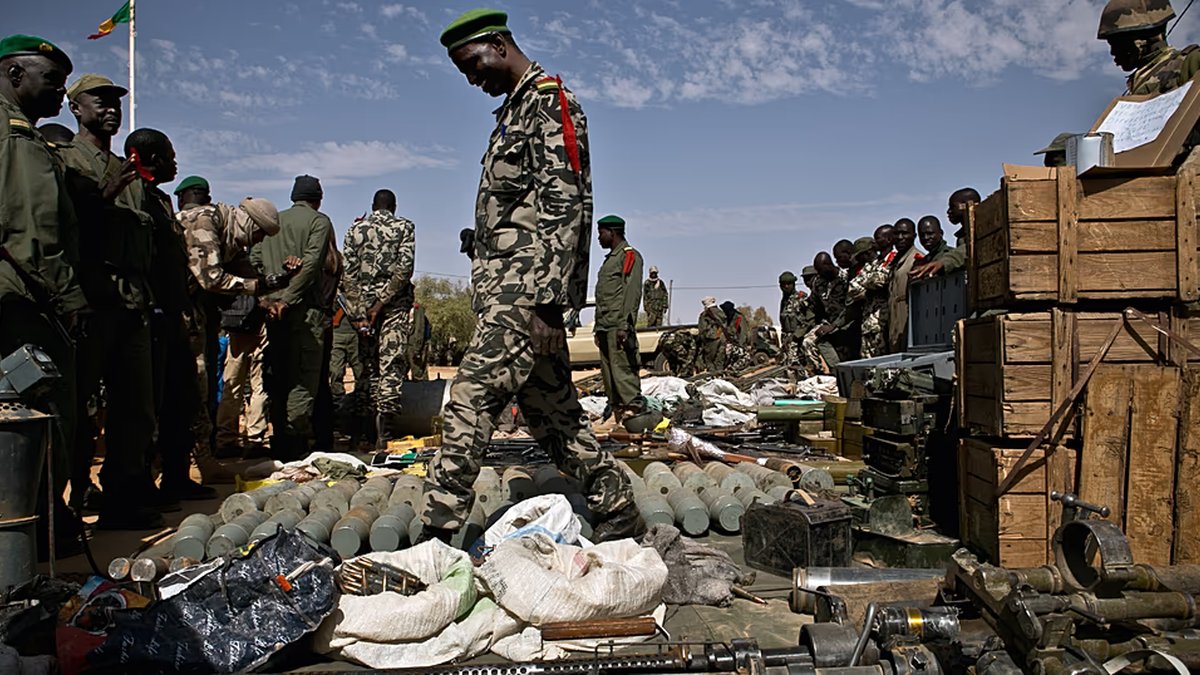
Mali’s army has retaken control of the key northern town of Anefis after a nearly week-long battle against rebel fighters.
Anefis is about 100 kilometres from the strategic town of Kidal, which was captured by al Qaeda-linked militants and Tuareg separatists in April.
The same groups launched coordinated attacks on Anefis on Saturday, seizing the town but failing to take a military camp.
Malian soldiers backed by Russian Africa Corps mercenaries remained to defend the base.
Dozens of vehicles, backed by air support set out from the city of Gao to provide reinforcement. They arrived on Thursday evening despite rebel attacks along the way and retook the town.
"Malian troops and the Africa Corps partners broke through the obstacles and arrived in Anefis to reinforce our troops who were on the ground", a Mali military source said.
A spokesperson for the Tuareg separatists said the group had "decided to leave Anefis for strategic reasons and to avoid civilian casualties."
Mali has been grappling with a security crisis for more than a decade. The country’s junta leaders promised to restore calm when they took power in 2021 but have mostly failed to deliver.
00:42
Jihadists launch fresh offensive across Mali
01:19
Niger: search underway for attackers who killed 11 soldiers at Niamey airport
00:40
Al-Qaeda-linked armed group JNIM releases propaganda video of Mali attack
00:59
Mali junta's offers $3.5M reward for jihadist leader
00:54
Mali restricts 125cc+ motorcycles amid Jihadist insurgency
00:28
Senegal sheep prices surge ahead of Tabaski amid Mali crisis

Facts Only

* Mali’s army retook control of the key northern town of Anefis after a nearly week-long battle against rebel fighters.
* Anefis is about 100 kilometers from Kidal.
* Kidal was captured by al Qaeda-linked militants and Tuareg separatists in April.
* The same groups launched coordinated attacks on Anefis on Saturday, seizing the town but failing to take a military camp.
* Malian soldiers backed by Russian Africa Corps mercenaries remained to defend the base.
* Dozens of vehicles, backed by air support from Gao, were deployed for reinforcement.
* Malian troops and Africa Corps partners arrived in Anefis to reinforce ground troops.
* A Tuareg separatist spokesperson stated the group left Anefis for strategic reasons and to avoid civilian casualties.
* Mali has been grappling with a security crisis for more than a decade.

Executive Summary

Malian forces, supported by Russian Africa Corps mercenaries, retook the northern town of Anefis after a week-long battle against rebel fighters. The area is approximately 100 kilometers from Kidal, which was taken by al Qaeda-linked militants and Tuareg separatists in April. Rebel groups launched coordinated attacks on Anefis on Saturday but failed to capture a military camp. Malian troops and Africa Corps partners subsequently arrived in Anefis, with reinforcements arriving via vehicles supported by air support from Gao, despite rebel attacks along the route. A spokesperson for the Tuareg separatists stated that their group decided to leave Anefis for strategic reasons and to avoid civilian casualties. The conflict is part of a broader security crisis in Mali, where junta leaders promised stability in 2021 but have not delivered.

Full Take

The dynamic presented involves shifting control over territory amidst a protracted, unresolved security environment marked by fractured governance. The movement of forces—rebel capture, counter-attack, and reinforcement—suggests fluid, localized power struggles rather than unified strategic objectives between all parties involved. The stated reason for the separatists’ withdrawal from Anefis is framed as a decision based on strategy and avoiding civilian harm, which introduces a layer of moral complexity onto the military maneuvers. This pattern reflects a cycle where territorial control is contested by armed groups, supported by external forces, against a central authority struggling to enforce its mandate. The context of the decade-long security crisis underscores that localized gains or retreats do not resolve the underlying structural instability. The reliance on external partnerships, such as the Africa Corps mercenaries, highlights how regional conflicts are often mediated and influenced by geopolitical interests rather than purely local dynamics. Questions arise regarding the long-term stability implications when military action results in tactical withdrawals framed as strategic decisions, and what mechanisms exist to transition from localized fighting to sustained peace. What underlying factors influence the calculus for groups choosing to leave versus staying?

Sentinel — Human

Confidence

The text reads like a factual news report detailing recent military developments and contextual background regarding the security crisis in Mali.

Signals Detected
low severity: Varied sentence structure and direct reporting of specific events, indicating journalistic style.
low severity: Direct reporting flow between military actions, statements, and background context without excessive hedging or synthetic balance.
low severity: References to specific actors (Malian army, Russian Africa Corps, JNIM) and direct quotes/attributions suggest sourced reporting.
low severity: The content relies on reporting established conflict dynamics rather than making novel, unverifiable claims.
Human Indicators
Use of specific geographical and military terms (Anefis, Kidal, Gao) grounded in an ongoing conflict narrative.
The inclusion of direct quotes/statements attributed to named sources (Malian military source, Tuareg spokesperson).
Malian army retakes key northern town of Anefis after week — Arc Codex