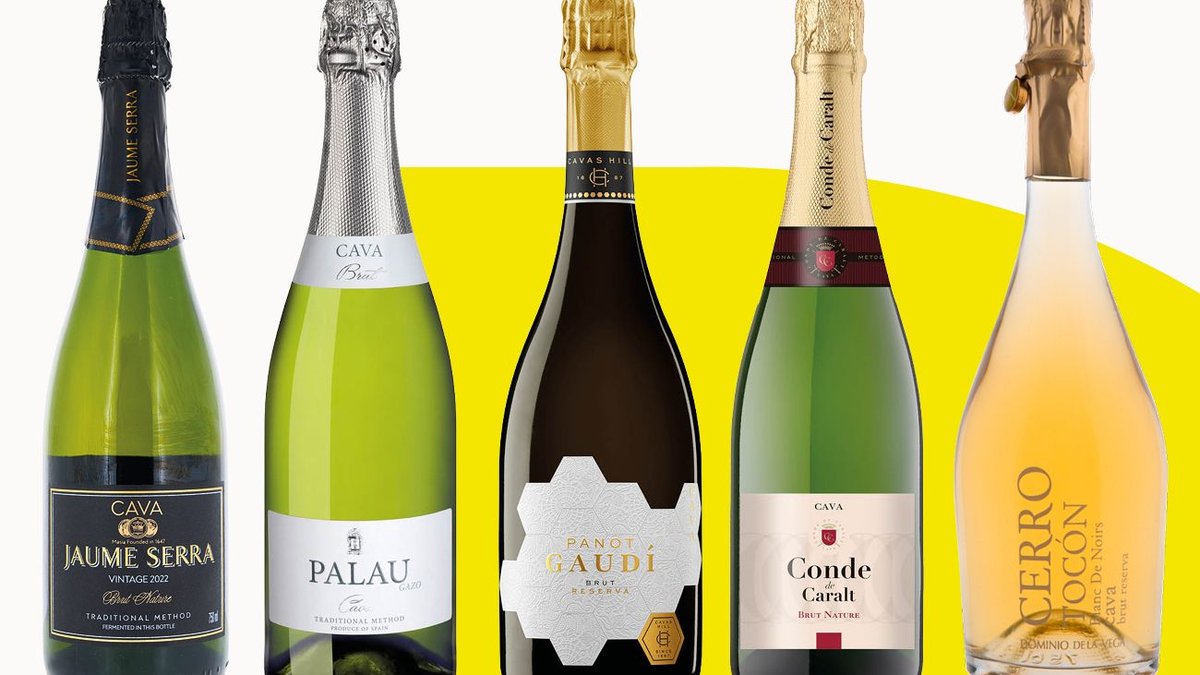
International Cava Day: 15 award-winning wines to try
Awarded Cavas from Decanter World Wine Awards 2026 to celebrate with.
Since the late nineteenth century Spain has been producing traditional method sparkling wines, and like Champagne, French Crémants or Italy’s Alta Langa, Franciacorta or Trentodoc, Spanish Cava is produced with this method, remaining on its lees for a minimum of nine months with secondary fermentation in the bottle.
What’s unique, however, is that Cava is often produced with a blend of indigenous white grape varieties: Macabeo, Xarel-lo and Parellada. Several international varieties, including the more common varieties for sparkling wines, Chardonnay and Pinot Noir, can also be used.
Scroll down to see the top 15 Cava wines of DWWA 2026
Cava has established a global reputation for making some of the best value sparkling wines produced by the traditional method. But it’s important to note the quality to be found across Cava’s categories and styles, with top expressions on par with some of the world’s best.
Styles of Cava
There are three main categories of Cava which produce different styles of sparkling wine.
When labelled Cava, the wine must undergo a minimum of nine months of lees aging, providing subtle notes of autolysis (the bready aromas and flavours found in traditional method sparkling wines). These Cavas typically have light apple, citrus and herbal notes with moderate acidity.
Cava Reserva must spend a minimum of 15 months on the lees – three months less than Champagne requires. Here, biscuit autolytic notes are more evident.
Aged a minimum of 30 months on the lees, Cava Gran Reserva wines can show pronounced autolytic characters including smoky and toasty notes. These Cavas can be premium in price but can show outstanding quality for value, especially when compared to traditional method sparkling wine counterparts.
Get our daily fine wine reviews, latest wine ratings, news and travel guides delivered straight to your inbox.
To strengthen Cava’s notoriety as a world-class sparkling wine, estate produced and bottled Cava can qualify for a relatively new category, Cava de Paraje Calificado. These wines must age a minimum of 36 months, showing even more development and integration of flavours.
Quality rising
Cava’s quality continues to be recognised by leading experts at the 2026 DWWA with Catalonia’s celebrated sparkling wines earning eight Golds including a Top Value Gold. The competition also recognised two magnum-format Cavas with Silver medals.
Along with the top accolades, Cava was awarded an additional 46 Silver and 72 Bronze medals.
To celebrate International Cava Day this 12th July, we highlight 15 award-winning wines to celebrate with.
International Cava Day: 15 award-winning wines to try
Asda, Exceptional Mas Miralda Brut 2023
Value Gold, 95 points
Hugely aromatic and soulful with boundless lemon peel, fresh herb and almond notes swaddled in glossy mousse and succulent acidity. A tasty joy to behold. Alcohol 12%
Bardinet Wines, Palau Gazo Brut NV
Gold, 95 points
Light and frothy, imbued with luscious lemon, fresh herb and wet stone character in a frame of curvaceous acidity. A linden blossom fragrance inures the length. Alc 11.5%
Cavas Hill, Panot Gaudí Brut, Reserva 2020
Value Gold, 95 points
A delightful perfume of chamomile, yellow fruit and butterscotch underscored by a twist of saline. Zesty lemon pith mousse and grapefruit acidity dapple the creamy texture. Alc 11.5%
Conde de Caralt, Brut Nature, Guarda 2024
Gold, 95 points
Well-defined green apple, pear and quince fused with lightly toasted brioche. Energetic and fresh with fine mousse and a zingy eucalyptus buzz at the end. Alc 11.5%
Dominio De La Vega, Cerro Tocón, Reserva 2018
Gold, 95 points
Restrained strawberry and rose petal perfume slinks into the smoke-infused effervescence and brushes against the fulfilling creamy texture. Gushing grapefruit. Alc 12%
Guilera, Centenari Brut Nature, Gran Reserva 2005
Gold, 95 points
Vast swathes of ripe peach, apricot, pineapple and mango simmer over the creamy brioche texture, complete with fine bubbles and red apple acidity. Fabulously moreish. Alc 12%
Jaume Serra, Reserva Brut Nature 2022
Value Gold, 95 points
Evocative dried petal, resin and nut aromas gently soothe the nose; bright. green apple fruit and lemon foam textures lavish the palate. Long, herbal finish. Alc 11.5%
Vallformosa, 150 Brut, Gran Reserva 2020
Gold, 95 points
Engaging floral perfume simmers alongside gooseberry fruit and french toast. Buttery and textured with a stylish smoky mousse and fine, savoury aftertaste which is just phenomenal. Alc 12%
Maria Rigol Ordi, Maria Brut Nature, Gran Reserva 2017
Silver, 94 points
Characterful aromas of fennel, dried herbs, brioche and intense toasty touches. Creamy and smooth, with a crisp acidity. Alc 11.5%
Rabetllat I Vidal, Brut Nature, Gran Reserva, Cava 2021
Silver, 94 points
Restrained character with earthy undertones and delicate aromas of brioche. Showing tension and energy, elegant and stylish palate. Long finish. Alc 12%
Art Laietà, Alto Alella 10 Pujol-Busquets Guillén Brut Nature, Gran Reserva 2014
Silver, 93 points
Savoury character with notes of butterscotch, bread, orange, golden pineapple and lemon balm. Toasty and creamy palate, well layered. Alc 12%
Família Ferrer, Can Sala Brut Nature, Paraje Calificado 2013
Silver, 93 points
Developing nuances of caramelised apple, quince, toasted almonds and butterscotch. Honeyed palate, rich and creamy, with a mineral finish. Alc 12.5%
Marevia, Chardonnay-Pinot Noir Brut, Reserva 2020
Silver, 93 points
Light nuances of delicate brioche and citrus fruit on the nose. Creamy on the palate, very tasty and elegant. Alc 11.5%
Pere Ventura, Clos La Secreta Paraje Calificado Can Bas, Gran Reserva 2017
Silver, 93 points
Delicate aromas of peaches, apricots, brioche and digestive biscuits. Well made and layered, with a crisp acidity and lovely mousse. Alc 12%
Sumarroca, Ecològica Brut Nature, Gran Reserva 2019
Silver, 93 points
Perfumed, with bittersweet lemon, peach skin, Mediterranean herbs and aniseed. Savoury, saline and precise, with a nougat-like richness and long finish. Alc 12%
Search all award-winning Cava wines from DWWA 2026
Related articles
Sparkling Glory: DWWA 2026's Best in Show winners
Success for English wine at DWWA 2026
DO Cava’s long-aged cuvées – Future-proof excellence
Olivia Mason is the Head of Marketing at Decanter, looking after Decanter World Wine Awards, Decanter Fine Wine Encounters, partnerships and the brand's involvement at international events
Facts Only
* The event is International Cava Day on July 12th.
* Cava production involves traditional method sparkling wine techniques similar to Champagne.
* Cava requires a minimum of nine months of lees aging with secondary fermentation in the bottle.
* Cava is often blended with indigenous white grape varieties: Macabeo, Xarel-lo, and Parellada.
* Cava styles include standard Cava (minimum nine months lees aging), Cava Reserva (minimum fifteen months), and Cava Gran Reserva (minimum thirty months).
* Cava de Paraje Calificado requires a minimum of thirty-six months of aging.
* The 2026 DWWA recognized Cava with eight Gold medals, including a Top Value Gold.
* Fourteen specific award-winning wines are highlighted for the day.
* Specific listed wines include Asda, Exceptional Mas Miralda Brut 2023, Bardinet Wines, Palau Gazo Brut NV, Cavas Hill, Panot Gaudí Brut, Reserva 2020, Conde de Caralt, Brut Nature, Guarda 2024, Dominio De La Vega, Cerro Tocón, Reserva 2018, Guilera, Centenari Brut Nature, Gran Reserva 2005, Jaume Serra, Reserva Brut Nature 2022, Vallformosa, 150 Brut, Gran Reserva 2020, Maria Rigol Ordi, Maria Brut Nature, Gran Reserva 2017, Rabetllat I Vidal, Brut Nature, Gran Reserva, Cava 2021, Art Laietà, Alto Alella 10 Pujol-Busquets Guillén Brut Nature, Gran Reserva 2014, Família Ferrer, Can Sala Brut Nature, Paraje Calificado 2013, Marevia, Chardonnay-Pinot Noir Brut, Reserva 2020, Pere Ventura, Clos La Secreta Paraje Calificado Can Bas, Gran Reserva 2017, Sumarroca, Ecològica Brut Nature, Gran Reserva 2019.
Executive Summary
International Cava Day highlights 15 award-winning wines from the Decanter World Wine Awards 2026, celebrating the traditional method sparkling wine production in Spain. Cava is produced using a method similar to Champagne and other regional sparkling wines, involving lees aging for a minimum of nine months with secondary fermentation in the bottle. The wines are often blended with indigenous white grapes like Macabeo, Xarel-lo, and Parellada, though international varieties such as Chardonnay and Pinot Noir are also used.
The article outlines three main styles of Cava based on aging duration: standard Cava requires nine months of lees aging; Cava Reserva requires fifteen months; and Cava Gran Reserva requires thirty months, which can exhibit pronounced autolytic notes like smoke and toast. A new category, Cava de Paraje Calificado, requires a minimum of thirty-six months of aging for enhanced flavor integration. The quality of Cava is recognized by the 2026 DWWA awards, with specific wines receiving Gold and Silver medals across various categories, including those recognizing Top Value Gold expressions.
Full Take
The narrative positions Cava as a sophisticated sparkling wine category rooted in traditional methods while simultaneously showcasing its adaptability through different aging styles and grape blends. The structure relies on establishing a historical parallel with established regions like Champagne to confer immediate legitimacy. The progression from standard Cava to Gran Reserva, culminating in Cava de Paraje Calificado, establishes a quality ladder based explicitly on time spent on lees, suggesting that temporal development is the primary driver of perceived value and complexity.
A critical pattern emerges in how quality is quantified: award recognition (Gold/Silver medals) validates the inherent value attributed to specific expressions, while the formal style classifications provide the framework for understanding these variations. The juxtaposition of tangible accolades with detailed descriptions—like the pronounced autolytic notes in Gran Reserva wines—functions to elevate the product beyond simple sparkling wine into a category defined by artisanal process and temporal maturity.
The implication is that status within this niche market is achieved not just through the method, but through adherence to extended aging protocols, which directly translate into specific sensory experiences (e.g., smoky notes for Gran Reserva). The focus on recognizing these distinct profiles suggests an underlying tension between mass appeal and artisanal specificity; the challenge lies in maintaining the perceived value derived from age and tradition against the market forces that favor simpler, immediate expressions. What factors drive consumer valuation when multiple, highly complex time-based metrics are introduced? What is the mechanism by which this formalization of aging translates into cognitive sovereignty for the consumer, rather than just providing descriptive labels?
Sentinel — Human
This text reads like an informational article synthesized by a wine publication, effectively blending educational context about Cava production with a curated showcase of award-winning examples.