Support CleanTechnica's work through a Substack subscription or on Stripe.
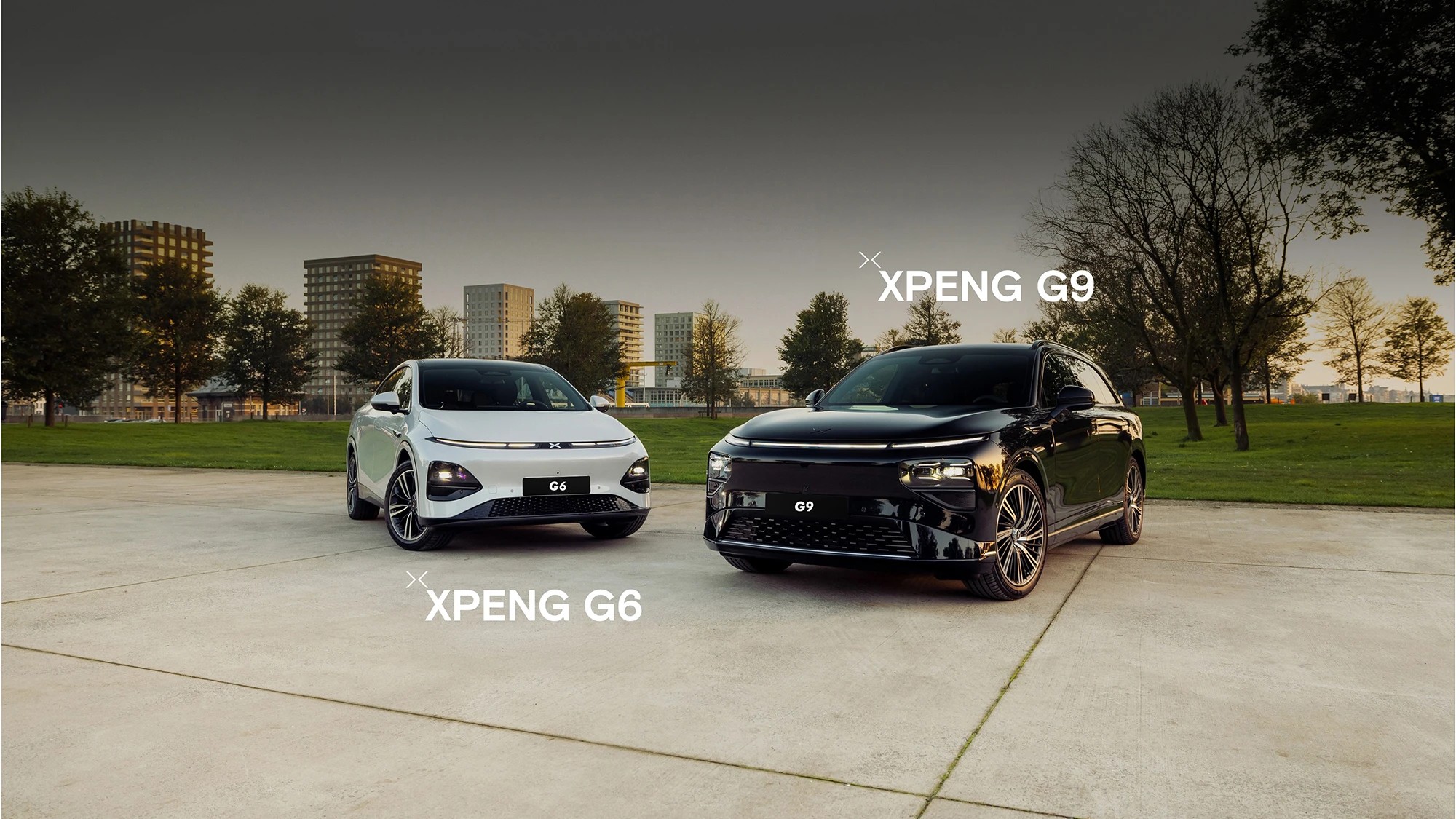
Last week, XPENG officially launched in Mexico. Their initial models start with the recently refreshed G6 starting at 819,900 MXP (~$45,000 USD), which is slightly higher than the recently stripped back Model Y at 799,000 MXP. Mexican automobile prices tend to overall be somewhat more than those in the US. The sporty XPENG G6 charges faster but is similar in size and specifications to the Tesla. While it is clearly targeting many of the same buyers as the Y, though, the G6 is significantly better equipped as standard. There is a value argument to be made, but they are not trying to beat Tesla just on price. Above the G6 sits the G9 at 1,099,900 MXP (approximately $61,000 USD) for a comfort-focused, larger, and more spacious vehicle.
For reference, the G6 in Mexico is similar (other than the steering wheel being on the opposite side) to the model that Robert Llewellyn recently reviewed on Everything Electric:
My friend Tom Gan at Ludicrous Feed has been driving the pre-refresh model for the better part of a year and has some in-depth coverage, for those interested in learning more.
For those in the local market, XPENG does not list a Mexico-specific website yet. However, there is Spanish-language information about the G6 and G9 on the websites for Uruguay, Guatemala, and Colombia. I expect other LATAM countries to be added to that list soon.
However, XPENG is not just bringing over vehicles, it is building up the infrastructure to support those vehicles. According to Vice Chairman and President Dr. Brian Gu:
Today marks an exciting milestone for XPENG as we officially enter Mexico. This is a key step in our global journey, and the starting point of our three-year plan to lead AI mobility in Latin America.
We’re bringing the XPENG G6 and G9 into the market, combining advanced AI capabilities with a human-centered driving experience. Just as importantly, we’re investing early in the fundamentals. Even before launch, we set up a 1,000㎡ parts warehouse to ensure fast, reliable after-sales support nationwide—reflecting our long-term commitment to this market.
Smart & Getting Smarter
Initial models available in Mexico contain the NVIDIA Orin-X chip on XPENG’s older X-Pilot ADAS system. It is still a capable system, supporting highway cruising, autonomous parking, and voice interaction. It is arguably better than what now comes standard on a Tesla without an added subscription. But it does not represent XPENG’s most advanced intelligent driving system anymore. XPENG is in the process of rolling out its in-house developed Turing AI chip for XNGP ADAS and VLA 2.0 across its lineup, including its new Robotaxi division. I experienced a preview of that system in November, prior to the P7+ launch, and hope to see more soon. Recent videos on XPENG’s YouTube channel show the system is advancing quickly to deal with China’s often chaotic traffic.
If it can do well there, it will work in many parts of the world. US and Canadian traffic patterns are very simple in comparison. We are lucky here that self-driving chips don’t have the capability to feel bored.
However, I would not expect that those capabilities will be limited to China for long. As Chairman and CEO, He Xiaopeng stated:
We bring not just the G6 and G9, but also a three-year promise to lead AI mobility in Latin America, from breaking into core markets in 2026 to establishing AI mobility leadership by 2028. We are here for the long run, to build a sustainable smart mobility future together.
That emphasis on AI also gives additional context to XPENG’s official name change from “XPENG Auto” to “XPENG Group,” as He Xiaopeng also explains:
From XPENG Auto to XPENG Group—twelve years, a full cycle, and a brand new starting point. Our journey began with smart electric vehicles, but it has expanded to flying cars, Turing AI chips, VLA autonomous driving models, the IRON humanoid robot, and Robotaxi. We are steadily turning these dreams into reality on a global expedition into physical AI.
There will be some regulatory hurdles, but we could soon see more advanced self-driving capability south of the US border than above it.
Our Neighbors Are Getting Smarter & Better EVs
I also anticipate XPENG will make an announcement soon north of the border in Canada. Cars are already offered in English speaking countries, so the infotainment system doesn’t even need translation. Trade policy opened the door for Chinese EVs at a 6% tariff and 50,000 unit quota. That could expand with enough public demand. XPENG also has manufacturing in Europe, including a contract with Magna in Austria, which could provide additional volume beyond the quota. Magna is based in Canada and Canada has shuttered manufacturing capacity, providing a path to establish operations. Canadian manufacturing may not be far away.
And I wouldn’t be surprised if some localized assembly starts in LATAM once sales get established. Chinese industrial labor prices were recently averaging 25% higher than in Mexico, and the gap keeps widening. Although trade policy continues to be volatile, Mexico and other countries also have access to more markets.
XPENG isn’t alone in Mexico, with other brands rapidly expanding sales. 1 in 5 cars last year were from Chinese brands, and customer acceptance is growing. XPENG is wise to enter the market in a meaningful way, while developing its sales and service infrastructure to help retain customers.
Overall, we are about to see far more competitive EV markets in the countries bordering the US. That might open some doors to import vehicles, but US trade policy has been unpredictable, with moving goalposts. When an opportunity to enter the market emerges, lobbyists will work to close it. However, we used to treat “the customer as king” and US consumers have massive buying power. With better vehicles on just the other side of the metaphorical or physical “wall” we put up between countries, voting consumers may demand better products, like those offered by XPENG. A quarter century ago, Trabant-driving East Germans also demanded better.
Sign up for CleanTechnica's Weekly Substack for Zach and Scott's in-depth analyses and high level summaries, sign up for our daily newsletter, and follow us on Google News!
Have a tip for CleanTechnica? Want to advertise? Want to suggest a guest for our CleanTech Talk podcast? Contact us here.
Sign up for our daily newsletter for 15 new cleantech stories a day. Or sign up for our weekly one on top stories of the week if daily is too frequent.
CleanTechnica uses affiliate links. See our policy here.
CleanTechnica's Comment Policy
Facts Only
Actor: XPENG, a Chinese electric vehicle company
Action: Launched in Mexico with G6 and G9 models
Timeline: Present
Locations: Mexico, Latin America (future plans)
Equipment: NVIDIA Orin-X chip for advanced AI capabilities
Infrastructure: 1,000㎡ parts warehouse for after-sales support
Goal: Lead AI mobility in Latin America by 2028
Executive Summary
Full Take
Analyzing the article from a Skeptical Mode perspective reveals several patterns worth noting. The article presents XPENG's expansion into Mexico as part of a larger strategic plan to lead AI mobility in Latin America, suggesting a long-term commitment to the region. However, this narrative employs forced binary choices (ARC-0021) by positioning XPENG against Tesla without acknowledging other competitors in the market. The article also evades the topic of potential regulatory hurdles that XPENG might face in Mexico. Furthermore, it hints at possible future announcements in Canada but does not provide concrete details or timelines.
Patterns detected: ARC-0021 Forced Binary Choices, ARC-0057 Evasion (potential regulatory hurdles)
From a Constructive Mode perspective, the article presents XPENG's expansion into Mexico as an opportunity to bring more competitive electric vehicles to Latin America. The focus on AI technology and human-centered driving experience could potentially improve mobility in the region. However, it is essential to consider other factors such as local regulatory environments, consumer preferences, and the competitive landscape when evaluating XPENG's long-term success in Latin America.
Questions for further inquiry: What are the specific challenges that XPENG might face in Mexico regarding regulations? How do consumer preferences in Mexico compare to those in China or other markets where XPENG already operates? Who are the main competitors for XPENG in the Mexican and Latin American markets, and how does their offering compare?
Sentinel — Human
The article shows signs of being human-written, with varied sentence length, idiosyncratic emphasis, and unique argumentative structure. However, the coordination signals are moderate due to the specific discussion about XPENG's AI capabilities and plans.