Last Updated: 2 July 2026
Robots and automated machines need to see clearly before they can work well in the real world. That is the problem Luxonis has spent years trying to solve. The company builds camera hardware and software that let machines understand what is in front of them, and it now has fresh money to grow. Luxonis was co-founded by Shawn McLaughlin and Martin Peterlin, and it is led today by CEO Bradley Dillon. For seven years, the company built its OAK camera platform and its open-source DepthAI software without taking money from outside investors.
That timing matters, because the market Luxonis serves is growing fast. Industry researchers project that the global physical AI market, which covers robots and automated systems that combine artificial intelligence with real-world sensing and movement, will surpass $430 billion by 2030. Manufacturing, logistics, and defense companies are investing in machines that can sense their surroundings and react to them. Visual perception is central to that shift. In simple terms, it means giving a machine the ability to understand what it is looking at. Most physical automation still relies on cameras and sensors to identify objects and move safely through space.
Luxonis has now closed a $14 million Series A round led by Denali Growth Partners, with participation from Taiwania Capital. This is the company's first round of institutional funding after years of growth built on product sales alone. The money will support production scaling and product development as demand for its camera systems increases.
For years, industrial robots could move with precision but had trouble understanding what was around them. Factories had to spend heavily on fixtures and careful part placement just to keep automation running smoothly. Sensor and AI advances have started to change that. Robots can increasingly identify and locate objects on their own, instead of needing everything positioned exactly right in advance. This shift helps explain why perception companies like Luxonis are drawing investor interest right now, as the market moves from prototypes toward real, commercial deployment.
"Luxonis is setting the global standard for physical AI by combining Central and Eastern Europe's elite AI engineering and Taiwan's robust manufacturing with a U.S. go-to-market engine. Taiwania Capital is proud to back a team that bridges these regional strengths to solve complex automation challenges for enterprises."
Richard Wang, Managing Partner at Taiwania Capital
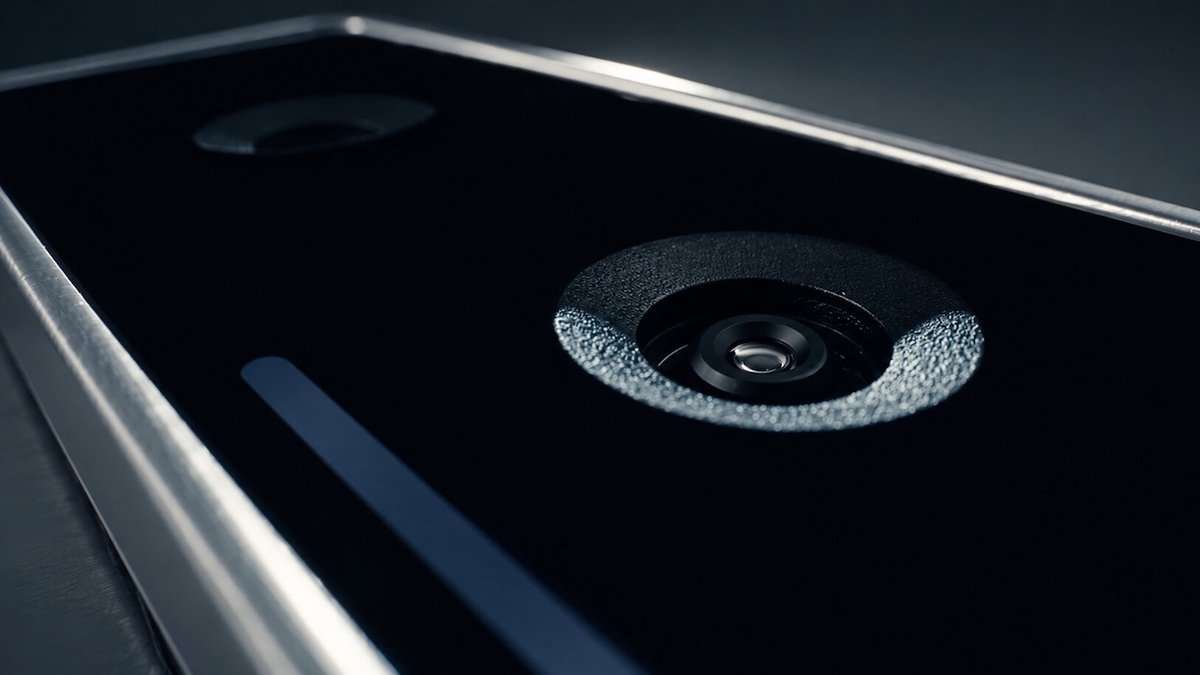
Luxonis built its OAK devices to give robots and machines this kind of perception right out of the box. Each unit combines several sensors with computing power built into the device itself, so a machine can process what it sees on the spot instead of sending the data somewhere else first. That design is meant to make it easier for companies in fields like agriculture, defense, and warehousing to add visual intelligence to their equipment without having to build the underlying camera and AI systems on their own.
The company plans to use the money to expand its supply chain capacity, so it can keep up with growing orders for the OAK camera platform. It will also keep building out the OAK4 product line, which launched in December 2025. Beyond manufacturing, Luxonis intends to grow its research and development, go-to-market, and engineering-support teams. The goal is to work more directly with customers as they move from early prototypes into full production.
New devices are planned at more accessible price points and in a wider range of physical designs. These are aimed at industries including agriculture, advanced robotics, defense, industrial automation, heavy machinery, medtech, and warehousing. The company also plans to invest in newer AI architectures that run on its hardware. The stated goal is to keep its systems able to process information at the edge, meaning directly on the device, rather than relying on distant data centers.
"We are thrilled to support the Luxonis team as they continue to meet the perception needs of customers ranging from individuals to Fortune 500 companies, across a range of end markets."
Alec Douglas, Principal at Denali Growth Partners
Luxonis was founded in 2019 with an early project called Commute Guardian, which used real-time AI and depth perception to help protect cyclists and pedestrians. That early effort pushed the founding team toward a broader goal: building a platform for machine vision. That work became the OAK camera line and the DepthAI software that runs on it. The company later ran two Kickstarter campaigns, in 2020 and 2021, which helped fund its early hardware and build a community of early users.
In plain terms, Luxonis makes camera devices that let machines understand their surroundings and make decisions in real time, without needing a constant connection to outside computing power. Its open-source DepthAI software has been downloaded more than six million times. The company says its hardware is now used by more than 60 Fortune 500 companies and 17 of the companies in the Dow Jones Industrial Average. Bradley Dillon serves as CEO. Co-founders Shawn McLaughlin and Martin Peterlin remain in leadership roles, as board member and chief architect, respectively.
"After more than seven years building Luxonis with the support of friends and family, we're delighted to close our first institutional round and welcome Denali and Taiwania to our board. They bring a wealth of experience that will help us accelerate our already rapid growth as we give machines the human perception they need to take on the world's physical work."
Bradley Dillon, CEO of Luxonis
The Series A was led by Denali Growth Partners, a Boston-based growth equity firm that typically invests in healthcare, technology, and services companies. The firm raised $400 million for a second growth equity fund in 2025. Taiwania Capital also took part in the round. This marks Luxonis's first outside institutional funding after seven years of growth built on product sales and two Kickstarter campaigns.
Luxonis is a U.S.-based company with six global offices, including sites in Central and Eastern Europe, where much of its engineering team is based.
Sentinel — Human
The text exhibits the structured, fact-heavy style typical of a corporate press release, leading to a low synthetic confidence score.