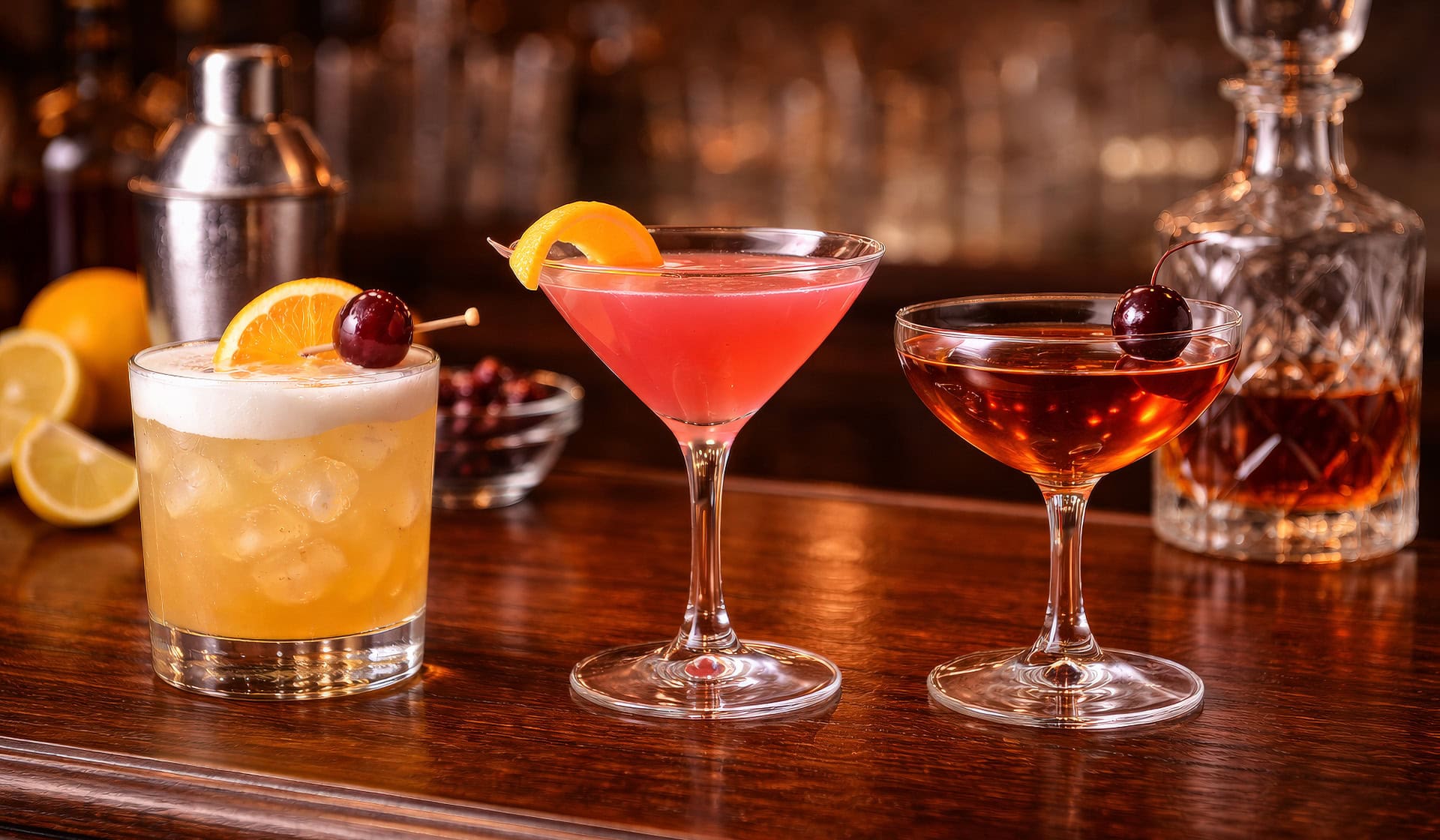
Making cocktails at home is more popular than ever. The Covid pandemic turned many of us into instant bartenders, mixing drinks in our own kitchens and living rooms. But it can still feel a little daunting. Long ingredient lists, unfamiliar tools, questions around technique and presentation—it’s enough to put anyone off. The good news? Many classic cocktails are far simpler than they look.
With a few basics in place, that uncertainty quickly turns into confidence. Invest in some core kit, a handful of key ingredients and the right glassware, and you’ll be ready to shake, stir and pour in no time.
Here are eight easy-to-make classic cocktails to add to your repertoire—and to serve with a bit of confidence next time you’re hosting.
The Cosmopolitan
A modern classic and very much a product of the 1980s, when vodka hit the mainstream in Western culture. The Cosmo is widely attributed to bartender Toby Cecchini, who created it at The Odeon in New York in 1988.
Its place in cocktail history was later cemented by Sex and the City.
What you need
Vodka, cranberry juice, orange liqueur or triple sec, lime juice, ice, cocktail shaker, strainer, coupe glass.
How you make it
Fill a cocktail shaker with ice, then add 2 parts vodka and cranberry juice, 1 part orange liqueur, and 1 part fresh lime juice. Shake well until the outside of the shaker feels ice-cold.
Strain into a chilled coupe glass and serve.
The Manhattan
The origins of the Manhattan are, unsurprisingly, a little murky. The most widely told story links it to The Manhattan Club in New York, where it was supposedly created for Lady Randolph Churchill, mother of Sir Winston Churchill, in 1874.
The first printed recipe appeared in O. H. Byron’s The Modern Bartender’s Guide in 1884.
What you need
Bourbon (or rye whiskey), vermouth, bitters, lemon zest, ice, mixing glass or jug, stirrer, strainer, coupe or martini glass.
How you make it
Add the whiskey, vermouth and a dash of bitters to a mixing glass filled with ice. Stir gently for about a minute, then strain into a chilled coupe or martini glass. Finish with a twist of lemon zest. F
or a slightly sweeter version, use sweet red vermouth and a dash of cherry syrup.
The Margarita
Margarita translates as “daisy” in Spanish, and the drink is often said to have evolved from the Daisy family of cocktails. Popular in the 1930s, these typically combined a base spirit, a sweet liqueur and citrus.
Other stories point to a couple of women named Margarita as the inspiration in the 1940s, but, as with most classics, the true origin is still up for debate.
What you need
Tequila, triple sec, lime juice, lime wedge, salt, ice, cocktail shaker, strainer, coupe glass.
How you make it
Fill a cocktail shaker with ice, then add 2 parts tequila, 1 part lime juice, and 1 part triple sec. Shake until the outside of the shaker feels properly cold. Strain into a salt-rimmed coupe glass – run a lime wedge around the rim and dip it in salt. Garnish with a fresh lime wedge.
For an ‘on the rocks’ version, simply pour into a tumbler over ice.
The Martini
Originating in the mid-1800s, the first known recipe for a martini appeared in Harry Johnson’s Bartender’s Manual in 1888. That version was sweeter, made with Old Tom gin and orange curaçao.
The modern martini took shape in the early 20th century as drier serves became more popular. It also happens to be the drink most closely associated with James Bond.
What you need
Vodka or gin, white vermouth, ice, lemon zest, cocktail shaker, strainer, martini glass.
How you make it
Pour five parts vodka or gin and one part white vermouth over ice in a cocktail shaker. Shake for 10–15 seconds, then strain into a chilled martini glass. Finish with a twist of lemon peel. For a dirty martini, add a splash of olive brine to the shaker and garnish with a green olive.
The Negroni
This legendary cocktail comes with a suitably strong backstory and is also one of the easiest to make at home. It originated in post-First World War Italy at Caffè Casoni in Florence.
In 1919, Count Camillo Negroni is said to have asked the bartender to strengthen his Americano – a mix of vermouth, Campari and soda – by swapping the soda for gin. The result is now one of the most iconic cocktails in the world.
What you need
Gin, red vermouth, bitter aperitif, ice, mixing jug, tumbler or rocks glass, strainer.
How you make it
Pour equal parts gin, vermouth and bitter aperitif – Campari is the classic choice – into a mixing jug filled with ice. Stir until thoroughly chilled, then strain into a rocks glass or tumbler over fresh ice. A large ice cube works particularly well here.
Garnish with a freshly cut orange slice.
The Old Fashioned
Many consider the Old Fashioned to be the original whisky cocktail. The earliest reference dates back to 1806, placing it right at the birth of the cocktail era. The recipe has barely changed in two centuries, which says everything.
Traditionally made with rye whiskey, bourbon is now commonly used and works just as well.
What you need
Bourbon or rye whiskey, sugar cube, bitters, ice, tumbler glass, stirrer, and orange zest.
How you make it
Place a sugar cube in a tumbler, soak it in bitters, then gently crush it. Add the whiskey and a few large ice cubes, then stir. And keep stirring. A good bartender will take their time here, which is part of the appeal.
Finish with a twist of orange zest.
The Sazerac
This classic cocktail first appeared in 1873 at the Sazerac Coffee House in New Orleans. A similar Cognac-based version existed before, but when phylloxera devastated French vineyards, Cognac became scarce.
The bar’s owner, Thomas Handy, switched to local rye whiskey instead, creating what we now know as the Sazerac.
What you need
Rye whiskey, bitters, sugar syrup, absinthe, ice, lemon zest, rocks glass, mixing jug, stirrer.
How you make it
In a mixing jug, stir a double measure of rye whiskey with a dash or two of bitters, a little sugar syrup and ice. Once well-chilled, strain into a rinsed rocks glass.
Garnish with a twist of lemon zest.
The Whiskey Sour
The exact origins of the whiskey sour are a little unclear. The most widely accepted theory is that it evolved from punch, a rum-based drink consumed by sailors to help prevent scurvy, in the mid-19th century.
The first recorded whiskey version appeared in 1862 in Jerry Thomas’ How To Mix Drinks.
What you need
Bourbon, lemon juice and zest, egg white, sugar, ice, cherry, cocktail shaker, rocks glass.
How you make it
Shake bourbon, fresh lemon juice, egg white and sugar with ice in a cocktail shaker until smooth and frothy. Strain into a rocks glass over ice and garnish with a twist of lemon and a cherry.
For a vegan alternative, swap the egg white for aquafaba.
Facts Only
The Cosmopolitan is a modern classic attributed to Toby Cecchini in 1988.
The Manhattan's origins are unclear but it was first printed in O. H. Byron’s The Modern Bartender’s Guide in 1884.
The Margarita, also known as "daisy" in Spanish, is often said to have evolved from the Daisy family of cocktails.
The Martini originated in the mid-1800s with a printed recipe appearing in Harry Johnson’s Bartender’s Manual in 1888.
The Negroni was created at Caffè Casoni in Florence, Italy, in 1919 by Count Camillo Negroni.
The Old Fashioned is considered one of the oldest cocktails, with earliest references dating back to 1806.
The Sazerac originated at Caffè Casoni in New Orleans, around 1919.
The Whiskey Sour's origins are unclear but the first recorded recipe appeared in Jerry Thomas’ How To Mix Drinks in 1862.
Executive Summary
Full Take
This article presents a collection of classic cocktails, each with its unique history and origin. The resurgence of homemade cocktails during the COVID-19 pandemic offers an opportunity for personal exploration and connection to these timeless drinks.
Patterns detected: ARC-0024 Ambiguity (unclear origins of several cocktails).
Root Cause: The popularity of classic cocktails has endured due to their historical significance, cultural impact, and the ongoing desire for unique drinking experiences.
Implications: Home bartenders can take pride in crafting these iconic drinks while gaining a deeper appreciation for their origins and traditions. By sharing their creations with friends and family, they contribute to the continuing evolution of cocktail culture.
Bridge Questions: What other classic cocktails would readers like to learn how to make? How has the COVID-19 pandemic impacted your exploration of homemade drinks? How do you see cocktail culture evolving in the future?