Tenzin Nyidon
DHARAMSHALA, March 14: Advocacy and activist group, Tibet Action Institute (TAI), known for exposing China’s residential boarding school system in Tibet, has strongly condemned the passage of China’s new “Law on Promoting Ethnic Unity and Progress,” warning that the legislation formalizes policies aimed at erasing Tibetan identity.
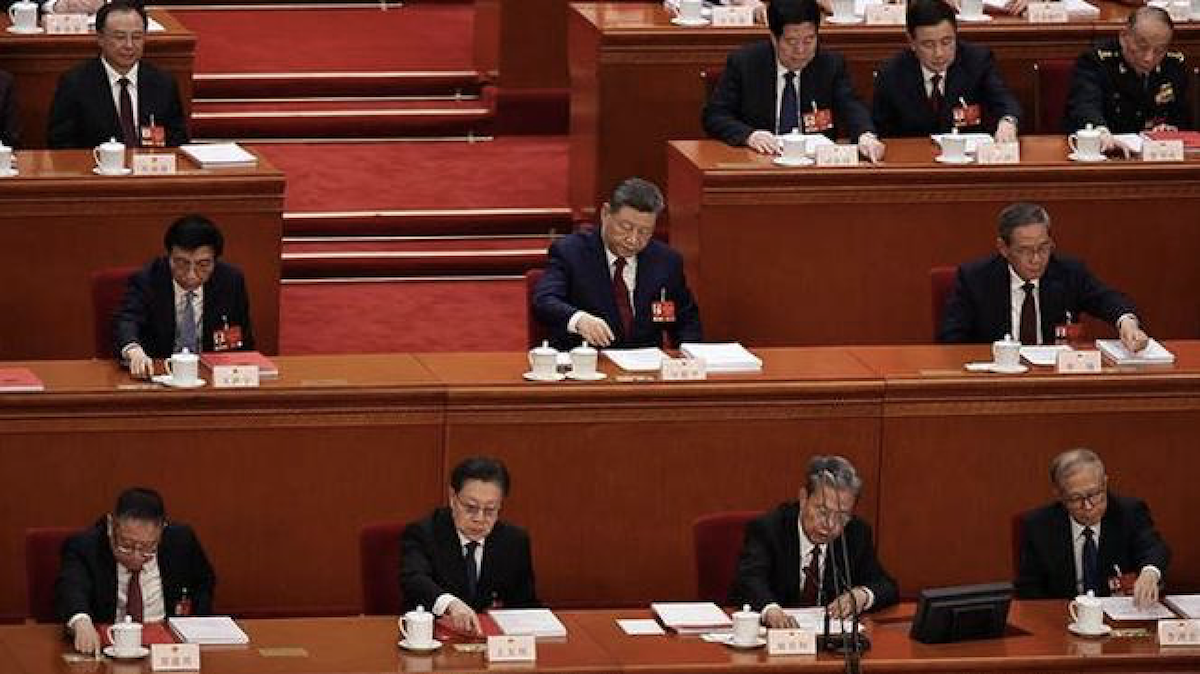
China’s legislature, the National People’s Congress (NPC), approved the law on Thursday during the closing session of its annual parliamentary meeting in Beijing. The legislation, which codifies Beijing’s approach to ethnic governance under the leadership of the Chinese Communist Party (CCP), is set to come into effect on July 1, 2026.
In a statement issued shortly after the law’s adoption, TAI said the measure legalizes policies already underway in Tibet and other minority regions, which critics say are designed to forcibly assimilate ethnic minorities into the dominant Han Chinese culture.
“The Chinese government just passed a law authorizing genocide in Tibet,” said Lhadon Tethong, Director of the Tibet Action Institute. “The new law should be seen for what it is: a legal framework for policies already underway, like the coercive system of colonial boarding schools in Tibet, that aim to eradicate Tibetans’ identity as a people.”
According to TAI, the legislation codifies several provisions that directly threaten Tibetan culture, language and identity. Among its key measures, the law requires Mandarin Chinese to be used in official communication and education, significantly weakening the limited protections for minority languages previously recognized under China’s Regional Ethnic Autonomy Law of 1984.
The law also encourages intermarriage between Han Chinese and non-Han ethnic groups, mandates that families and educational institutions teach children loyalty to the Chinese Communist Party, and requires that different ethnic groups live in mixed communities to promote integration.
TAI warned that the legislation also empowers authorities to prosecute individuals deemed to be instilling views considered harmful to “ethnic unity” in children. The group said the law could potentially criminalize Tibetan parents who simply advocate for their children to receive education in their mother tongue or seek to preserve their cultural traditions.
“The legalization of the Chinese Communist Party’s policies of forced assimilation intensifies the threat to Tibetan identity and way of life,” the organization said. “It provides a legal basis for criminalizing Tibetans who actively engage with their language, religion and customs.”
The statement also referenced a recent report by the UN Special Rapporteur on Minority Issues, presented during the 61st session of the UN Human Rights Council, which examined China’s policies targeting Tibetan language and identity. The report described Beijing’s residential boarding school system in Tibet as part of a process of “extermination” of a minority group and warned that the policies aim at “erasing the Tibetan language and identity” by preventing the intergenerational transmission of culture and language.
The rapporteur further argued that such policies could qualify as genocide and should be treated as such by the international community.
China maintains that the law is intended to foster national cohesion and strengthen what it calls a “shared sense of community for the Chinese nation.” Officials say the legislation aims to promote development, integration and common prosperity among China’s 56 officially recognized ethnic groups.
However, scholars and rights groups warn that the law marks a significant shift away from earlier policies that recognized limited ethnic autonomy and language rights, and instead entrenches a framework prioritizing assimilation into a unified national identity under the Chinese Communist Party.
The CCP dictator has bared its true colour by criminalising Tibetan language in the guise of so called “ethnic unity”! Unity must come out of harmonious co-existence with each other and not by exterminating the identity of their ethnicity. The Chinese communists are imperialists and colonialists of the worst kind even though they pretend to be anti-colonialists and anti-imperialists! Invasion and occupation of Tibet in 1949/50 is a blatant imperialist act just like America and Israel’s attack on Iran! Nations can attack other nations if they are threatened by them or if United Nations gives the permission to attack but other than that, it is illegal to attack another sovereign country. Communist China was neither threatened by Tibet nor the UN gave sanction to attack Tibet but it ATTACKED TIBET WITHOUT THE ABOVE MENTIONED CRITERIA UNDER INTERNATIONAL LAW! THEREFORE, IT CLEARLY VIOLATED INTERNATIONAL LAW BY COMMITTING AGGRESSION ON TIBET IN 1949/50. Therefore, they are no different from the aggression the US and Israel committed against Iran on February 28th 2026. The imperialist Chinese communists invade other countries and take their territories and subject the people to oppression while plundering their rich natural resources unashamedly! If this is imperialism, what is? It forcibly populates the conquered territories with Chinese colonisers under the guise of “development” but in reality, they colonise the conquered land with Chinese population to change the population demographics in order to legitimise their occupation! When the indigenous people resent the colonisers for taking away their land, their livelihood and their freedoms, the CCP imposes rules to criminalise the resentment of the native population by stripping them of their culture, language, religion and identity in the name of “ethnic unity” when in reality it is to exterminate the indigenous people! This a carbon copy of the cultural imperialism perpetrated by the white colonisers on Afro-Asian peoples, Indian American, Australian aboriginals, the Maoris of New Zealand etc for centuries! Today the yellow imperialism and colonialism is rampant as the “yellow peril” as feared by the west is coming to fruition! The forcible removal of more than a million Tibetan children from their homes to be brought up as Chinese by stripping them of their language, culture, religion and identity was practised by imperialist white America against the American Indians to wipe them out! Communist China pretends to be anti-imperialists and anti-colonialists but in REALITY, IT IS A CARBON COPY OF THE WHITE EUROPEAN IMPERIALISTS OF YESTER YEARS! IT IS PRACTISING THE SAME EVIL PRACTISE THAT IT CLAIMED TO BE AGAINST. WHEN THE CHINESE FIRST INVADED TIBET, THEY CLAIMED THAT THEY CAME TO TIBET TO “DRIVE OUT THE IMPERIALISTS” AS A CONVENIENT DECOY! TODAY, IT IS COMMITTING THE SAME CRIMES AND ATROCITIES THE WHITE EUROPEANS COMMITTED UPON THEIR TIBETAN VICTIMS! The Asian and African people fought the cruel, inhuman, greedy colonialists and imperialists and won their freedom. TIBETANS WILL FIGHT THE CRUEL, EVIL AND GREEDY CHINESE COMMUNISTS IMPERIALISTS AND THEIR DEPRAVED WAYS AND GAIN COMPLETE INDEPENDENCE! Communist China is ENEMY OF THE WORLD AND ESPECIALLY THE ENEMY OF THE SIX MILLION TIBETANS! Henceforth, Tibetans should start BURNING THE BLOOD SOAKED CHINESE COMMUNIST FLAG AND THE EFFIGIES OF THE EVIL DICTATOR XI JINPIENG! The CCP has no regard, nor respect for the Tibetan people and their civilisation. Therefore, we should not have any respect for them! Now, every Tibetan must recognise the evil nature and ultimate goal of the despicable Chinese communist regime and fight without any regard whatsoever against the regime! The great English writer Charles Dickens said,”Do unto others what they do unto you”! Do to the enemy CCP regime what it is doing against Tibet and its subjugated people!
Facts Only
The Tibet Action Institute (TAI) condemned China’s new “Law on Promoting Ethnic Unity and Progress,” approved by the National People’s Congress (NPC) on March 14, 2024.
The law is scheduled to take effect on July 1, 2026.
The legislation mandates the use of Mandarin Chinese in official communication and education.
It encourages intermarriage between Han Chinese and non-Han ethnic groups.
The law requires families and educational institutions to teach loyalty to the Chinese Communist Party (CCP).
It mandates mixed residential communities to promote integration among ethnic groups.
Authorities are empowered to prosecute individuals deemed to instill views harmful to “ethnic unity” in children.
The TAI warns the law could criminalize Tibetan parents advocating for mother-tongue education or cultural preservation.
A UN Special Rapporteur report described China’s residential boarding school system in Tibet as part of a process of “extermination” of Tibetan identity.
The UN report suggested such policies could qualify as genocide.
China states the law aims to foster national cohesion and a “shared sense of community for the Chinese nation.”
The TAI’s director, Lhadon Tethong, called the law a “legal framework for genocide” in Tibet.
Executive Summary
China’s National People’s Congress (NPC) approved the “Law on Promoting Ethnic Unity and Progress” on March 14, 2024, set to take effect on July 1, 2026. The legislation codifies policies aimed at integrating ethnic minorities, including Tibetans, into a unified national identity under the Chinese Communist Party (CCP). Key provisions include mandating Mandarin Chinese in official communication and education, encouraging intermarriage between Han Chinese and minorities, and requiring mixed residential communities. The Tibet Action Institute (TAI) condemned the law, arguing it legalizes forced assimilation, including the residential boarding school system in Tibet, which critics describe as eradicating Tibetan language and identity. A UN report presented during the 61st session of the UN Human Rights Council warned that such policies could constitute genocide by preventing intergenerational cultural transmission. Chinese officials maintain the law promotes national cohesion and shared prosperity among its 56 recognized ethnic groups. However, rights groups and scholars argue it marks a shift from earlier policies recognizing limited ethnic autonomy toward enforced assimilation.
The debate reflects broader tensions between state-led integration and minority rights. While China frames the law as fostering unity, critics see it as a tool for cultural erasure, drawing parallels to historical colonial practices. The TAI’s statement escalates rhetoric, comparing China’s actions to imperialism and calling for Tibetan resistance, including symbolic acts like burning the Chinese flag. The law’s passage coincides with ongoing concerns about Tibet’s autonomy, language preservation, and the treatment of Tibetan children in state-run schools.
Full Take
The strongest version of this narrative centers on the argument that China’s new ethnic unity law institutionalizes forced assimilation, drawing on documented policies like residential boarding schools and language suppression. The TAI’s framing gains credibility from the UN rapporteur’s report, which explicitly links these policies to potential genocide—a serious charge that elevates the stakes. The law’s provisions, such as mandating Mandarin and mixed communities, are presented as evidence of a systematic effort to erase Tibetan identity, a claim supported by historical parallels to colonial assimilation tactics.
However, the article also employs patterns of emotional exploitation and distortion. The comparison of China’s actions to “white European imperialists” and the call to burn the Chinese flag and effigies of Xi Jinping escalate the rhetoric into provocative, symbolic resistance, which risks overshadowing the legal and human rights arguments. The forced equivalence between China’s invasion of Tibet and hypothetical U.S./Israel actions against Iran (which did not occur in 2026) stretches credibility, potentially undermining the core critique. The repeated use of inflammatory language (“evil,” “depraved,” “blood-soaked”) leans into moral panic, which may alienate readers seeking nuanced analysis.
Rooted in anti-colonial and anti-imperialist paradigms, the narrative assumes that China’s policies are inherently genocidal and that resistance is the only moral response. This framing echoes Cold War-era critiques of state-led assimilation but risks conflating cultural erosion with physical genocide, a distinction the UN report itself carefully navigates. The implications for human agency are stark: Tibetans are positioned as victims of a predatory state, with little room for dialogue or reform within the system. The second-order consequences could include heightened repression, as the CCP may view such rhetoric as justification for tighter control.
Bridge questions: How might Tibetans pursue cultural preservation without reinforcing cycles of repression? What evidence would change the assessment of these policies as genocidal rather than assimilatory? How do other minority groups in China experience these laws, and does their perspective complicate the narrative?
Counterstrike scan: A coordinated influence campaign would amplify emotional triggers (e.g., calls for flag-burning), exploit historical grievances, and frame the issue as a binary struggle between oppressor and oppressed. While the article aligns with this pattern in its rhetoric, the core facts—UN reports, legislative details—remain substantiated. The overuse of provocative language, however, mirrors tactics used to polarize audiences rather than inform them.
Patterns detected: ARC-0012 Emotional Exploitation, ARC-0024 Ambiguity (forced equivalence), ARC-0043 Motte-and-Bailey (shifting from legal critique to symbolic resistance).
Sentinel — Human
The article shows strong signs of human authorship, particularly in its emotional tone, idiosyncratic phrasing, and specific attributions, with minimal indicators of synthetic generation.