Posted: 25 March 2026 | Gabriel Higgins | No comments yet
New quantum inertial navigation system tested on mainline railway could transform train positioning, reduce infrastructure costs and improve reliability across Britain’s rail network.
Credit: GBRX
Britain’s railway has taken a significant step forward in the development of quantum navigation technology, with a new system designed to measure train position with high precision now tested on the national network.
This programme begins the process of understanding how quantum positioning could fundamentally reshape how railways work.”
Quantum inertial navigation uses ultra sensitive sensors to detect small changes in motion and rotation, allowing trains to determine their position without relying on satellite signals. Unlike GPS, the system can operate in tunnels, dense infrastructure or areas affected by interference, offering a more resilient alternative to existing positioning methods.
First mainline trial of quantum positioning
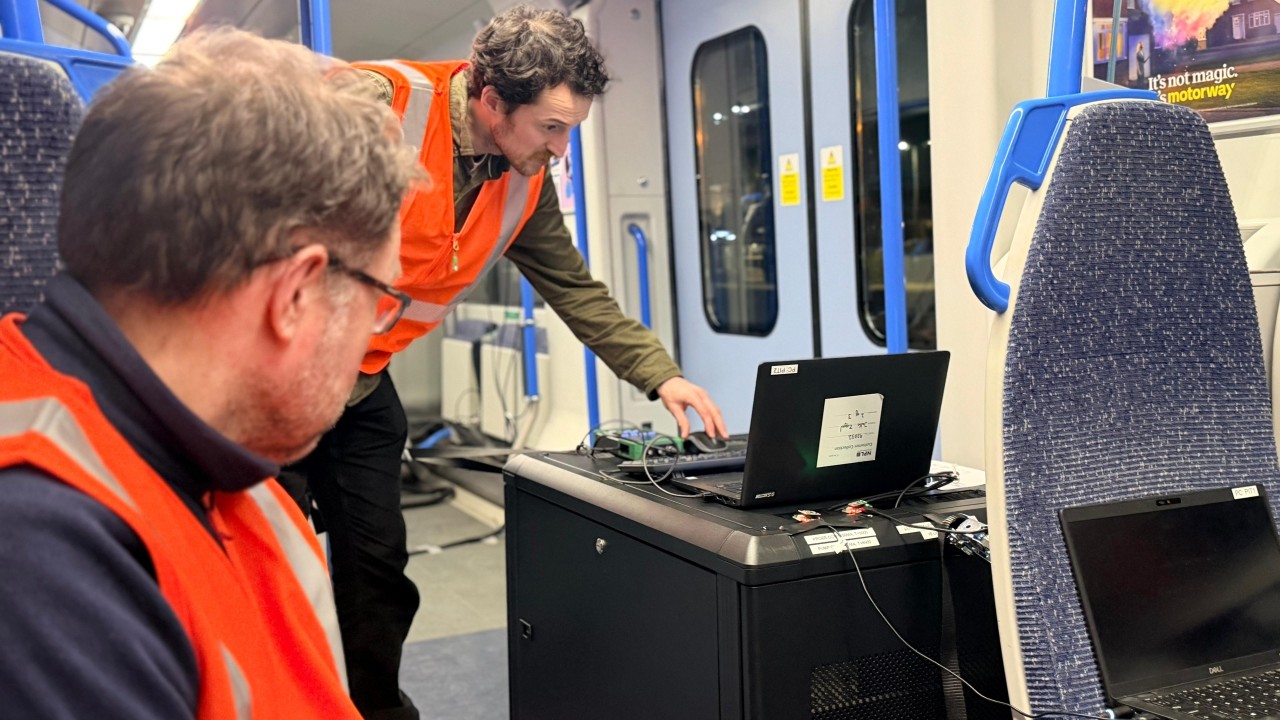
The Rail Quantum Inertial Navigation System was recently tested on a mainline service operated by Govia Thameslink Railway between central London and Welwyn Garden City. The trial provided real world data on system performance within a live railway environment, marking the first time this technology has been tested on a mainline anywhere in the world.
The technology is being explored as a potential replacement for fixed trackside positioning infrastructure, which can be expensive to install and maintain and may be vulnerable to disruption or failure. A successful rollout could reduce costs while improving operational reliability and resilience.
The programme builds on earlier work by the Ministry of Defence and Transport for London, extending quantum sensing research into heavy rail applications.
Development is being led by a consortium including MoniRail Ltd, Imperial College London, University of Sussex, QinetiQ, PA Consulting and National Physical Laboratory, with support from Innovate UK and the Department for Science, Innovation and Technology.
The initiative is coordinated by GBRX to accelerate adoption of emerging technologies across the rail network.
Rail Minister Peter Hendy said the development continues the UK’s legacy of rail innovation and will help improve reliability and passenger experience.
Toufic Machnouk of GBRX added that quantum sensing could reshape railway operations by reducing reliance on trackside systems and enabling smarter, more efficient networks.
Stay Connected with Global Railway Review — Subscribe for Free!
Get exclusive access to the latest rail industry insights from Global Railway Review — all tailored to your interests.
✅ Expert-Led Webinars – Gain insights from global industry leaders
✅ Weekly News & Reports – Rail project updates, thought leadership, and exclusive interviews
✅ Partner Innovations – Discover cutting-edge rail technologies
✅ Print/Digital Magazine – Enjoy two in-depth issues per year, packed with expert content
Choose the updates that matter most to you. Sign up now to stay informed, inspired, and connected — all for free!
Thank you for being part of our community. Let’s keep shaping the future of rail together!
Related topics
Big Data, Digitalisation, Infrastructure Developments, Operational Performance, Safety, Signalling, Control & Communications, Standardisation & Technical Harmonisation, Sustainability/Decarbonisation, Technology & Software, Track Systems
Facts Only
Who: Govia Thameslink Railway, MoniRail Ltd, Imperial College London, University of Sussex, QinetiQ, PA Consulting, National Physical Laboratory, Innovate UK, Department for Science, Innovation and Technology
What: Tested Rail Quantum Inertial Navigation System on mainline railway, potential benefits include reduced infrastructure costs, increased operational reliability, functionality in areas with poor satellite reception or dense infrastructure
When: Not specified in the article
Where: Central London to Welwyn Garden City (UK)
Executive Summary
Full Take
Analyzing this article from a skeptical perspective, we find that it presents a promising development in quantum navigation technology for railways. However, it is essential to recognize potential concerns surrounding the adoption of such advanced technology.
Firstly, while the technology offers improved resilience compared to existing satellite-based systems, there may be technical challenges associated with implementing and integrating this new system into the existing railway infrastructure. This could lead to additional costs or disruptions during the transition phase.
Secondly, the article does not provide details about the timeline for widespread implementation of the quantum navigation technology across Britain's rail network. Achieving nationwide adoption may require significant investment and coordination between various stakeholders, which could potentially be met with resistance or challenges.
Lastly, it is crucial to consider the potential impact of this development on existing employment opportunities within the railway sector. Implementing new technologies might lead to changes in workforce composition, skills requirements, and even job losses if automation is involved. This highlights the importance of addressing potential social and economic consequences alongside technological advancements.
Questions for further reflection: How can stakeholders ensure a smooth transition to quantum navigation technology while minimizing disruptions and maintaining operational reliability? What measures can be taken to address potential negative socio-economic impacts on the railway workforce?
Sentinel — Human
This article shows signs consistent with human authorship, such as variable sentence length, idiosyncratic emphasis, personal voice, and anecdotal quotes. However, it is important to note that there are no definitive indicators of AI generation or manipulation.