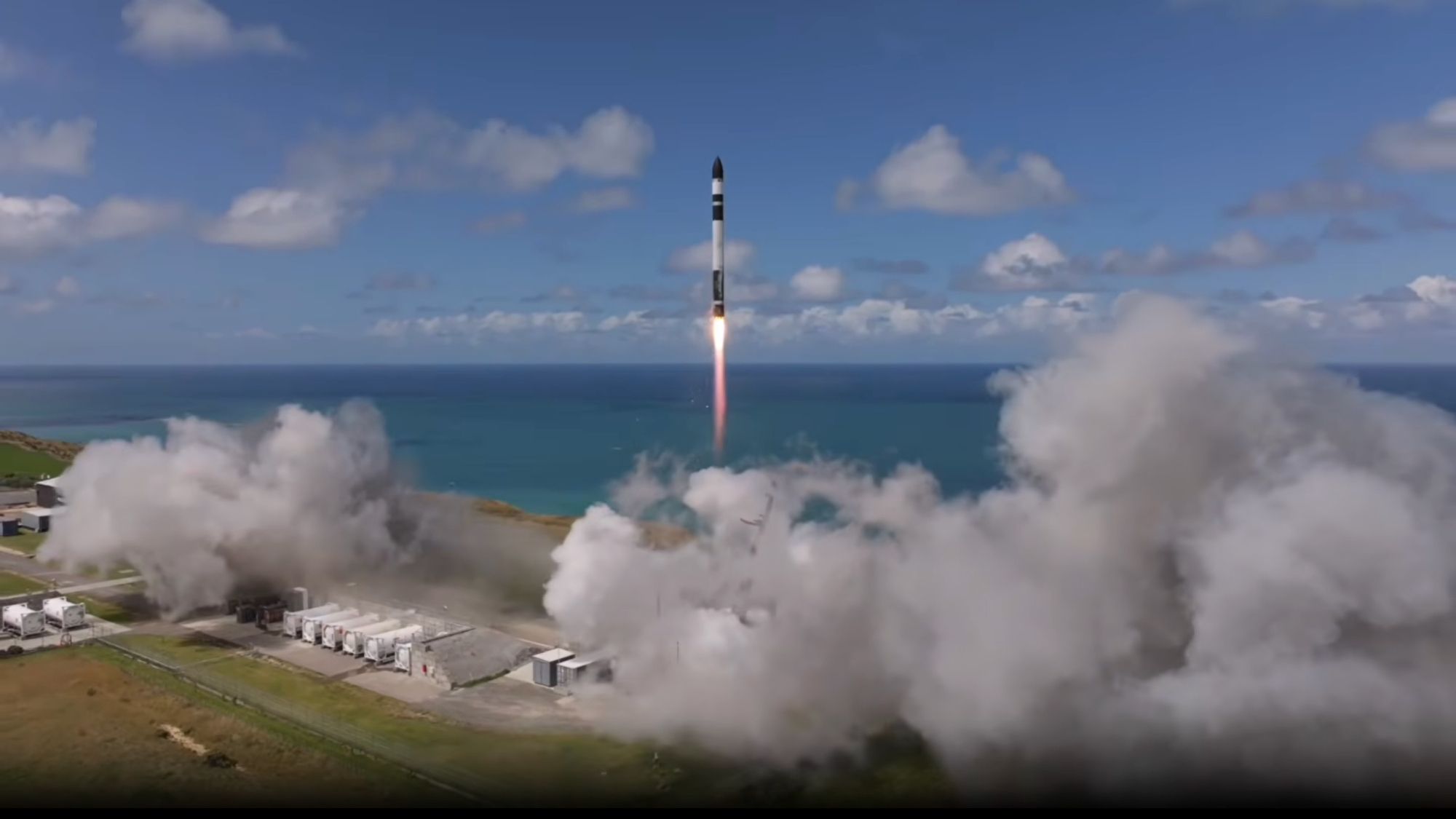
"This is a defining moment for the space industry and the start of a new era of strategic, accelerated growth for Rocket Lab and Iridium."
California-based launch company Rocket Lab has inked a landmark $8 billion deal to acquire long-time satellite communications giant Iridium.
Rocket Lab has brought a variety of companies into its space systems architecture in recent years, but none of those previous purchases were as notable as the acquisition announced today (June 29). Rocket Lab and Iridium settled on the purchase at $54 per share, equating to an $8 billion deal for the legacy satellite operator.
"This is a defining moment for the space industry and the start of a new era of strategic, accelerated growth for Rocket Lab and Iridium," Rocket Lab CEO Peter Beck said in a statement. The merger folds another area of expertise into Rocket Lab's growing, vertically integrated operations and creates a stream of continued revenue from Iridium's existing subscribers.
Iridium is a Virginia-based communications company that operates a constellation of L-band satellites in low Earth orbit (LEO) that provide a global network of voice, Internet of Things, aviation, maritime, defense and emergency communications services to more than 2.5 million customers. It was founded by Motorola, via the company's efforts in the 1980s to establish a handheld global satellite phone network.
Iridium operated one of the first large commercial LEO constellations, but the success didn't last; the company went bankrupt in 1999. Iridium later rebuilt its constellation through the $3 billion Iridium NEXT campaign, launching 75 replacement satellites aboard SpaceX rockets between 2017 and 2019. Soon, that network will be operating under Rocket Lab's supervision.
The newly announced agreement comes as Rocket Lab ramps up its business ventures, as well as its dealings with the U.S. government as a national defense contractor. Within just the last month, Rocket Lab passed a major test in its program to deliver a constellation of advanced missile warning and tracking satellites for the U.S. Space Force (USSF), broke a responsive readiness record by executing a Tactically Responsive Space launch within 16 hours and 42 minutes of receiving notice from USSF's Space Systems Command, and announced its selection by NASA for three different science missions to launch in 2027.
Now that it's bringing Iridium under its umbrella, Rocket Lab is making even bigger plans. Instead of just supporting Iridium's existing network, Rocket Lab is planning its expansion. "We will go far beyond maintaining a legacy; we are going to build upon it to pioneer next-generation space applications and deliver sought-after capabilities to existing and new customers," Beck said. That includes Iridium's next-generation direct-to-device satellite network and the capabilities it will add to Rocket Lab's potential national security contributions.
"By marrying Iridium's deep heritage, trusted infrastructure, and highly-sought-after spectrum with Rocket Lab's extensive and proven launch and manufacturing capabilities, we have the capability to unlock entirely new markets," Beck said.
You must confirm your public display name before commenting
Please logout and then login again, you will then be prompted to enter your display name.
Josh Dinner is Space.com's Spaceflight Staff Writer. He is a writer and photographer with a passion for science and space exploration, and has been working the space beat since 2016. Josh has covered the evolution of NASA's commercial spaceflight partnerships and crewed missions from the Space Coast, NASA science missions and more. He also enjoys building 1:144-scale model rockets and spacecraft. Find some of Josh's launch photography on Instagram, and follow him on X, where he mostly posts in haiku.
Sentinel — Human
The text exhibits the clear structure and factual density of professional financial/space journalism, suggesting human authorship or highly structured, verifiable synthesis rather than raw machine generation.