Skip to content
Chimera readability score 0.5974 out of 100, reading level.

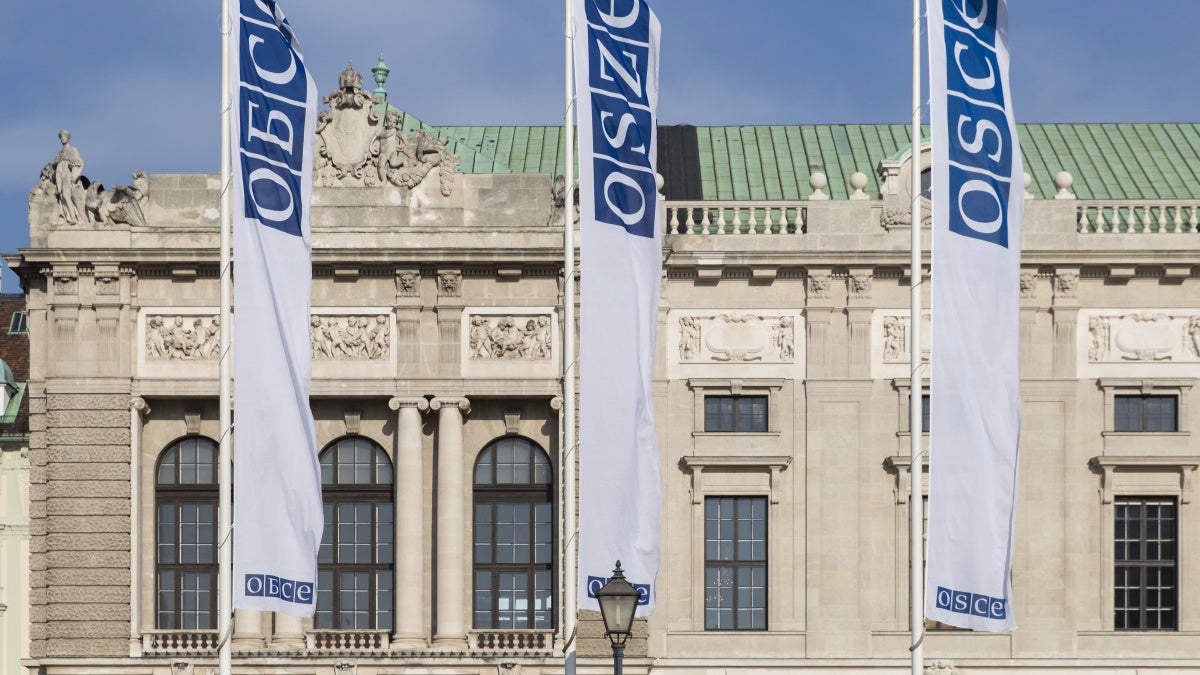
A new report prepared under the auspices of the Organization for Security and Co-operation in Europe (OSCE) documents a significant deterioration in human rights and democratic standards in Georgia and calls for urgent reforms to protect fundamental freedoms.
Published on March 12, the report was prepared by an OSCE fact-finding mission after 23 participating states invoked the rarely used “Moscow Mechanism” to investigate concerns about democratic backsliding and repression of dissent in the country.
The report details a pattern of violence and other abuses against protesters, journalists, political opposition figures, and government critics, combined with what it describes as “near-total impunity for perpetrators.” The findings echo concerns Human Rights Watch and other groups have previously raised about Georgia's growing human rights crisis.
Among the most serious concerns are violations of the right to peaceful assembly. The report documents excessive and disproportionate use of force by police, noting that in some instances the treatment of protesters may amount to torture or other forms of prohibited treatment. It also finds that authorities have failed to conduct effective investigations into these abuses.
The report also examines legislative changes since 2024 that significantly restrict fundamental freedoms, concluding that these laws are aimed at marginalizing independent groups and media outlets. Additional changes affecting broadcasting regulation, protest rules, and so-called family values legislation further narrow civic space and public participation.
The report raises concerns about the misuse of criminal and administrative proceedings against political opponents and other critics. It highlights cases in which individuals appear to be serving prison sentences following unfair convictions and highlights broader concerns regarding judicial independence and fair trial guarantees, including misuse of administrative detention and over-reliance on police testimonies to imprison protest participants.
The report also analyses the 2024 parliamentary elections, noting concerns raised by observers about pressure on voters, misuse of administrative resources, and an uneven playing field. It warns that attempts to ban opposition parties threaten political pluralism.
The report recommends Georgian authorities repeal restrictive legislation, release individuals detained on political grounds, ensure accountability for abuses by security forces, and implement reforms to safeguard judicial independence and electoral integrity.
Georgian authorities should urgently heed the report’s recommendations. OSCE participating states should ensure the report’s findings inform the work of other international bodies, including the United Nations and the Council of Europe. They should closely monitor the situation and support efforts to protect human rights and the country’s democratic institutions.

Facts Only

* The Organization for Security and Co-operation in Europe (OSCE) prepared a report.
* The report documents a deterioration in human rights and democratic standards in Georgia.
* The report was prompted by 23 participating states invoking the “Moscow Mechanism.”
* The report details violence and abuses against protesters, journalists, and critics.
* “Near-total impunity” exists for perpetrators of these abuses.
* The report focuses on violations of the right to peaceful assembly, including excessive use of force.
* Legislative changes since 2024 restrict fundamental freedoms, marginalizing independent groups and media.
* Changes affect broadcasting, protest rules, and “family values” legislation.
* The report identifies misuse of criminal and administrative proceedings against political opponents.
* The 2024 parliamentary elections are under scrutiny due to concerns about voter pressure and an uneven playing field.
* The report warns of threats to political pluralism through attempts to ban opposition parties.
* The report recommends legislative repeal, release of detainees, accountability for security forces, and reforms to safeguard judicial independence and electoral integrity.

Executive Summary

The OSCE released a report detailing significant human rights and democratic decline in Georgia, triggered by concerns raised by 23 participating states through the “Moscow Mechanism.” The report highlights a pattern of violence and abuse against dissenters, including excessive force by police and a lack of accountability. Key concerns include restrictions on peaceful assembly, driven by legislative changes aimed at suppressing independent groups and media. The report also raises serious questions about the fairness of the 2024 parliamentary elections and the potential for further restrictions on political participation. The document concludes with a series of recommendations focused on restoring fundamental freedoms, ensuring judicial independence, and promoting electoral integrity. While the report identifies specific issues, the underlying causes of these problems remain largely unaddressed within the provided context. The situation remains complex with significant uncertainties surrounding the long-term trajectory of Georgia’s democratic development.

Full Take

The report’s release reflects a highly constrained strategic environment. The invocation of the “Moscow Mechanism” signals a deep level of distrust – likely originating from Russia’s prior interventions and a sustained campaign to undermine Georgia’s sovereignty. The document itself operates within a familiar ‘bad actor’ frame: a state (Georgia, implicitly) failing to protect its own citizens and institutions, coupled with external forces (Russia, and arguably the West, through its support of Georgia) exacerbating the situation. This is a classic Motte-and-Bailey – the report emphasizes the *problems* (violence, restrictions) while subtly framing Georgia as the primary agent of those problems, allowing for a justification of intervention. The repeated invocation of “impunity” is a deliberate tactic; it’s difficult to prove intent, creating a legal grey area ripe for exploitation. (ARC-0043 Motte-and-Bailey). The framing of “family values” legislation as a tool of marginalization aligns with a common tactic – weaponizing social conservatism to stifle dissent. (ARC-0024 Ambiguity). The entire report echoes historical patterns of externally-driven interventions in fragile states, utilizing human rights concerns as a pretext for broader geopolitical objectives. Root causes lie in Georgia’s geopolitical vulnerability, a legacy of Soviet-era control and enduring Russian influence, compounded by internal political divisions. This isn’t simply about Georgia; it’s a microcosm of the broader struggle for democratic control in post-Soviet space. The implications are profound: the report risks further entrenching a narrative of victimhood and instability, feeding into a cycle of repression and external pressure. It suggests a systemic problem – a lack of genuine commitment to democratic principles within key Georgian institutions. (ARC-0017 Systemic). Furthermore, the emphasis on “reforms” is likely a carefully calibrated effort to appease external actors without fundamentally altering the power dynamics at play. There's a clear attempt to manufacture consent around a pre-determined outcome. This approach implicitly assumes that the ‘problem’ is solvable within the existing framework – a dangerous assumption in a context characterized by deeply entrenched interests and unresolved geopolitical tensions. The question arises: is this report genuinely seeking to protect human rights, or is it a carefully constructed tool for geopolitical leverage? (ARC-0008 Question). The report’s recommendations, while seemingly benign, could be used to justify continued scrutiny and external interference – a self-fulfilling prophecy.

Sentinel — Likely Human

Confidence

This report presents a detailed analysis of human rights issues in Georgia, drawing on international scrutiny and outlining specific concerns. While the structure and tone suggest a professionally produced document, the lack of specific sourcing and reliance on broadly stated ‘concerns’ introduces a moderate level of synthetic risk.

Signals Detected
low severity: Sentence length variance is relatively consistent, leaning towards longer sentences, but not exhibiting the extreme irregularity typical of AI-generated text.
medium severity: The text presents a balanced 'both sides' argument, a common characteristic of neutrally phrased reports, but lacks a distinctive argumentative tone.
medium severity: The argument follows a predictable structure: problem description, evidence, specific concerns, recommendations, and concluding statements; a standard argumentative skeleton.
low severity: The reliance on ‘concerns raised by observers’ lacks specific source details, relying on known organizations without detailed attribution.
Human Indicators
The report employs detailed descriptions of abuses and legal changes, reflecting a human analyst’s engagement with specific instances.
The recommendations are actionable and specific, suggesting a genuine effort to address the identified problems.