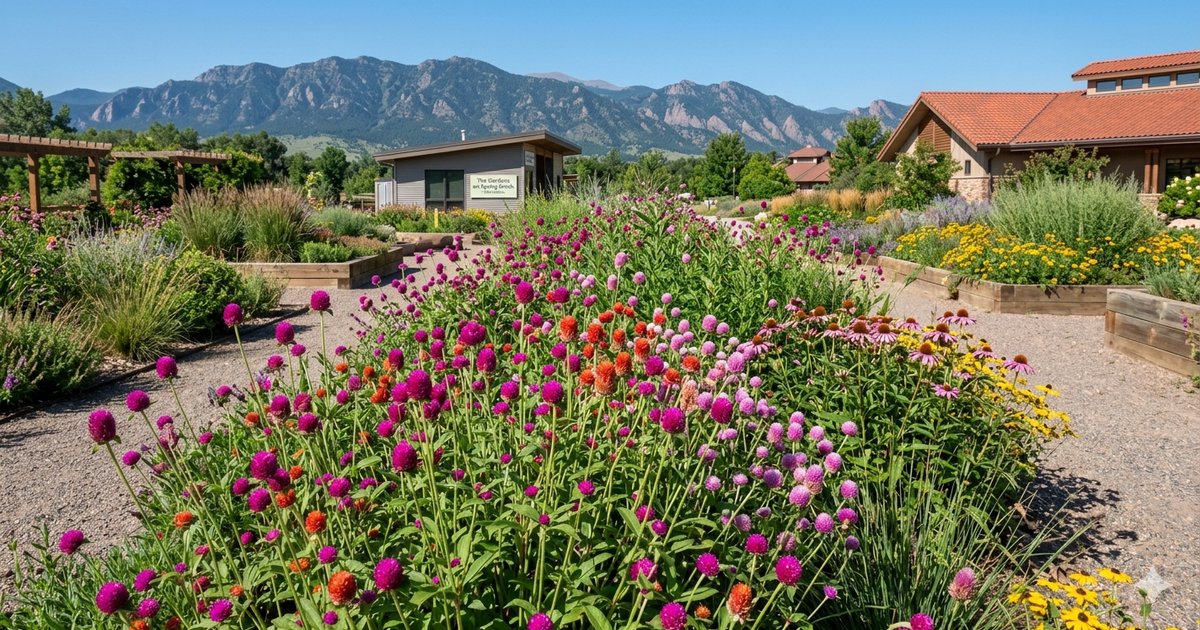
If you are looking for a plant that laughs at the high-plains heat and keeps its vibrant color from the first summer barbecue through the first crisp frost, look no further than Gomphrena (commonly known as Globe Amaranth). These charming, button-like blooms are a gardener's secret weapon for maintaining a lush, colorful landscape in the unique climate of Northern Colorado.
Why Gomphrena Thrives in Fort Collins
Fort Collins gardeners face specific challenges: intense high-altitude sunlight, drying winds, and often unpredictable water restrictions. Gomphrena is a champion of high-altitude gardening, specifically prized for being a heat-resilient variety. Its papery bracts hold their clover-like shape and neon-bright hues even when other garden favorites begin to wilt under the July sun.
Designing with Gomphrena
In a Fort Collins landscape, Gomphrena offers incredible versatility:
- Drought-Tolerant Borders: Use lower-growing varieties to line gravel paths or stone walkways. They thrive in the well-drained soils found throughout the Front Range.
- Pollinator Magnets: These blooms are irresistible to local butterflies and bees, making them essential for a backyard habitat.
- Cutting Gardens: The stiff stems make them an excellent choice for fresh bouquets, and they are world-class for drying. Simply hang them upside down, and they will retain their color for years.
Perfect Pairings
To create a truly professional "Better Homes" look, pair Gomphrena with other hardy, sun-loving companions that share its love for the Colorado climate. It looks stunning when nestled alongside:
- Agastache (Hyssop): The spiky verticality of Agastache provides a beautiful contrast to the rounded "globes" of the Gomphrena.
- Amaranth: For a bold, textural statement, combine various types of Amaranth to create a tapestry of rich, deep tones.
- Angelonia (Summer Snapdragon): These offer elegant, snapdragon-like towers of flowers that complement the playful, whimsical shape of Globe Amaranth.
- Ornamental Grasses: For a modern, prairie-inspired look, plant Gomphrena among blue oat grass or little bluestem to add pops of color to the shimmering seed heads.
Whether you are tucking them into a container on your patio or filling a large sunny bed, Gomphrena is a low-maintenance, high-reward choice for any Fort Collins home.
Facts Only
* Gomphrena is commonly known as Globe Amaranth.
* The plant is recommended for gardening in Northern Colorado.
* Gomphrena is described as a heat-resilient variety.
* The plant's papery bracts maintain shape and color under intense sunlight.
* Gomphrena can be used for drought-tolerant borders along gravel paths or stone walkways.
* Gomphrena thrives in well-drained soils found throughout the Front Range.
* Gomphrena blooms are attractive to butterflies and bees.
* Stiff stems are suitable for cutting gardens and drying.
* Suggested pairings include Agastache, Amaranth, Angelonia, and Ornamental Grasses.
Executive Summary
Full Take
The narrative frames Gomphrena as an inherently resilient solution to environmental stress, leveraging its physical properties (stiff stems, color retention) to address specific regional climate challenges. This functions as a model for consumer adaptation, suggesting that horticultural success in unpredictable climates can be achieved through specific, hardy plant selections. The emphasis on "heat-resilience" and "drought-tolerant" positions the plant not just as an aesthetic choice, but as a practical tool for mitigating environmental uncertainty in a high-altitude setting.
The pattern observed is the deployment of botanical traits to address perceived environmental vulnerability, linking aesthetic beauty directly to ecological fitness. This approach taps into the desire for low-maintenance, high-reward solutions, often bypassing complex ecological shifts in favor of immediate, localized solutions. The implied assumption is that regional climate variability can be managed effectively by selecting specific, robust species, rather than adapting to systemic changes.
This perspective raises questions about the distinction between physical resilience (the plant surviving heat) and systemic resilience (the ecosystem adapting to changing water and wind patterns). What is the cost of defining gardening success solely by the ability of a single plant to withstand local environmental pressures, and what systemic support is required for true long-term resilience in the Front Range?
Sentinel — Likely Human
The text is exceptionally well-structured and highly fluent, exhibiting characteristics of modern AI synthesis used to create accessible, practical instructional content.