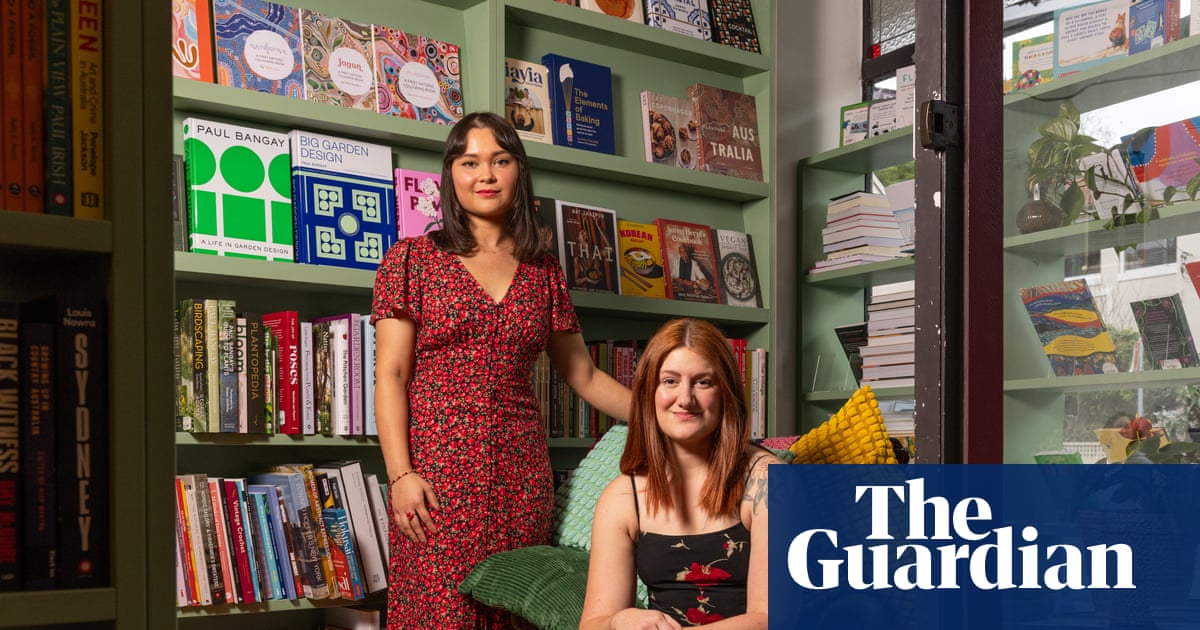
Stephanie Beck and Mischa Parkee bonded over their love of reading when they were teenagers, joking that one day they’d open their own bookshop. Now, despite both 31-year-olds having full-time teaching jobs, they’ve fulfilled their dream, opening an art deco corner store in Sydney’s Summer Hill called The Rose Read Bookshop.
When Beck’s mother died last year, she was left with an inheritance, which she used to invest in the shop. “I thought, this is not a money-making venture,” but it felt like a “meaningful way” to use it, she says.
“[The area] needs a community hub, where there’s kids’ events, parent and bubs’ events, free events and affordable bookclubs,” says Beck. “A place where people meet others and expand their perspectives,” adds Parkee. “Where they can have a sense of belonging.”
Judging by the number of locals who stop by during our interview, their shop is a welcome addition to the neighbourhood. Ahead of the opening, strangers volunteered to sticker books for them and others sent flowers, food and cards.
But operating a bookshop is tough. According to independent research published last year, the number of bookstores in Australia fell by 49% in a decade, dropping from 2,879 to 1,457 between 2013 and 2023. Many blamed rising rents and competition from major retailers such as Kmart and Amazon. The Australian Booksellers Association (ABA) reports 24% of independent booksellers don’t even pay themselves a wage. So will community goodwill be enough?
‘We have so many bookshops running on empty’
“We have so many bookshops running on empty,” says Susannah Bowen, CEO of the ABA. “The typical owner-operator bookseller is working incredibly long hours, either not paying themselves at all or paying themselves way less than they could earn elsewhere.”
About 40% of local bookshops report under $50,000 profit each year, the ABA says, which explains the steady decline of bookselling businesses in the last 25 years. The indie bookshops that are surviving tend to function as community gathering spaces, hosting live talks and events – but while there are existing grants to support live events in bookshops, the industry needs more government support, says Bowen.
Earlier this year the ABA put forward a new cultural policy submission to help Australia’s booksellers survive, including proposing tax offsets on the purchase of Australian titles; restricting the deep discounting of books via price-fixing measures that are common in Europe (an idea author Richard Flanagan has voiced his support for); and legislation to recognise bookshops as essential cultural spaces, like libraries and regional cinemas.
Terri-Jane Dow, owner of Cursive Knives bookstore in Fortitude Valley, Queensland, believes that bookshops offer a valuable community service and should be supported accordingly. “I think it’s quite reductive to say that it’s just retail,” she says. “Reading is a very solitary pastime, but books as a whole just is not. When you read a book, you want to go and talk to people about it.”
Cursive Knives, which opened in December 2025, hosts up to five book club nights a week, plus monthly writing workshops and creative workshops such as ink drawing and journal making. And people have been fighting for tickets, she says. “I’ve basically forgotten what my husband looks like, but running a bookshop is great. In the space of six months, I have made so many friends. I have so many different, interesting conversations every day.”
But her small store is run on very tight margins. “There are new books published every week and the space they take up on the shelf is valuable real estate, so they need to sell,” she says. (It doesn’t help that Australian publishers seem to be fast-tracking new titles, flinging them on shelves before they’re ready.)
The recommended retail price for a book is about $36.99, which is about what a bookshop will charge you – but only 43% of books bought in Australia are purchased that way. The majority are sold much more cheaply via Amazon or discount department stores such as Big W and Kmart.
“You can’t, as an independent bookshop, compete with Big W selling books for like $14. They’re costing me more than $14 to bring in. But I would say the vast majority of people want to chat to you about what they’re reading, and I think that is where the value is. You’re not going to get that by buying your book for half the RRP on Amazon.”
‘Bookshops are naturally a bit of a community space’
Despite those mounting pressures, new bookshops continue to open. Melbourne’s Fino Books, in Fitzroy North, opened this month and sells new and secondhand titles, as well as vinyl from Northside Records. “Bookshops are naturally a bit of a community space,” says owner Tessa Dwyer. “People come and have a little pause from what’s going on outside; they’re not quite a library, but they’re not quite a shop either. Or they’re both.”
Writing workshops, book launches and talks add “opportunities for creativity, discussion and critical thought” to your local area, she says.
“Books are an absolute necessity and you can’t overstate the pivotal role they play in nurturing our society … My feeling is that people are hungry for a bookstore, but there are still very serious pressures facing booksellers.”
Ultimately, says Bowen, if we want to address Australia’s literacy crisis, we need more places for people to discover what they like to read. “It’s not really possible to browse and talk to someone about the books in an online environment or a discount department store,” she says. “It just doesn’t happen.
“Bookshops drive literacy, they function as community gathering spaces, and they sustain Australian stories. Most people want to support that.”
Sentinel — Human
This text demonstrates high human authorship, successfully blending qualitative community narratives with quantitative economic data to build a nuanced argument about the role of independent bookstores.