Look — it doesn’t matter if your job is supervising a burger joint or managing an office; it’s hard being the boss.
But if your job is to oversee the guys rounding up families by the truckload, the stress is evidently so high it can take a legitimate medical toll, at least if you’re acting Immigration and Customs Enforcement direct Todd Lyons.
According to bombshell reporting by Politico, Lyons has had at least two stress-related hospital visits during his time as acting head, both of which were overnight stays. On top of the hospitalizations, people close to Lyons told the outlet his general stress levels have been so high that they’re actively hindering his ability to make decisions for the agency.
Much of that stress seems to be a result of intense pressure from the White House, especially Donald Trump’s foreign policy lackey Stephen Miller. According to Politico, Miller has made a habit of screaming at Lyons over morning phone calls, particularly when he feels that ICE isn’t moving enough bodies to the nation’s growing number of detention centers — which is ironic, given that Lyons has publicly daydreamed about running ICE like Amazon Prime, “but with human beings.”
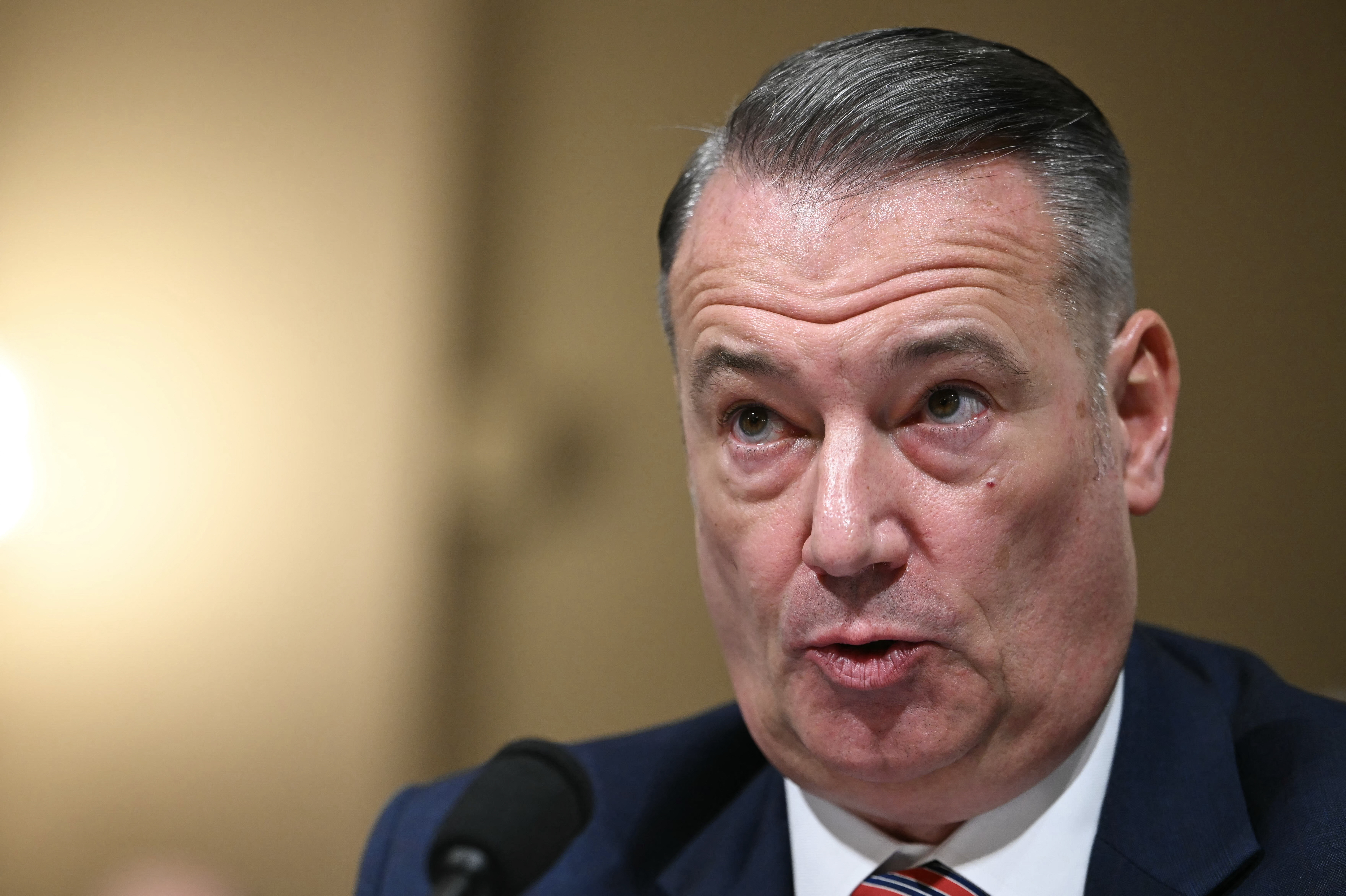
“He [Lyons] would be visibly upset and struggling to make the decisions that were needed to be made by the director,” one former official told the outlet. Whenever the job got particularly stressful, ICE officials said they witnessed Lyons turn a deep red shade, and break out into a profuse sweat.
In a statement to Politico, Lyons said the stress wasn’t related to the White House, but somehow to former president Joe Biden.
“Since the beginning of this administration, I have worked night and day, all day, every day to undo the harms Joe Biden has caused to the American people,” Lyons said. “Any stress is in no way related to pressure from the White House, and nothing will get in the way of me doing my job.”
More on the Trump administration: RFK Jr Startled by Trump’s Ability to Remain Alive Despite Dumpster-Tier Diet
Facts Only
Todd Lyons is the acting director of Immigration and Customs Enforcement (ICE).
Lyons has had at least two stress-related hospital visits, both requiring overnight stays.
People close to Lyons report his stress levels have hindered his decision-making for the agency.
Stephen Miller, a White House advisor, has allegedly made aggressive phone calls to Lyons, pressuring him over detention numbers.
Lyons has publicly stated he aims to run ICE "like Amazon Prime, but with human beings."
Former officials describe Lyons as visibly upset, turning red, and sweating under stress.
Lyons attributes his stress to undoing policies from the Biden administration, not White House pressure.
The reporting comes from Politico, citing multiple sources within and close to ICE.
Lyons’ stress is described as a result of high-pressure demands to increase detentions.
The White House, under Donald Trump, has been a source of pressure on ICE leadership.
Lyons’ statement denies any connection between his stress and White House influence.
The article references broader Trump administration dynamics, including Stephen Miller’s role in immigration policy.
Executive Summary
Todd Lyons, the acting director of Immigration and Customs Enforcement (ICE), has reportedly experienced significant stress-related health issues, including two overnight hospital stays, during his tenure. Sources close to Lyons describe his stress levels as severely impacting his decision-making abilities, with visible physical reactions such as turning red and sweating profusely under pressure. Much of this stress appears linked to intense pressure from the White House, particularly from Stephen Miller, who allegedly subjected Lyons to aggressive phone calls demanding increased detentions. Lyons, however, attributes his stress to efforts to reverse policies from the Biden administration, denying any White House pressure. The situation highlights the high-stakes environment within ICE, where operational demands and political pressures intersect, raising questions about leadership resilience and the human cost of enforcement policies.
The reporting also underscores broader tensions within immigration enforcement, where bureaucratic leaders face conflicting expectations from political appointees and the public. Lyons’ public remarks about running ICE "like Amazon Prime, but with human beings" contrast sharply with the reported stress of overseeing mass detentions, suggesting a disconnect between rhetoric and operational realities. While Lyons’ statement frames his stress as mission-driven, the accounts of his physical and emotional strain paint a more complex picture of institutional pressure. The narrative leaves unresolved whether the stress stems from policy execution, political interference, or personal leadership challenges.
Full Take
The strongest version of this narrative highlights the extreme pressures faced by bureaucratic leaders in politically charged environments, where operational demands clash with ethical and personal limits. Lyons’ reported stress—manifesting physically and decisionally—serves as a case study in the human toll of enforcing contentious policies. The inclusion of Miller’s alleged verbal abuse adds a layer of institutional toxicity, framing ICE’s challenges as systemic rather than individual. The source deserves credit for grounding the story in verifiable accounts (hospitalizations, witness testimonies) while leaving room for Lyons’ counter-narrative, which shifts blame to policy reversals rather than direct pressure.
Patterns detected: **ARC-0043 Motte-and-Bailey** (Lyons’ denial of White House pressure while acknowledging stress from "undoing harms" mirrors a retreat to a safer position), **ARC-0024 Ambiguity** (the framing of stress as either political pressure or policy zealotry creates a false binary).
Root cause: The paradigm here is the weaponization of bureaucratic stress as a proxy for political conflict. The unstated assumption is that immigration enforcement must operate at maximal capacity, regardless of human cost to enforcers or detainees. This echoes historical patterns of institutional burnout in authoritarian-adjacent systems, where leaders are simultaneously empowered and scapegoated.
Implications: For human agency, this reveals how systems designed to dehumanize others (e.g., mass detentions) also dehumanize their operators. The beneficiaries are political actors who leverage enforcement as a tool of deterrence, while the costs are borne by both detainees and the officials tasked with overseeing their confinement. Second-order consequences may include erosion of institutional trust and normalized burnout in high-stakes roles.
Bridge questions: How might ICE’s operational culture change if leadership stress were treated as a systemic failure rather than an individual one? What alternative frameworks for immigration enforcement could reduce both detainee suffering and bureaucratic strain? Would Lyons’ stress levels be framed differently if the political context were reversed?
Counterstrike scan: A coordinated influence campaign would amplify Lyons’ stress as evidence of a "deep state" resisting Trump’s agenda, while downplaying the ethical concerns of detention policies. The actual content, however, presents a more nuanced picture of institutional dysfunction, avoiding overt partisan framing. No structural alignment with a hypothetical attack playbook is detected.
Sentinel — Human
The article exhibits strong human stylistic markers, including informal tone, emotional emphasis, and specific sourcing, making synthetic origin highly unlikely.