San José is preparing for the return of Transitarte this week, with the annual urban arts festival set for April 10, 11 and 12 across parks, boulevards and public spaces in the capital. The festival remains free to attend and is entering its nineteenth edition.
This year’s version is larger than in previous editions. Organizers are projecting more than 300,000 attendees and more than 200 artists and groups, while the event footprint has been expanded by more than 1,300 additional meters of programming space. New areas include Plaza de la Democracia, the Boulevard República de Argentina and the newer section of Avenida Central’s pedestrian corridor.
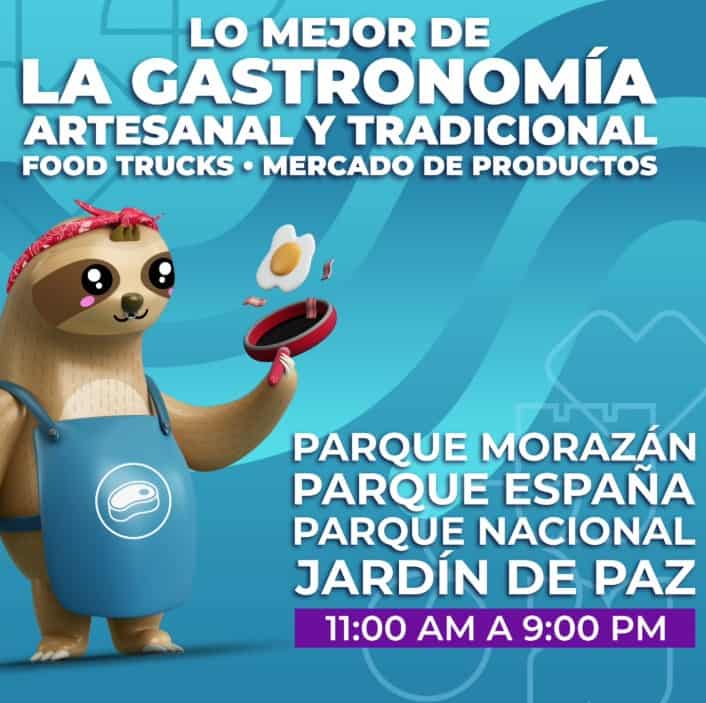
San Jose’s traditional festival hubs will still play a central role. Programming is planned for Parque Nacional, Parque España, Parque Morazán, Paseo de las Damas and other downtown locations, turning central San José into a large open-air cultural circuit from 11 a.m. to 9 p.m. each day.
The lineup goes well beyond concerts. Organizers say the festival will include nearly 35 musical acts, more than 50 stage performances, about 34 educational workshops, over 80 creative ventures and more than 240 food spaces. New features include a mobile stage, themed areas for swing and bolero, urbana and electrónica, a literary corridor with robotics workshops, open-air cinema, family activities, sports and recreation, and spaces tied to animal welfare.
An earlier municipal release also showed the scale of participation behind the event. In the product market category alone, 505 applications were received and 119 ventures were selected for the festival.
City officials are also treating the weekend as a major logistics operation. More than 140 municipal police officers are expected to be deployed, along with prehospital care stations, hydration points, restrooms and signage. Regulated road closures are scheduled in the city center from Friday at midnight through Sunday at midnight.
The event is expected to provide a lift for street commerce and small businesses as well as the broader creative economy. Markets, food fairs, outdoor trade and exchange spaces are all part of the program, giving the festival a strong economic angle in addition to its cultural pull.
Transitarte has long been one of San José’s most visible efforts to bring us locals as well as visitors back into the city’s public spaces. This year, the festival is betting that a wider map and bigger menu of activities will keep that momentum going through one of the capital’s busiest cultural weekends of the year.
Facts Only
Transitarte, an annual urban arts festival, will take place in San José on April 10, 11, and 12.
The festival is free to attend and is in its nineteenth edition.
Over 300,000 attendees and more than 200 artists and groups are expected.
The event footprint has expanded by more than 1,300 meters, including new areas like Plaza de la Democracia and Avenida Central’s pedestrian corridor.
Traditional festival hubs include Parque Nacional, Parque España, Parque Morazán, and Paseo de las Damas.
Programming runs from 11 a.m. to 9 p.m. each day.
The festival features nearly 35 musical acts, over 50 stage performances, about 34 educational workshops, and more than 80 creative ventures.
New features include a mobile stage, themed areas for swing, bolero, urbana, and electrónica, a literary corridor with robotics workshops, open-air cinema, and family activities.
505 applications were received for the product market category, with 119 ventures selected.
Over 140 municipal police officers will be deployed, along with prehospital care stations, hydration points, and restrooms.
Regulated road closures are scheduled in the city center from Friday at midnight through Sunday at midnight.
The event aims to support street commerce, small businesses, and the creative economy.
Executive Summary
San José is gearing up for the 19th edition of Transitarte, a free urban arts festival taking place April 10-12 across parks, boulevards, and public spaces in the capital. This year’s event is the largest to date, with over 300,000 attendees expected and more than 200 artists and groups participating. The festival has expanded its footprint by over 1,300 meters, incorporating new areas like Plaza de la Democracia and the pedestrian corridor of Avenida Central, while maintaining traditional hubs such as Parque Nacional and Parque Morazán. Programming spans music, theater, workshops, food, and family activities, with new features like a mobile stage, themed areas, and a literary corridor with robotics workshops. Logistically, the city is deploying over 140 municipal police officers, prehospital care stations, and road closures to manage the event. Organizers aim to boost street commerce and the creative economy, positioning Transitarte as a key cultural and economic driver for the city.
The festival reflects San José’s broader effort to revitalize public spaces and attract both locals and visitors. With a diverse lineup and expanded infrastructure, it seeks to sustain momentum as one of the capital’s most significant cultural events. While the scale and ambition are notable, the success of such large-scale public gatherings often hinges on execution, crowd management, and the balance between cultural celebration and commercial activity.
Full Take
**STEELMAN:** Transitarte’s expansion reflects a deliberate effort to rejuvenate San José’s public spaces and local economy through culture. The festival’s scale—300,000 attendees, 200+ artists, and new thematic zones—demonstrates ambition to create a vibrant, inclusive urban experience. The inclusion of workshops, markets, and family activities suggests a holistic approach to community engagement, while logistical preparations (police, medical stations, road closures) indicate serious planning. The economic angle—supporting small businesses and street vendors—aligns with broader urban revitalization goals, positioning culture as a catalyst for civic pride and commerce.
**PATTERN SCAN:** The narrative leans heavily on quantitative metrics (attendee projections, artist counts, square meters) to convey scale and success, a classic appeal to authority via volume (ARC-0024 Ambiguity). While the numbers are impressive, they lack qualitative depth—how will crowd density affect safety? Are the 119 selected vendors representative of diverse communities? The framing of the festival as a panacea for urban revitalization risks oversimplifying complex challenges like inequality or public space access (ARC-0043 Motte-and-Bailey: "culture solves everything" vs. "it’s just a festival"). The absence of critical voices (e.g., vendors not selected, residents affected by road closures) hints at a curated optimism.
**ROOT CAUSE:** The paradigm here is "creative placemaking"—the belief that arts and culture can drive economic and social renewal. This assumes that temporary festivals can foster lasting civic engagement, a debatable premise. Unstated assumptions include: that large crowds equate to success, that commercial activity (food fairs, markets) inherently benefits locals, and that public space activation is universally positive. Historically, such events often prioritize spectacle over systemic change, echoing urban renewal projects that prioritize aesthetics over equity.
**IMPLICATIONS:** For human agency, the festival offers a platform for artists and vendors to showcase work, but the benefits may skew toward established players (the 119 selected out of 505 applicants). Costs—disruptions for non-participating residents, environmental impact of mass gatherings—are externalized. Second-order effects could include gentrification pressures if the event "proves" the area’s viability to developers. The focus on consumption (food, products) over participation risks reducing culture to a transactional experience.
**BRIDGE QUESTIONS:**
How do the festival’s economic benefits distribute across San José’s communities? Who is excluded from participation?
What metrics beyond attendance would measure the event’s success in fostering long-term civic engagement?
If Transitarte is a model for urban revitalization, what safeguards exist to prevent displacement or commercialization of public space?
**COUNTERSTRIKE SCAN:** A coordinated influence campaign would amplify the festival’s economic and cultural benefits while suppressing critiques (e.g., vendor selection bias, resident disruptions). It might frame dissent as "anti-culture" or "anti-progress." This article, however, presents a straightforward promotional narrative without overt manipulation. The lack of critical perspectives is notable but not necessarily sinister—it may reflect source material limitations rather than intent.
Patterns detected: ARC-0024 Ambiguity, ARC-0043 Motte-and-Bailey
Sentinel — Human
The text appears to be human-written, demonstrating variability in sentence length, a clear narrative, no indicators of coordinated synthetic production or fabricated claims.