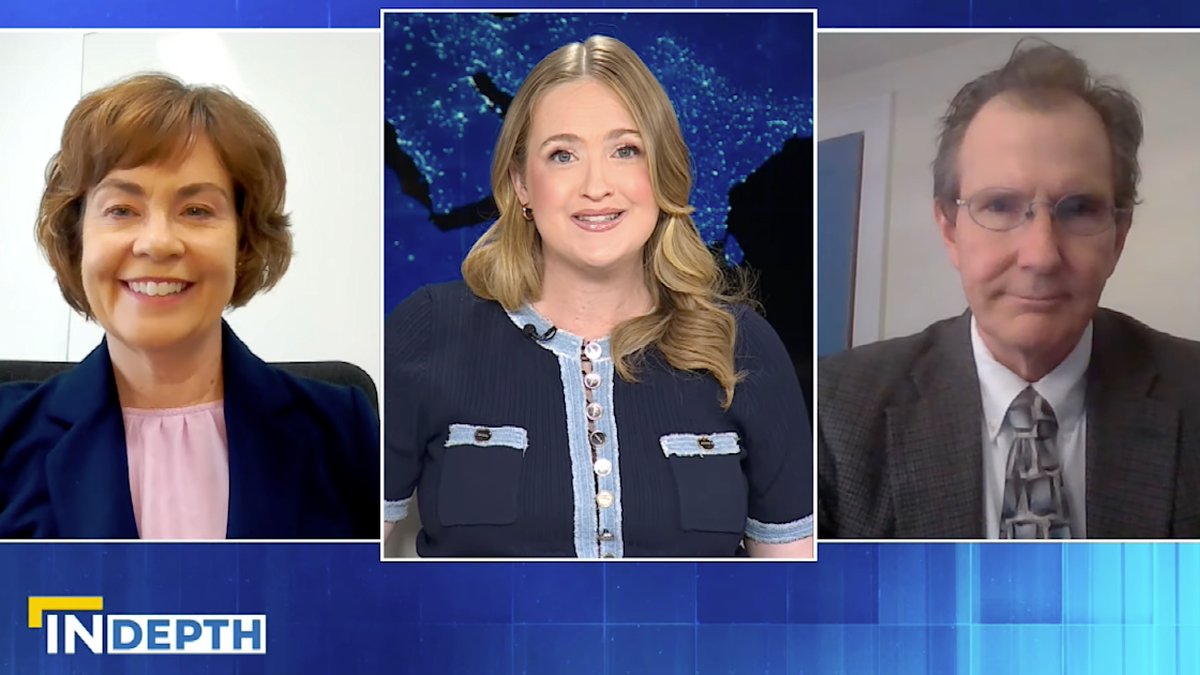
As the United States prepares to celebrate the 250th anniversary of its founding, two Catholic historians say the nationʼs story cannot be fully understood without recognizing the role Catholics have played in shaping American life.
In a July 3 “EWTN News in Depth” interview with Catherine Hadro, Kathleen Sprows Cummings of the University of Notre Dame and Christopher Shannon of Christendom College reflected on the complex history of Catholicism in the United States.
Cummings, director of Notre Dameʼs Global Catholic Research Initiative, said it is difficult for many Americans today to imagine the level of hostility Catholics once faced.
“It’s hard to imagine today the extent to which Catholics were seen as not welcome in the United States,” she said. Nineteenth-century Catholic immigrants, particularly those arriving from Ireland, Italy, and Eastern Europe, were often viewed with suspicion because they were poor, came from “undesirable” countries, and were believed to be “loyal to the pope.”
“Anti-Catholicism in the 19th century often meant anti-papist,” Cummings explained, noting that many Americans feared the pope harbored “imperial designs on the United States.”
Despite that prejudice, Catholics gradually demonstrated their loyalty to the nation through military service, civic life, and public leadership, she said.
Shannon, author of “American Pilgrimage: A Historical Journey Through Catholic Life in a New World,” said Catholics ultimately proved themselves to be deeply patriotic, though often “on their own terms.”
“Catholics seem just so darn American now,” he said.
The conversation also highlighted the witness of American saints, including St. Frances Xavier Cabrini, St. Elizabeth Ann Seton, and St. John Neumann, whose lives demonstrated, Cummings said, the harmony between “patriotism and sanctity.”
The historians also discussed Catholic political leaders from Al Smith to President John F. Kennedy, the challenges of living an authentically Catholic public life, and what the election of Pope Leo XIV, the first U.S.-born pope, means for American Catholics.
Calling the moment “truly astonishing,” Cummings said an American pope “would have been a travesty at home and an absurdity in Rome” for much of U.S. history. Yet she emphasized that Catholics should remember Pope Leo “views the world not primarily through an American filter, but through a Catholic lens.”
Sign up for the EWTN News Email and Stay Connected
The reliquary that is touring the U.S. weighs nearly 150 pounds with its protective case. It contains St. Margaret Mary Alacoque’s clavicles, two of her ribs, and a small piece of her brain.
Sentinel — Human
This text exhibits strong characteristics of human-authored journalism, grounded in expert quotes and focused on complex historical and theological synthesis.