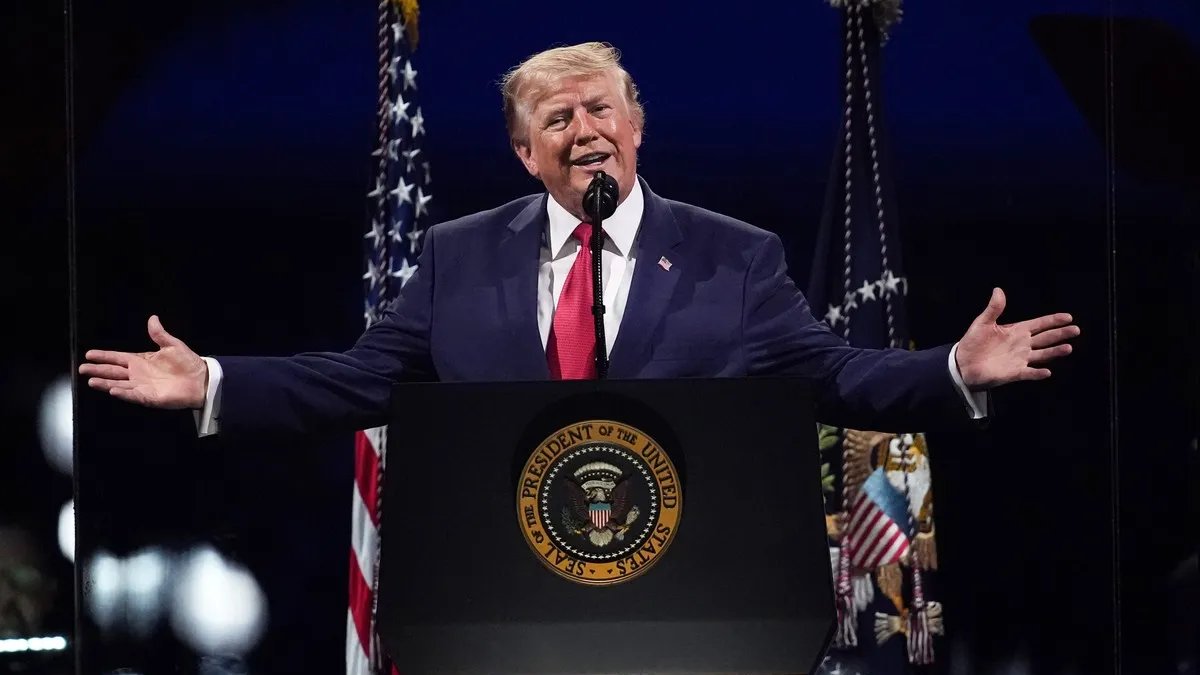
Ties between Washington and the organization have worsened since the U.S. and Israel launched their war on Iran on Feb. 28
President Donald Trump will meet with Ukrainian President Volodymyr Zelenskyy at a NATO summit in Turkey on Wednesday that will be charged with tension over the U.S. leader’s views on Greenland, European defence spending and the Iran war.
Trump arrives in Turkey on Tuesday, when he will meet with President Recep Tayyip Erdogan before a summit with the full defence alliance the next day, White House spokesperson Anna Kelly said.
Trump, who has had an up-and-down relationship with Zelenskyy, had pledged as a presidential candidate to end Russia’s war with Ukraine within a day once he returned to office. He has been frustrated by an inability to do that.
European leaders, who Trump has criticized over tepid support for his war with Iran, have called for new U.S. and European efforts to support new peace talks between Russia and Ukraine. The White House has been preoccupied for months with the conflict in Iran, leaving U.S.-brokered talks between Kyiv and Moscow stalled.
Trump spoke to Russian President Vladimir Putin on Saturday about Ukraine and the upcoming summit, Kremlin foreign policy aide Yuri Ushakov said.
Ukraine has increasingly targeted sites deep inside Russia with long-range drones and missiles, showing strength against its much larger opponent, but a U.S. official told reporters on Sunday the administration still viewed the conflict as one in which neither side was making much progress. Trump will speak to Zelenskyy about trying to end the war, the official, speaking on the condition of anonymity, told reporters on a conference call.
Ties between Washington and the North Atlantic Treaty Organization — rarely warm under Trump — have worsened since the U.S. and Israel launched their war on Iran on Feb. 28. The conflict sparked a global energy crisis, with the closure of the Strait of Hormuz halting oil and gas shipments. U.S. allies, who were not consulted ahead of the strikes, grappled with the fallout.
Trump has lashed out at several NATO members who declined to allow the U.S. to use military bases to carry out early strikes and for failing to help the U.S. reopen the strait. The president has also berated partners for not raising their defence spending to 5 percent of GDP and repeatedly questioned whether the U.S. is getting enough from its allies.
“President Trump expects all allies to step up immediately and not only get on a sustainable path to the five per cent, but get to five per cent as soon as possible,” U.S. Ambassador to NATO Matt Whitaker told reporters on the conference call, calling an increase in European defence spending “really crucial.”
The U.S. has rattled allies in recent months with shifting announcements about pulling troops and resources from Europe. The U.S. has said it will withdraw 5,000 troops from the continent and slash the military assets that Washington would provide in the event of a crisis.
The president has also angered European nations with his aim to take over Greenland, which is part of NATO ally Denmark. The U.S. official said Trump still wanted to acquire the territory but was exploring other options in the face of European opposition to that plan.
Late last month, NATO Secretary General Mark Rutte tried to soothe tensions during a visit to Washington. Rutte made a hard sell for the alliance, praising Trump for pushing countries to boost their defence spending and insisting European allies were standing alongside Washington.
The U.S. president, who has had a warm relationship with Rutte, for his part, seemed largely unmoved, reiterating at one point that allies weren’t there for the U.S. Rutte, who once praised Trump as NATO’s “daddy,” has faced his own blowback in Europe from what some say has been a too-deferential approach to the U.S. president.
Ahead of last month’s Group of Seven leaders’ summit, senior administration officials said the U.S. was happy with some of the burden-shifting of defence commitments to European countries, and is looking for more.
Fears of Russia expanding its war beyond Ukraine to other parts of Europe has heightened tension throughout the continent.
Putin has said he is willing to continue talks with U.S. envoys on ending the war, but has rejected a proposal to halt long-range strikes that have damaged both sides. The Kremlin has pushed maximalist demands for Ukrainian territory, including land Russia has failed to capture by force in a war now well into its fifth year.
In June, Putin rejected an offer from Zelenskyy for face-to-face negotiations.
Our website is the place for the latest breaking news, exclusive scoops, longreads and provocative commentary. Please bookmark nationalpost.com and sign up for our newsletters here.
Postmedia is committed to maintaining a lively but civil forum for discussion. Please keep comments relevant and respectful. Comments may take up to an hour to appear on the site. You will receive an email if there is a reply to your comment, an update to a thread you follow or if a user you follow comments. Visit our Community Guidelines for more information.
Sentinel — Human
The text reads like a synthesized piece of political commentary based on real events, demonstrating the complexity and interconnectedness expected in human-written geopolitical reporting.