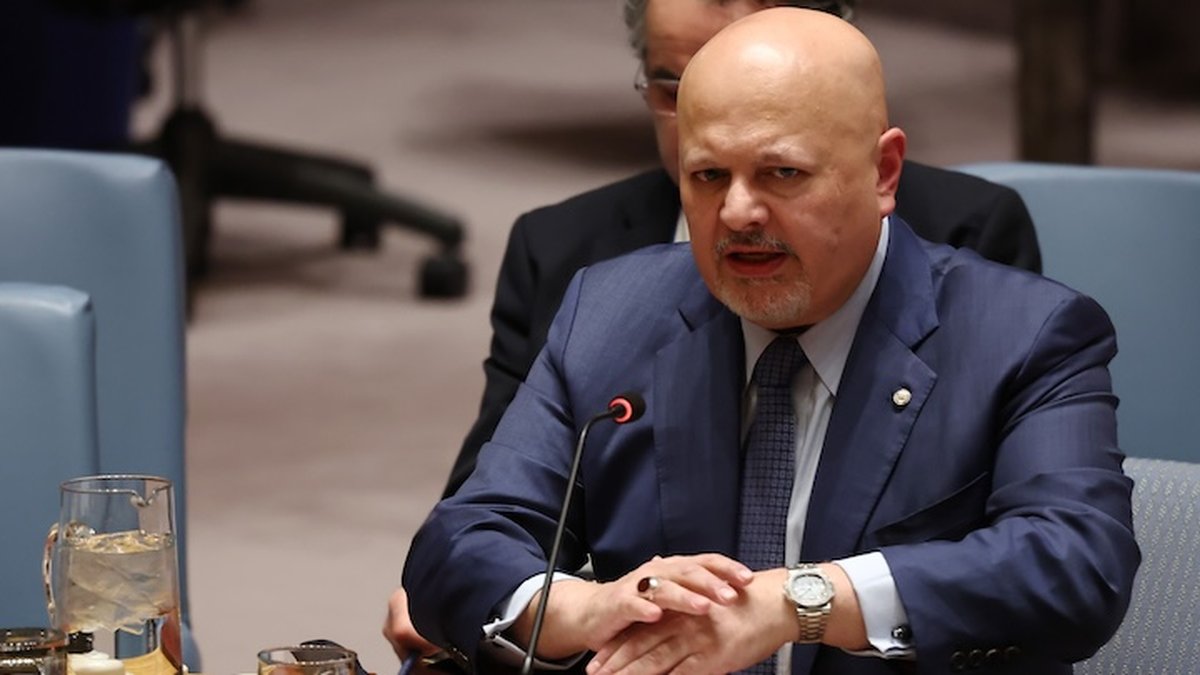
Karim Khan’s hopes of remaining the chief prosecutor of the International Criminal Court just took another hit. An ICC internal report has concluded that Khan engaged in sexual harassment and abuse of power over a female subordinate. His role at the ICC might have survived the report, but it almost certainly won’t survive the leak of the report to the New York Times.
Now the world is watching as the court decides what to do about its chief prosecutor, who has put the ICC in a bind: “Removing Mr. Khan would be an unprecedented move for the court. However, leaving him in place, analysts and experts said, would potentially be deeply damaging to its functioning and reputation.”
Next, just to twist the knife, the Times quotes Ken Roth, the man who single-handedly destroyed the credibility and mission of Human Rights Watch and sullied the reputation of international “humanitarian” NGOs. Roth says: “It is hard to see how Khan can continue in the job, which demands complete adherence to the truth, when at least two thirds of the bureau’s member states found his credibility to be utterly lacking.”
One can imagine Roth’s glee while saying this. It’s not that Roth has anything personal against Karim Khan—indeed, the two of them are soulmates. It’s that until the allegations of impropriety against Khan, Roth was the poster child for what happens when anti-Zionist obsession drives a person to light his entire life’s work on fire in the mad hope that somehow the Jewish state goes up in flames with it. Now, for at least the near future, “Ken Roth” isn’t the least respected phrase in all of global humanitarianism.
To briefly review how Khan ended up in the remainder bin of global affairs: According to court documents, testimony, and other investigative documentation, Khan appears to have sexually mistreated an employee over an extended period of time and released arrest-warrant requests for Israeli leaders in a bid to cover up his private transgressions. His accuser’s testimony, in fact, painted a clear picture: He pressured her to keep quiet about the abuse by saying she’d otherwise ruin the opportunity to help Palestinians get retribution against the Jewish state.
Khan’s case against Israel was a sham—he canceled important fact-finding trips in order to file the warrants before he could be outed as an office pest. The ICC report establishes “the accuser’s credibility,” which puts all past testimony and reporting in an even more damning light. The internal investigation also found Khan’s belated denials to be “devoid of credibility.”
From the Times, which obtained the internal report:
“First, she said, there was overfamiliarity during a work trip to London, then incidents in his office in which ‘he would grab and paw at her breasts, try to access her pelvic area, and suck on her ear or neck,’ according to a summary of the U.N. investigation’s findings obtained by The Times.
“Eventually, she said, the advances progressed to unwanted sexual activity. She told investigators that ‘the power dynamic between them meant that she could not say no.’”
Now, why would someone with access to this report want to ensure that such details saw the light of day before the ICC made its final decision on Khan’s job?
Most likely, the answer is: because there is reason to worry that court members’ anti-Israel fervor is such that they may still try to protect him. But now the public knows what the ICC believes Khan did, and it would destroy the court to leave him as chief prosecutor.
It is yet another example of the dangers of the world’s obsession with Israel. The UN’s refugee agency has been coopted by Hamas. The Committee to Protect Journalists is facing an internal revolt over the possibility that the organization might stop referring to Hamas and Palestinian Islamic Jihad terrorists as “journalists.” The International Committee of the Red Cross’s callous disregard of Israeli hostages and its participation in Hamas’s own public mistreatment of those hostages has disgraced its work.
Unfortunately, I could go on. But the point should be clear. Allowing anti-Zionist radicals to hijack human-rights groups has left genuine humanitarianism and genuine justice hobbled. This is the destruction left in the wake of an industry that destroyed itself because it was solely focused on destroying Israel.
Sentinel — Likely Human
The text is highly opinionated and structured around a specific moral argument but appears to be grounded in specific documentary evidence, leaning toward human authorship despite the high degree of emotional intensity.