Even a free infrastructure project wasn’t enough to convince Maryland officials to work with Elon Musk.
On Tuesday, Elon Musk’s tunnelling business, the Boring Company, started discussions with city officials about building a free tunnel around the Baltimore Ravens’ football stadium. While the free project seemed like a coup for the Ravens, who had pitched it to the Boring Co., the idea was short-lived. Within nine hours of the announcement, Baltimore’s mayor and city council had filed a lawsuit against xAI, an AI company also owned by Musk, alleging that its chatbot “flooded” users’ feeds with nonconsensual intimate imagery and child sexual abuse material.
On Wednesday, the Ravens said that, after conversations with “public partners,” they would walk away from the tunnel proposal. Mayor Scott, a Democrat, said publicly that it was “not something that I would have approved.”
Together, the two moves mark a notable shift in a state that courted Elon Musk’s business with open arms only a decade ago and illustrates the challenges now facing Musk’s collection of companies as the famously impulsive and truculent mulit-billionaire has turned himself into a political lightning rod.
In statements emailed to Fortune, Baltimore’s City Solicitor Ebony Thompson said the City had sued xAI “to protect residents from deceptive and harmful practices involving generative AI tools,” and the Mayor’s Office said it supported the Ravens’ “decision to withdraw their application.” The Mayor’s press secretary declined to comment further.
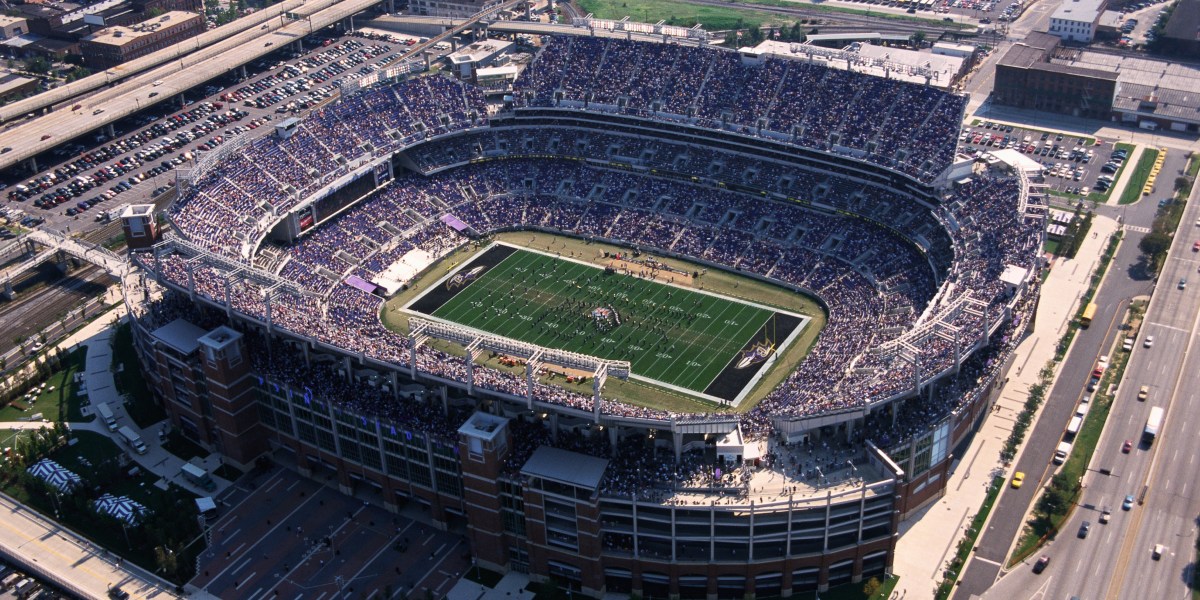
The Raven Loop tunnel was one of more than 480 pitches Boring Company received to build a one-mile long loop tunnel that is 12 feet in diameter. No other details about the Ravens’ specific pitch have been made available. The M&T Bank Stadium, where the Baltimore Ravens play, currently seats about 70,000 people at capacity and spans approximately 1.6 million square feet. Fans typically drive and park around the stadium, use the city light rail system—which has a Stadium stop, take the nearby subway and walk for about 20 minutes, or, especially for bigger games, use added transit and shuttle systems.
The proposed tunnel does not seem to have received much public attention among Ravens fans or city residents before it was scrapped, with scant debate supporting or opposing the project in the local news.
Maryland and Baltimore have historically welcomed Musk’s companies through incentives and partnerships. Former Maryland Governor Larry Hogan, a Republican, was one of the first politicians to publicly get behind a major Boring Company project in 2017, when Boring Company announced it planned to build a high-speed tunnel for autonomous vehicles between Baltimore and Washington, D.C. The Maryland Department of Transportation sponsored the project, and Baltimore’s then-Mayor, a Democrat, had said the project would have “tremendous potential.”
That posture has shifted since Musk donated $300 million to President Trump’s campaign and took a hands-on role in government through DOGE. Governor Wes Moore, a Democrat, was an early critic of Musk’s work at DOGE, characterizing the firing of thousands of federal workers in 2025 as “arbitrary” and “draconian” during a working session in March 2025 and saying it was cruel. Boring Company president Steve Davis, one of Musk’s longtime trusted fixers, helped Musk run the government department.
In January of this year, Maryland’s Democratic Attorney General, Anthony G. Brown, a Democrat, signed a letter with 33 other attorneys general demanding that xAI take “additional action” to prevent Grok from generating nonconsensual intimate images and child sexual abuse material.
The demands followed wide reports in late December and early January that Grok, the name of xAI’s chatbot, had been generating photos of women undressed or in bikinis, violent sexual content, or explicit images involving AI-generated individuals that appeared underage.
In the City of Baltimore’s lawsuit, the Mayor and City Council accuse Grok of exposing residents to the risk that any photograph they uploaded—of themselves or of their children—could be ingested by Grok and transformed into sexually degrading deepfakes without their knowledge or consent.
The lawsuit also alleges that xAI has been responsible for “normalizing a form of image-based sexual abuse that is difficult to prevent, contain, or remedy once unleashed at scale.”
The political action echoes partisan aggression against Musk in other states. In Nevada, it’s been exclusively Democrats calling for accountability after safety issues and environmental episodes during construction of Boring Company tunnels.
xAI and Boring Company did not respond to requests for comment.
Baltimore’s first tunnel project
Baltimore was supposed to be the first showpiece of what Elon Musk’s tunneling startup, Boring Company, could be capable of.
Back in 2017, the initial designs of the Baltimore-Maryland Loop were ambitious—a 35.3-mile twin tunnel system that would enable self-driving vehicles to travel between Baltimore and Washington, D.C. at speeds of up to 150 miles per hour, with stops along the way. Critics, including engineers, said it was unfeasible, and the project quietly died when Boring Company stopped the federal review process. Boring Company later turned its attention to Las Vegas, where it is currently digging tunnels and operating an Uber-like Tesla chauffeur service.
Earlier this year, as part of Boring Co’s efforts to expand to more regions, the company launched a “tunnel vision challenge” soliciting pitches for various tunnel projects—such as utility, water, or pedestrian tunnels—around the U.S. and promising it would build a tunnel to one winner for free.
The process culminated with the announcement this week that the Boring Company had selected the “Ravens Loop” project in Baltimore as one of three projects it would pursue—only for the Ravens to suddenly have a change of heart regarding Musk’s munificence.
“Following discussions with public partners, we have determined we will not continue with the process at this time,” a spokesman for the Baltimore Ravens sent Fortune in a statement.
Boring Company issued an “update” on its X account on Wednesday: “After initial meetings, this project unfortunately will not be moving forward as part of the competition,” the account wrote, before opining whether it should reopen the selection process to another pitch.
Facts Only
The Boring Company proposed a free tunnel project near the Baltimore Ravens’ M&T Bank Stadium.
The project was announced on Tuesday and withdrawn by the Ravens on Wednesday.
Baltimore’s mayor and city council filed a lawsuit against xAI, another Musk-owned company, alleging its chatbot, Grok, generated nonconsensual intimate imagery and child sexual abuse material.
Mayor Brandon Scott stated he would not have approved the tunnel project.
The Ravens cited discussions with public partners as the reason for withdrawing their application.
The Boring Company had received over 480 pitches for tunnel projects, selecting the Ravens Loop as one of three finalists.
Maryland previously supported Musk’s ventures, including a 2017 proposal for a high-speed tunnel between Baltimore and Washington, D.C., which was later abandoned.
Maryland Governor Wes Moore criticized Musk’s role in a federal department, DOGE, and the firing of thousands of workers in 2025.
Maryland’s Attorney General, Anthony G. Brown, joined 33 other attorneys general in demanding xAI take action to prevent Grok from generating harmful content.
The lawsuit alleges Grok exposed residents to risks of AI-generated deepfakes without consent.
The Boring Company has shifted focus to projects in Las Vegas after the Baltimore-Washington tunnel proposal failed.
The Ravens Loop project was part of a Boring Company competition offering a free tunnel to one winner.
Executive Summary
Elon Musk’s Boring Company proposed a free tunnel project near the Baltimore Ravens’ stadium, but the initiative collapsed within hours after the city filed a lawsuit against Musk’s AI company, xAI, alleging its chatbot, Grok, generated nonconsensual intimate imagery and child sexual abuse material. The Ravens withdrew their support following discussions with public officials, with Baltimore Mayor Brandon Scott stating he would not have approved the project. This marks a shift in Maryland’s relationship with Musk, who was once welcomed by state officials but has since become a polarizing figure due to his political involvement and controversial business practices. The lawsuit accuses xAI of exposing residents to risks of AI-generated deepfakes, while the Boring Company’s past projects in Maryland, including an abandoned high-speed tunnel between Baltimore and Washington, D.C., highlight the challenges facing Musk’s ventures. The incident reflects broader partisan tensions, with Democratic officials in Maryland and other states increasingly critical of Musk’s operations.
The Boring Company had selected the Ravens Loop as one of three free tunnel projects but announced its cancellation after the Ravens’ withdrawal. The company’s history in Baltimore includes an earlier failed tunnel proposal, while its current focus remains on projects in Las Vegas. The lawsuit against xAI aligns with broader concerns about AI-generated harmful content, with Maryland’s Attorney General previously demanding action to prevent Grok from producing explicit material. The rapid unraveling of the tunnel deal underscores the growing political and ethical scrutiny surrounding Musk’s enterprises.
Full Take
The strongest version of this narrative highlights a legitimate shift in public and political trust toward Elon Musk’s ventures, driven by concrete legal and ethical concerns. The lawsuit against xAI is grounded in serious allegations about AI-generated harmful content, a growing area of regulatory and societal concern. The rapid collapse of the tunnel project reflects real political and reputational risks for municipalities engaging with Musk’s companies, particularly as his public persona becomes increasingly polarizing. The article effectively documents this tension, providing context for why a once-welcoming state like Maryland is now distancing itself.
However, the narrative also risks amplifying a pattern of emotional exploitation (ARC-0012) by framing Musk as a "political lightning rod" without deeper exploration of whether the legal claims against xAI are substantiated or part of a broader partisan strategy. The article leans into the drama of the tunnel project’s swift rejection, which could be interpreted as weaponized outrage (ARC-0008) if the legal case against xAI is later found to be overstated. The focus on Musk’s impulsiveness and political donations, while relevant, may also serve as a distraction from the substantive issues of AI ethics and infrastructure policy.
The root cause here is the collision of technological ambition with political and ethical accountability. Musk’s companies operate at the intersection of innovation and controversy, and this incident reveals how quickly public-private partnerships can unravel when trust erodes. The implications for human agency are significant: residents’ concerns about AI-generated abuse are valid, but the rapid dismissal of a potential infrastructure benefit—without broader public debate—raises questions about whether political posturing is overshadowing genuine policy discourse.
Bridge questions: How much of this rejection is driven by legitimate concerns versus partisan opposition? What would it take for a Musk-led project to regain public trust in a politically divided landscape? Are there alternative ways to address AI harms without outright rejecting associated infrastructure projects?
Counterstrike scan: A coordinated influence campaign would likely amplify the legal allegations against xAI while downplaying any potential benefits of the tunnel project, framing Musk as uniquely untrustworthy. The article does not fully match this pattern, as it presents both the legal concerns and the political context without overt manipulation. However, the rapid sequence of events and the lack of public debate about the tunnel’s merits could be exploited to reinforce a narrative of Musk as a disruptive force, regardless of the project’s actual feasibility.
Sentinel — Human
The provided article, while demonstrating a balance in presentation and some personal touch, shows signs of human authorship. The analysis suggests slight variations in sentence length and the use of casual language, indicating possible human authorship.