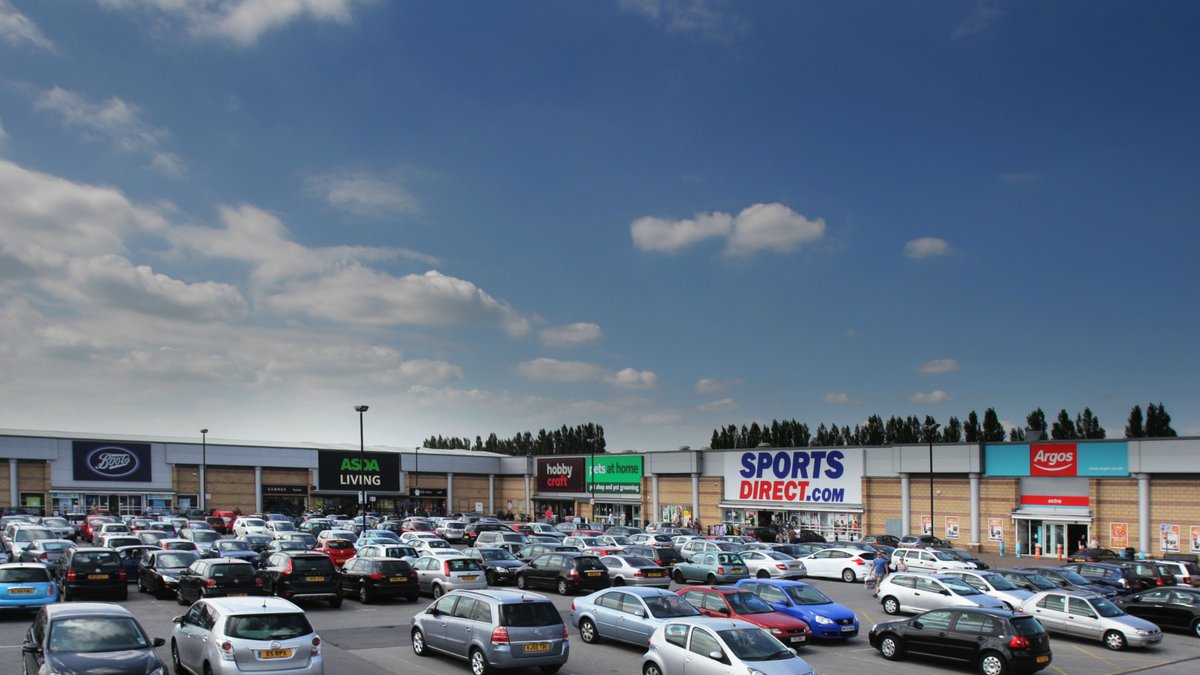
Data from Savills has confirmed what many already suspected: Britain's out-of-town retail parks are effectively at full capacity. Cara Imbrailo, partner in the real estate team of law firm Charles Russell Speechlys, explains the implications for fashion retailers.
Britain’s out-of-town retail parks are full. The latest data from Savills, published on 16 June, shows there is just 1.8% of the country’s 407m sq ft retail park estate vacant.
The picture Savills paints tallies closely with what we see in practice. Shopping habits have shifted fundamentally and, while the rise of ecommerce has been well documented, the thriving retail park market is clear evidence that people still want to shop in person. When they do, convenience is a priority: they want to drive to a single destination with ample and free parking, sort out the food shop, pick up clothes for the kids, plants for the garden, grab a coffee and get on with their day. Retail parks deliver that convenience in a way the traditional high street increasingly cannot. They also complement ecommerce rather than compete with it: many retail park stores now double as click-and-collect points and returns hubs, effectively becoming hybrid spaces that blend physical retail with online operations.
But the squeeze on space is not driven by convenience alone. That hybrid model, where a single unit serves both as a shop floor and as fulfilment infrastructure, impacts on how much space retailers need. A fashion retailer operating a 20,000 sq ft retail park unit can comfortably carve out room for online order processing, last-mile dispatch and returns handling without compromising the in-store experience. On a traditional high street, that trade-off is harder to make. The result is that retailers now need more square footage per store than they did even five years ago, which only intensifies competition for the limited remaining supply.
Who is taking space on retail parks?
The occupier mix on retail parks has evolved, too. For years, the majority were bulky goods retailers, selling furniture, carpets and DIY. Then discount grocery chains expanded aggressively into out-of-town locations.
And now more traditional high street names, including fashion brands, are clamouring for space. Marks & Spencer, Next, Primark and TK Maxx are now well-established retail park occupiers and are being joined by brands not traditionally associated with out-of-town retail locations – including Flannels, part of Frasers Group, who have opened large-format stores at major parks includes Fosse Park in Leicester and Hotel Chocolat who are actively targeting retail parks and drive-to destination sites across the UK, often also featuring dedicated cafés. The pandemic accelerated this shift: shoppers who might previously have stuck to high streets or shopping centres became more comfortable with out-of-town retail during lockdowns, and many never went back.
Advertisement
Today’s parks host everything from gyms and coffee operators to dental practices and diagnostic clinics alongside established fashion and homeware names. Discount food retailers remain a particularly powerful anchor, generating the kind of repeat footfall that benefits every other occupier. For fashion brands, this “halo effect” matters: a shopper who visits every week for groceries is far more likely to browse a clothing store on the same trip than to make a dedicated journey to a high street they have no other reason to visit.
What are the implications for fashion retailers?
The uncomfortable truth is that there is no quick fix on the supply side. The pipeline for new retail park development is thin, planning consents for out-of-town sites remain slow and heavily constrained, construction costs have risen sharply, and high interest rates continue to impact development viability. Planning reform has a key role to play – faster determination of applications for new parks and extensions to existing ones, and a more pragmatic approach to the rules that currently prioritise town centre locations over out-of-town sites, would help unlock capacity. But even with political will, new supply takes years to deliver.
In the meantime, the market is adapting. Landlords are reconfiguring existing assets: subdividing larger units, adding mezzanine floors that effectively double a retailer’s footprint without increasing the rentalised area, and curating a more deliberate tenant mix that maximises dwell time and cross-shopping.
Lease structures are becoming more flexible too. We are seeing spaces shared between non-group occupiers, and shorter or more innovative lease arrangements designed to bring new entrants onto parks without displacing established tenants. That adaptability is one of the sector’s genuine strengths. The concession model – where one retailer hosts another within its space – is becoming increasingly common in retail parks. Costa operating coffee concessions within Tesco stores and Decathlon running sports ranges inside selected Asda outlets are established examples of non-group brands sharing space, while Next has pioneered a franchise and joint venture approach, hosting Gap and Victoria’s Secret shop-in-shops across dozens of its stores.
For fashion retailers, the message is clear: waiting for the perfect unit in the perfect location is no longer a viable strategy. Brands need to be ready to move quickly and decisively when space does become available, often on the back of a competitor’s restructuring or a lease expiry. They should also be looking at their existing estates with fresh eyes: refurbishment, format innovation and better use of in-store space for omnichannel fulfilment can all extract more value from a current footprint. And they need to stay open to creative arrangements – whether that means a flexible sublet within a larger unit, or another solution.
Advertisement
Retail parks are thriving because they are attuned to the way people actually shop today. The brands that recognise this and plan accordingly will be the ones that find room to grow.
Have your say
or a new account to join the discussion.
Sentinel — Human
This text functions as high-quality business journalism, successfully synthesizing real estate data with market trends and strategic implications for fashion retailers.