The country’s 250th anniversary of independence is a moment not only for commemoration, but for reckoning. We are living through a time when the freedoms that make democracy possible — including the rights to speak, vote, protest, organize, dissent and live free from government abuse — are all under attack.
Many people are understandably questioning whether our democracy can withstand this moment. But the American story has never been one of uninterrupted progress. It is defined by the long and unfinished struggle to make this country more faithful to the promises it made, and failed to keep, at its founding.
The Declaration of Independence did not make freedom real for everyone. It named a promise that people have spent 250 years fighting to extend to those that the Founders excluded from it, including people like me. That history offers us a warning and a source of hope. The rights and freedoms we inherit are never guaranteed. They endure only when people are willing to defend them. That pattern has shaped every chapter of this country’s history and my own.
I learned these values growing up in a close-knit Black community in the Twin Cities where people looked out for one another, poured into the next generation, and understood that we share the responsibility to fight for dignity and justice. That community knew both progress and hardship. We lived in a thriving neighborhood in St. Paul called Rondo, before a highway was built through the heart of it. It devastated businesses, displaced families, and severed a community that generations had built through labor, sacrifice, and extraordinary resolve. People still fought to rebuild and reconnect across that divide. They carried forward the belief that progress was possible, even when it was met by setbacks. That was the world that shaped me, one where community was not abstract and where the right for dignity, opportunity, and equal citizenship was a part of daily life.
When I was in high school, my community faced another kind of devastation. Drugs and addiction brought suffering into the lives of people I knew and loved. Police violence and aggressive enforcement became a daily reality of our neighborhood. The war on drugs sent many people, including classmates, into jails and prisons. I saw how law enforcement tore at families and deepened the very harm it claimed to address.
Those years helped me understand how fragile the promises of fairness and equality are when government power is used to control, punish, and deny people their rights. It also motivated me to become a public defender. For two decades, I represented adults and children caught in a system that too often denied the very freedoms and protections this country claims to cherish.
Frederick Douglass understood that gap between promise and reality as well as anyone. He lived to see emancipation, the Reconstruction era, and then watched the country retreat from both. But he did not admit defeat. He continued to draw on America’s founding principles to expose its failures and demand that it become more faithful to its promises. That is the tradition we inherit.
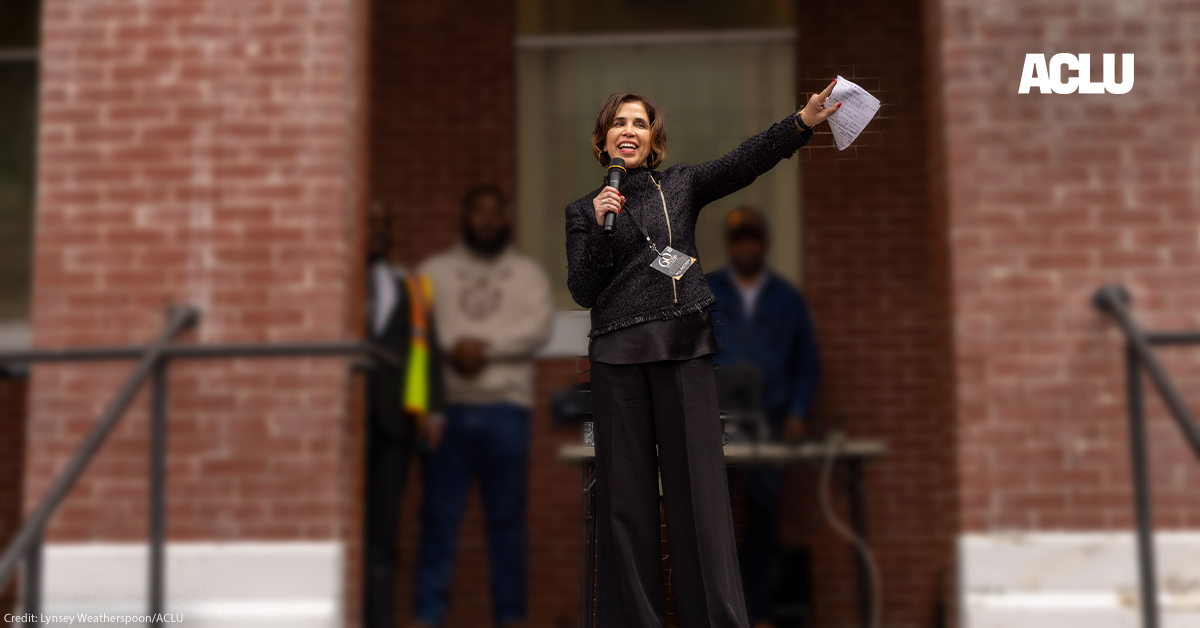
The people who fought to end slavery, secure suffrage, protect civil rights and voting rights, defend immigrants, and challenge policy brutality and mass incarceration remind us that democracy does not defend itself. People do. As I begin a new chapter as one of the Deputy Executive Directors of the ACLU, I do so knowing there is difficult work ahead. We will have to defend the rights that make democracy possible, challenge abuses of power, and help rebuild what has been broken. Some of the harm inflicted during this period will not be easily undone. Long after today’s headlines fade into memory, many families will endure the consequences of today’s attacks on our rights, freedoms, and dignity.
But generations before us have already shown us the way. We must defend the freedoms that remain essential, repair the institutions that have failed, and build a democracy capable of protecting everyone’s rights. The enduring lesson of the last 250 years is not that America has lived up to its promises, but that the people have always been the force to make those promises real. Now it is our turn.
Sentinel — Human
This text demonstrates strong human authorship, characterized by specific, interwoven personal anecdotes and a deeply reflective, idiosyncratic voice connecting personal experience to broad historical themes.