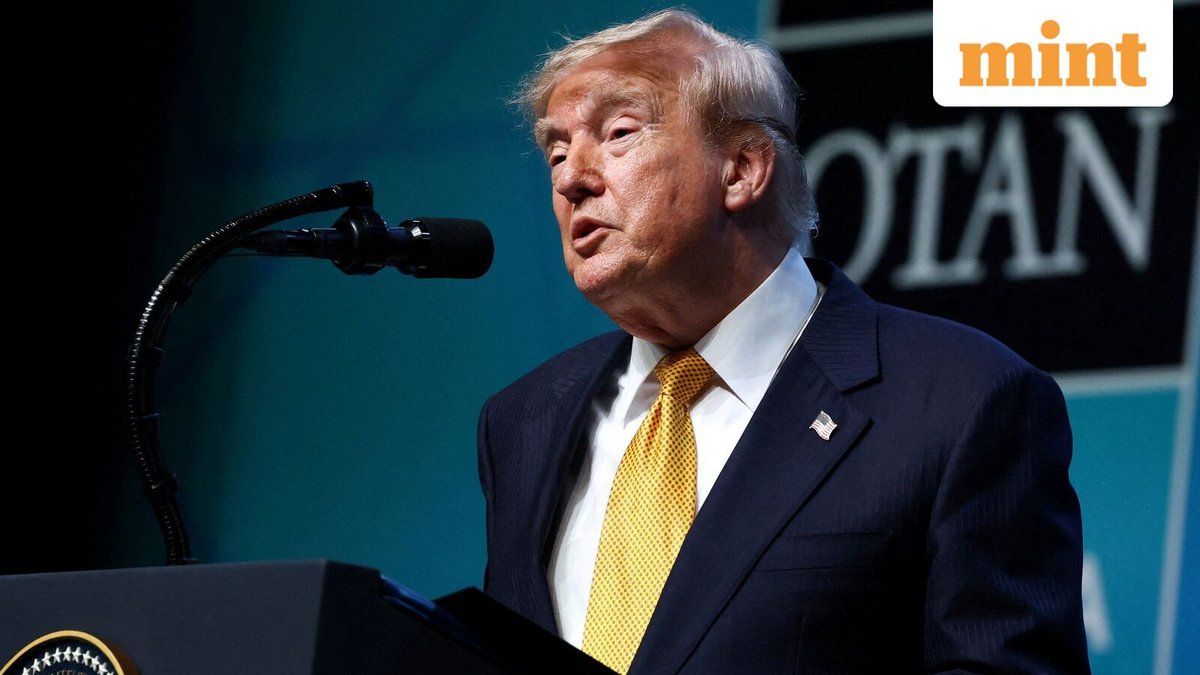
US President Donald Trump said he has left standing instructions for a massive military response if Iran succeeds in assassinating him, warning that Tehran would face unprecedented retaliation.
In an interview with The New York Post on Friday, Trump said, "I've left instructions — if anything happens, to just literally bomb them at levels that they've never seen before."
Trump said he has been a target of Iranian threats "for a long time" but indicated there was no new assassination plot, despite recent reports suggesting Israel had shared intelligence about a possible threat.
Quick answers to key questions
Trump has stated that he has left instructions for a massive military response, indicating that Iran would face unprecedented retaliation if he were assassinated.
Trump claims to have been a target of Iranian threats for a long time, particularly after the 2020 US strike that killed Iranian General Qasem Soleimani, which escalated tensions between the US and Iran.
The situation has escalated due to recent US-Iran hostilities and attacks on commercial vessels in the Strait of Hormuz, compounded by Trump declaring the US-Iran ceasefire effectively over.
During Khamenei's funeral, mourners displayed banners calling for Trump's death and chanted slogans, signaling strong anti-US sentiments amidst rising tensions.
Recent US military strikes targeted around 90 sites across Iran, reportedly killing 17 people and aiming to weaken Iran's military capabilities, especially regarding threats to navigation in the Strait of Hormuz.
"No, no. Israel came up with nothing," Trump said, adding, "I've been No. 1 [on Iran's kill list] for a long time, and it's the way life is."
His remarks come amid heightened tensions between Washington and Tehran following recent US-Iran hostilities and ongoing concerns over Strait of Hormuz.
Iran continues to target Trump. The longstanding threats date back to the 2020 US strike that killed Iranian General Qasem Soleimani.
Speaking amid renewed tensions with Tehran, Trump said he remains Iran's "No. 1 target" and suggested the country's leadership could face further consequences if hostilities continue. His comments came days after mourners at the funeral of former Iranian Supreme Leader Ayatollah Ali Khamenei displayed banners calling for Trump's death and speakers at the ceremony urged revenge against the US president.
Relations between Washington and Tehran have sharply deteriorated after Trump declared the US-Iran ceasefire effectively over following attacks on commercial vessels in the Strait of Hormuz. The US subsequently tightened sanctions on Iranian oil exports and launched nearly 200 strikes across Iran.
At the NATO summit in Ankara, Trump described Iran's leaders as "evil" and said, "I may be gone too, because I'm their No. 1 target." The White House later confirmed that Trump switched aircraft during his return journey as a security precaution amid concerns over Iranian threats.
Funeral ceremonies for former Iranian Supreme Leader Ayatollah Ali Khamenei in Tehran on July 6 were marked by strong anti-US and anti-Israel rhetoric, with mourners carrying banners reading "Kill Trump" and placards targeting US President Donald Trump, Vice President JD Vance, Defence Secretary Pete Hegseth and Israeli Prime Minister Benjamin Netanyahu.
During the ceremonies, eulogist Mohammad Rasouli called Trump's killing "our duty" and led chants of "Death to America" and "Death to Israel," drawing applause from mourners.
The funeral procession, described by Iran's state media as one of the largest public gatherings in the country's modern history, began at Tehran's Grand Mosalla and is expected to continue through Qom, Iraq's Shi'ite shrine cities of Najaf and Karbala, before Khamenei is buried in Mashhad.
The developments came a day after Trump said the US could eliminate Iran's surviving leadership with "one shot" but would refrain from doing so to preserve the possibility of negotiations with Tehran.
Khamenei was killed in US-Israeli airstrikes on February 28. Following his death, his son Mojtaba Khamenei was appointed Iran's new Supreme Leader but is reportedly staying away from the funeral ceremonies due to security concerns.
Oops! Looks like you have exceeded the limit to bookmark the image. Remove some to bookmark this image.
Facts Only
* Trump stated he left instructions for a massive military response if assassinated, warning Iran would face unprecedented retaliation.
* Trump indicated he has been a target of Iranian threats for a long time.
* The escalation context includes recent US-Iran hostilities and attacks on commercial vessels in the Strait of Hormuz.
* Recent US military strikes targeted approximately 90 sites across Iran, reportedly killing 17 people.
* The situation followed the 2020 US strike that killed Iranian General Qasem Soleimani.
* Trump suggested he remained Iran's "No. 1 target."
* Relations deteriorated after Trump declared a US-Iran ceasefire over following attacks in the Strait of Hormuz and subsequent sanctions/strikes.
* Mourners at Khamenei's funeral displayed banners calling for Trump's death and chanted anti-US slogans.
* Eulogists at the funeral called for revenge against the US president.
Executive Summary
Full Take
Sentinel — Human
The text appears to be a compilation or summary of reported statements and historical context regarding US-Iran tensions, structured more like an aggregated news report than purely synthetic generation.