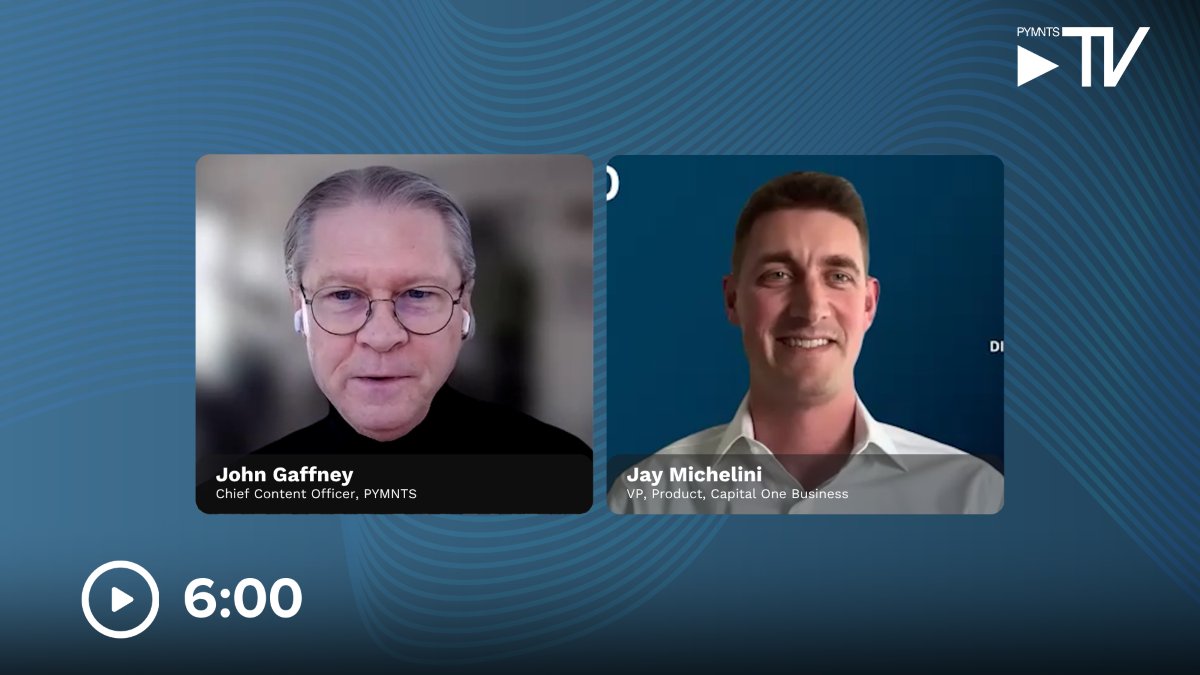
Every financial institution talks about transformation. The technical work may attract the headlines, but the organizational work often determines whether new initiatives succeed or stall.
Jay Michelini, vice president of product at Capital One Business, said successful change management begins before new software reaches production. The first responsibility for leaders is making certain employees understand why change is taking place.
“You’ve got to lead with the ‘why,’” Michelini told PYMNTS in an interview.
Within the FinTech space, new entrants, changing customer expectations and emerging technologies regularly reshape priorities. Leaders should acknowledge that constant adjustment has become part of the operating environment instead of treating each shift as an isolated event, Michelini said.
He also argued against relying solely on executive messaging. Organizations benefit when they identify employees who are genuinely interested in a particular initiative and can help explain its practical value across the business. Whether the subject is product modernization or a new payments capability, internal champions often carry more credibility than formal announcements alone.
Ownership also depends on showing employees how their work affects people beyond their immediate teams.
Michelini described three perspectives that help create that connection: understanding customer needs firsthand, appreciating how operational colleagues experience day-to-day work, and recognizing how competitive developments across the FinTech sector reshape expectations. Each offers a different reason for embracing change, making the discussion less abstract and more closely tied to daily responsibilities.
Michelini encouraged product leaders to spend time with customers and internal stakeholders rather than relying exclusively on reports or dashboards.
“I just spent time visiting with our sales team … It was so eye-opening to sit with them firsthand,” Michelini said. “You see different angles to a problem … You need to have conviction in the direction that you’re heading but be open to different perspectives and feedback that are going to change your mind or adjust your course of travel.”
Organizational change frequently falters when departments work independently rather than together, Michelini said. Instead of treating product, technology, operations, compliance and other functions as sequential checkpoints, leaders should use them to shape decisions from the outset.
Leaders can often tell whether collaboration is genuine by asking simple questions during project reviews. Were operational teams consulted early? Have legal and risk partners already weighed in? Is this the first time an executive stakeholder is hearing about a significant initiative? These signals reveal whether teams have been solving problems collectively or merely handing them to someone else.
Listening Reveals Problems Before Dashboards Do
Managers should also reconsider how they measure progress during periods of change, Michelini said. Delivery schedules and performance metrics remain important, but they rarely capture whether a team is under unnecessary strain or whether obstacles are beginning to undermine morale.
“Instead of asking where it’s at … [ask] ‘How do you feel about how progress is going?’” Michelini said. “That shift in framing gives you a better sense … that this may be moving forward, but it may not feel great to that team.”
The approach can expose issues that traditional reporting overlooks. Teams may technically be meeting deadlines while depending on excessive overtime or waiting for decisions from other parts of the organization. These conversations also help leaders identify where they can remove obstacles instead of merely monitoring them.
Cross-functional partners often provide another useful perspective because they work across multiple initiatives simultaneously, Michelini said. Functions such as legal, compliance, risk and product specialists can quickly identify where collaboration is working well and where projects are creating avoidable friction.
“I think about creating missionaries, not mercenaries,” Michelini said. “It’s very important to empower the teams to outthink you.”
At an individual level, “I don’t have all the answers,” he added.
Watch the full interview with Capital One’s Jay Michelini to learn more about:
- Why Michelini said frontline employees often provide the earliest warning signs that a transformation is drifting off course.
- How product leaders can use trusted delegates inside other business units to build stronger executive alignment.
- Why recognizing cross-functional partners before your own team can strengthen future collaboration.
- The practical difference between leading with certainty and leading with conviction.
Facts Only
Executive Summary
Full Take
Sentinel — Human
This text exhibits strong human markers, characterized by direct dialogue, personal reflection, and a narrative structure built around lived experience rather than purely objective reporting.