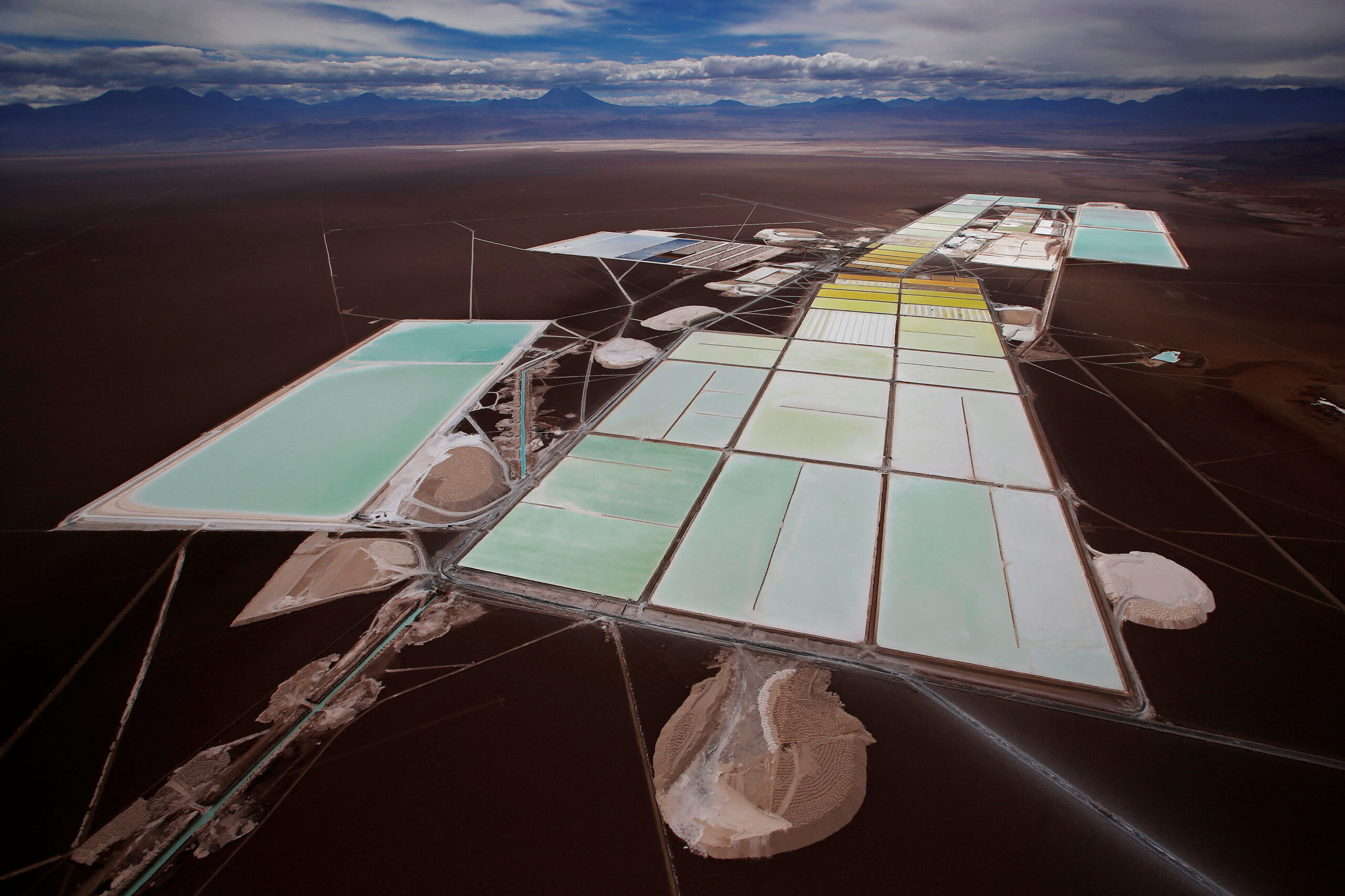
For too long, the vast lithium reserves beneath the salt flats of Argentina, Bolivia, and Chile have been viewed through a zero-sum lens — each nation guarding its brine as if the global energy transition were a territorial dispute.
But a new strategic reality is emerging.
With the right leadership and a shared pro-U.S., free-market orientation, these three Andean nations have not only the chance but the imperative to transform their lithium sector into the world’s most flexible and reliable model for collaborative resource development.
The potential for a trilateral alliance — built on open markets, private investment, and diversified global partnerships — is not just promising; it is essential.
First, consider the sheer scale. Argentina, Bolivia, and Chile collectively hold over 60% of the world’s known lithium reserves, along with significant deposits of copper, boron, and potassium — minerals now deemed critical by the United States, the European Union, and even China’s strategic raw materials list.
No other region on Earth can match this concentration. Yet, individually, each country has struggled to scale production efficiently.
Bolivia’s past experiments with state-dominated extraction have yielded little. Argentina’s more open, province-led model has attracted foreign capital but lacks coordination. Chile’s regulated approach, while successful, remains cautious.
Imagine, instead, a coordinated framework where the three governments harmonize permitting, share geological data, and create a unified logistics corridor from the Atacama to Pacific ports.
That is not socialism; that is smart market-making — and it opens doors to every major demand center on the planet.
Here is the insight that many geopolitical analysts miss: a free-market Andean lithium bloc does not have to choose between Washington and Beijing. It can sell to both.
Future collaborations
The global energy transition is not a zero-sum game. China will remain the world’s largest EV battery manufacturer for decades; Europe needs diversified supply to reduce reliance on Chinese processing, and the United States seeks friend-shored alternatives to state-controlled rivals.
Argentina, Bolivia, and Chile, acting in concert, can supply all three.
By maintaining open, transparent, and non-discriminatory markets — without exclusive deals that lock out Western or Eastern buyers—the triangle becomes the world’s most trusted swing supplier. Chile already exports lithium hydroxide to China and Germany.
Argentina’s Caucharí-Olaroz project sends carbonate to both Asian and North American customers. Bolivia, with technical help from Western and Chinese firms alike, could finally monetize its Uyuni deposit.
A collaborative framework would allow joint pricing, coordinated production, and quality standardization — not to pick winners among buyers, but to maximize revenue and stability for the producing nations.
Crucially, all three nations are now governed by or trending toward leaders who understand that economic pragmatism serves sovereignty better than ideological isolation.
Argentina’s Javier Milei has made clear his devotion to dollarization, deregulation, and dismantling protectionist barriers.
Chile under Gabriel Boric, despite early leftist rhetoric, pragmatically embraced private-public partnerships and deepened ties with Western and Asian mining majors. Now, under Jose Antonio Kast, it has a clear market orientation.
Even Bolivia, long the outlier, is signaling a pivot: facing an economic crisis and a hollowed-out state mining sector, its government has begun courting international investment — from Chinese, European, and North American firms alike.
This pro-market orientation is not about allegiance to any single superpower; it is about creating a stable, rules-based environment where capital from anywhere competes on equal terms. That is the true meaning of free-market resource nationalism.
Looking West
Now add the broader Western Hemisphere dimension. The lithium triangle is not alone. Brazil, already a mining giant, holds significant lithium reserves in the Jequitinhonha Valley and is emerging as a mid-tier producer with a strong pro-investment legal framework.
Mexico, while earlier nationalizing its lithium, has recently signaled openness to private partnerships under the right conditions. Its Sonora deposit sits just a few hundred miles from U.S. battery plants in the Southwest.
Paraguay, often overlooked, hosts rare earth and lithium brine potential in its western regions, and its stable, low-tax, pro-business environment makes it a natural logistics and processing hub.
A truly secure Western-hemisphere supply chain cannot rely solely on the Andean triangle. It requires a second and third tier of partners.
Imagine a regional compact: Argentina, Bolivia, and Chile as the primary extraction core; Brazil providing refining capacity and industrial equipment; Mexico offering proximity to U.S. assembly lines; and Paraguay serving as a free-trade logistics node for overland and riverine routes to the Atlantic and Pacific.
This is not fantasy. It is the logical extension of the U.S.-led push for near-shoring under the Inflation Reduction Act and the Americas Partnership for Economic Prosperity.
An over-arching view
For Washington, the opportunity is unmistakable. A collaborative Andean lithium bloc — operating under transparent, free-market rules and selling freely to China, Europe, and the United States — would offer a direct alternative to dependence on any single buyer or supplier.
The United States should champion a hemisphere-wide critical minerals framework that offers tariff incentives, technical assistance in sustainable extraction (using American direct lithium extraction technology), and fast-tracked financing through the Export-Import Bank, while explicitly allowing partner nations to maintain commercial relationships with other global markets.
In return, Argentina, Bolivia, Chile, Brazil, Mexico, and Paraguay would commit to non-discriminatory access, environmental best practices, and joint infrastructure planning. This is not about building a fortress; it is about building a bridge — from the Andes to the world.
Skeptics will point to historical rivalries — the War of the Pacific, border disputes, and nationalist resource policies. But history is a poor guide when the economics are this compelling. Lithium prices are volatile; cooperation stabilizes markets. Water scarcity in the salt flats demands cross-border management; competition only deepens conflict.
And the global race for EV dominance will not wait for Andean parochialism. Either these three nations unite as a free-market, commercially flexible powerhouse — integrated with Brazil, Mexico, and Paraguay — or they will be picked off individually by less scrupulous state actors.
The message to La Paz, Santiago, Buenos Aires, Brasília, Mexico City, and Asunción is simple: You share a hemisphere, complementary resources, and now a political moment. Set aside the rhetoric of resource nationalism. Embrace open capital, pragmatic diplomacy, and each other.
The lithium triangle — and its wider American partners — can be the anchor of a democratic, prosperous, and independent critical-mineral future for the entire Western Hemisphere. But only if its governments have the courage to collaborate — not as rivals, but as the world’s most trusted suppliers to East and West alike.
Facts Only
* Argentina, Bolivia, and Chile collectively hold over 60% of the world’s known lithium reserves.
* These nations also hold significant deposits of copper, boron, and potassium.
* The United States, European Union, and China list these minerals as critical raw materials.
* Bolivia's past state-dominated extraction experiments yielded little result.
* Argentina employed a province-led model that attracted foreign capital but lacked coordination.
* Chile utilized a regulated approach for mining.
* The text proposes harmonizing permitting, sharing geological data, and creating a unified logistics corridor between the Atacama and Pacific ports.
* The proposed collaboration involves Argentina, Bolivia, Chile, Brazil, Mexico, and Paraguay.
* Argentina’s leader emphasizes dollarization and deregulation.
* Chilean leadership has embraced private-public partnerships and market orientation.
* Bolivian government is courting international investment from various nations.
Executive Summary
The analysis posits that Argentina, Bolivia, and Chile collectively hold over 60% of the world’s known lithium reserves, along with significant deposits of other critical minerals. The core argument suggests that these three nations possess the potential to form a trilateral alliance focused on collaborative resource development through open markets and private investment. This coordination is presented as essential for transforming their sector into a reliable global supply chain, capable of serving major demand centers across the globe.
The framework suggests a coordinated approach where governments harmonize permitting, share geological data, and establish unified logistics corridors from the Atacama to Pacific ports. The argument is that this free-market Andean bloc can act as a trusted swing supplier, selling lithium products to both Western and Eastern markets without exclusive deals that restrict access. The proposed regional extension includes Brazil, Mexico, and Paraguay to create a comprehensive Western Hemisphere supply chain. The ultimate goal is to achieve stability and maximized revenue for the producing nations by prioritizing economic pragmatism over ideological isolation.
Sentinel — Uncertain
This text is a highly sophisticated synthesis of existing geopolitical and economic arguments, exhibiting strong structural coherence and flawless rhetorical flow characteristic of advanced machine generation.