By Menna AlaaElDin, Nayera Abdallah and Humeyra Pamuk
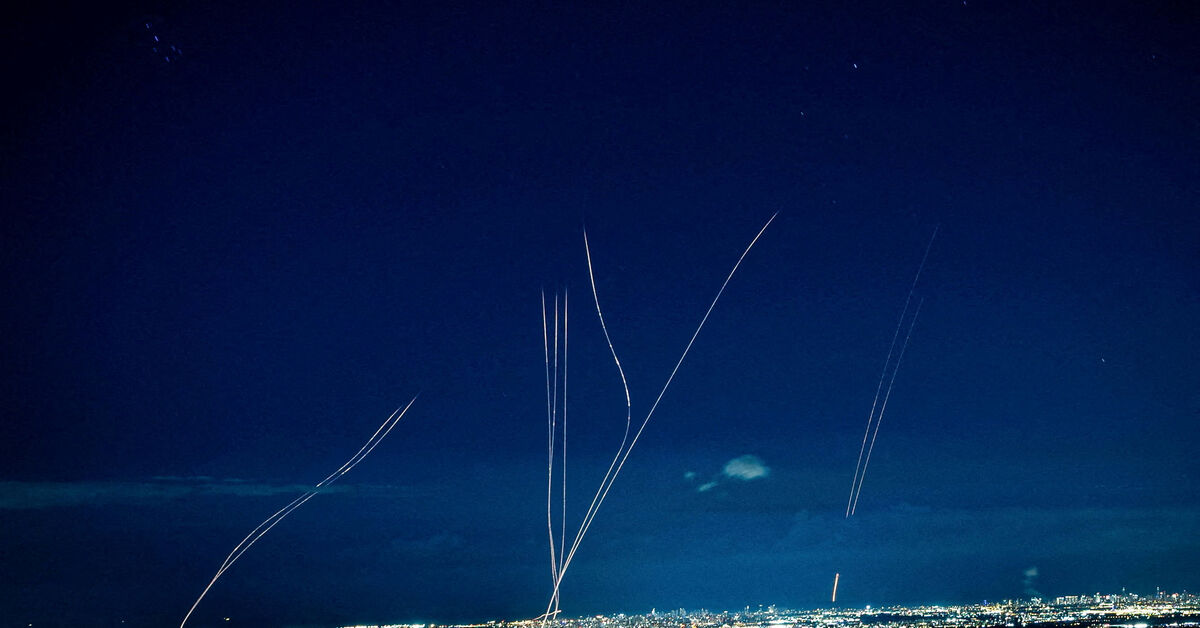
CAIRO/DUBAI, March 29 (Reuters) - The risk of an expanded Iran war grew on Saturday as Yemen's Iran-aligned Houthis on Saturday launched their first attacks on Israel since the start of the conflict, even as additional U.S. forces reached the Middle East.
Speaking before the strike, Secretary of State Marco Rubio said the United States expected to conclude military operations within weeks, although a new deployment of U.S. Marines started arriving in the region. The Houthis said they would continue their operations until the "aggression" on all fronts ended.
Iranian President Masoud Pezeshkian spoke to Pakistan's Prime Minister Shehbaz Sharif, whose government hosts a meeting with the Turkish and Saudi foreign ministers on Sunday to seek to ease regional tensions.
But there is no sign of an immediate diplomatic breakthrough and the war, launched with U.S. and Israeli strikes on Iran on February 28, has spread across the Middle East, killing thousands and hitting the world economy with the biggest-ever disruption to global energy supplies.
Washington has dispatched two contingents of thousands of Marines to the Middle East, the first of which arrived on Friday on an amphibious assault ship, the U.S. military said on Saturday.
The U.S. could achieve its aims without ground troops, Rubio said on Friday, but acknowledged it was deploying some to the region so Trump would have "maximum" flexibility to adjust strategy as needed.
The Pentagon is also expected to deploy thousands of soldiers from its 82nd Airborne Division.
LEBANESE JOURNALISTS, RESCUE WORKERS HIT
On Saturday, Israel said it had carried out a wave of attacks on Tehran, targeting what the military said were infrastructure sites belonging to Iran's government.
It also hit targets in Lebanon, where it has resumed its war against Iran-backed Hezbollah, killing three Lebanese journalists in a strike on a media vehicle, Lebanon's Al Manar TV reported, as well as a Lebanese soldier. A follow‑up strike on the rescue workers sent to assist them also caused fatalities.
Israel's military said it had targeted one of the journalists, whom it called a "terrorist", accusing him of being part of a Hezbollah intelligence unit, and saying he had reported on locations of Israeli soldiers.
Iran kept up attacks on Israel and several Gulf states after hitting an air base in Saudi Arabia on Friday and wounding 12 U.S. military personnel, two of them seriously, in one of the most serious breaches of U.S. air defences so far.
Air defences shot down a drone near the residence of the leader of the Iraqi Kurdish ruling party, Masoud Barzani, in Erbil, security sources told Reuters early Sunday. Security sources said on Saturday that a drone attack targeted the home of the president of Iraq's Kurdistan Region.
HOUTHIS CAN STRIKE TARGETS FAR FROM YEMEN
Israel, which regularly faced missile attacks from the Houthis before the war, confirmed a missile had been fired at it from Yemen. There were no reports of casualties or damage.
The attack pointed to a potential new threat to global shipping, already hit by the effective closure of the Strait of Hormuz, the conduit for about a fifth of global oil and liquefied natural gas supplies.
Houthi military spokesperson Yahya Saree later said the group carried out a second attack on Israel in less than 24 hours and vowed more strikes to come.
The Houthis have shown an ability to strike targets far beyond Yemen and disrupt shipping lanes around the Arabian Peninsula and the Red Sea, as they did in support of Hamas in the Gaza war.
MARKETS ALARMED BY PROSPECT OF ONGOING WAR
With U.S. midterm elections due in November, the increasingly unpopular war has weighed on President Donald Trump's Republican Party and he has appeared eager to end it soon, while also threatening escalation.
Demonstrators took to city streets across the U.S. on Saturday in anti-Trump rallies described by organizers as a call to action against the war on Iran.
Financial markets have reacted with alarm to signs the war may drag on. The Brent crude oil benchmark is up more than 50% since the war began.
Trump has threatened to hit Iranian power stations and other energy infrastructure if Iran does not open the Strait of Hormuz. But he has extended a deadline he had imposed for this week, giving Iran another 10 days to respond.
Iranian threats to attack ships in the strait have kept most oil tankers from attempting the waterway. A few vessels have traversed the strait without issue, including ships under the flags of Pakistan and India, after Iranian assurances of safe passage.
Iran has agreed to allow an additional 20 Pakistani-flagged vessels to pass through the strait, with two ships permitted to transit daily, Pakistan's Foreign Minister Ishaq Dar said.
Israel has targeted Iran's nuclear infrastructure, and the head of Russia's state nuclear corporation Rosatom, which has evacuated staff from the Bushehr nuclear power plant on the Gulf coast, said the attacks threatened nuclear safety.
Pezeshkian said Iran would "retaliate strongly if our infrastructure or economic centers are targeted".
Iranian attacks were reported in multiple areas across the Gulf, including Kuwait, the United Arab Emirates and Oman.
An Iranian airstrike hit the Israeli village of Eshtaol, near Jerusalem. Seven people were hospitalized, Israel’s ambulance service said.
In Iran, media said at least five people were killed in a U.S.-Israeli attack on a residential unit in the northwestern city of Zanjan and in Tehran, the Iran University of Science and Technology was struck.
(Reporting by Reuters bureaux; Writing by Lincoln Feast and James Mackenzie; Editing by William Mallard, Edwina Gibbs, Keith Weir, Timothy Heritage, Sergio Non, Rod Nickel, Chizu Nomiyama )
Facts Only
Yemen's Houthis launched their first attacks on Israel since the conflict began.
The U.S. deployed additional Marines and troops to the Middle East, with the first contingent arriving on Friday.
Secretary of State Marco Rubio stated the U.S. expects to conclude military operations within weeks.
Iran's President Masoud Pezeshkian spoke with Pakistan's Prime Minister Shehbaz Sharif ahead of a regional meeting to ease tensions.
Israel conducted airstrikes on Tehran and Lebanon, killing three Lebanese journalists and a soldier.
Iran attacked an air base in Saudi Arabia, wounding 12 U.S. military personnel.
A drone strike targeted the residence of Iraqi Kurdish leader Masoud Barzani in Erbil.
The Houthis confirmed a second attack on Israel within 24 hours, vowing further strikes.
Global oil prices have risen over 50% since the war began due to disruptions in the Strait of Hormuz.
Israel targeted Iran's nuclear infrastructure, prompting Rosatom to evacuate staff from the Bushehr nuclear plant.
Iran agreed to allow 20 Pakistani-flagged vessels to pass through the Strait of Hormuz daily.
U.S.-Israeli strikes hit residential areas in Iran, killing at least five people.
Executive Summary
Full Take
The strongest version of this narrative highlights a rapidly escalating regional conflict with clear geopolitical stakes: Iran and its proxies expanding attacks, the U.S. reinforcing its military presence, and Israel conducting retaliatory strikes. The article effectively captures the multi-front nature of the war, from Yemen to Lebanon to the Gulf, and the economic fallout from energy disruptions. It also notes diplomatic efforts, though their futility is underscored by continued violence.
However, the framing leans toward a "clash of civilizations" motif, with Iran and its allies portrayed as aggressors and the U.S./Israel as responders, despite the war's origins in U.S.-Israeli strikes on Iran. The emotional weight of civilian casualties (journalists, rescue workers) is used to amplify moral outrage, though the context of Israel's accusations against the journalists is included. The economic angle—oil price surges—serves as a fear appeal, reinforcing the stakes for global audiences.
Root cause: The narrative assumes a zero-sum power struggle between Iran and a U.S.-Israel axis, with proxies like the Houthis and Hezbollah as pawns. Unstated is the historical pattern of Western interventions in the region and how they shape current alliances. The article echoes Cold War-era proxy conflicts, where local actors' agency is often overshadowed by great-power rivalry.
Implications: Human agency is most visible in the anti-war protests and diplomatic meetings, but the dominant frame is one of inevitability—war as an unstoppable force. The costs are borne by civilians (journalists, soldiers, energy consumers), while benefits accrue to arms manufacturers, oil speculators, and political leaders leveraging nationalist rhetoric. Second-order effects include normalized military deployments, eroded trust in diplomacy, and deeper regional sectarian divides.
Bridge questions: How might this conflict reshape global energy markets beyond the immediate crisis? What role do local grievances (e.g., Yemen's civil war) play in the Houthis' alignment with Iran, and how is that nuance obscured? Would evidence of a negotiated ceasefire change your view of the war's trajectory?
Counterstrike scan: A coordinated influence campaign would amplify the "Iran as aggressor" frame while downplaying U.S./Israeli first strikes, using civilian casualties to justify escalation. The article includes these elements but also provides counterpoints (e.g., Iran's warnings, diplomatic efforts), avoiding full alignment with a propagandistic playbook. The tone remains journalistic, not overtly manipulative.
Patterns detected: ARC-0024 Ambiguity (selective framing of aggression), ARC-0043 Motte-and-Bailey (justifying strikes as "defensive" while expanding operations).