There has been a rise in homeowners taking out green loans from banks and credit unions.
Experts said consumers were rushing to upgrade their homes and move to EV cars to increase energy efficient to counter some of the impacts of rising energy prices.
Banks said what they call green lending has reached a record high.
Green personal loans include finance for an electric vehicle or funding to carry out works to make a home more energy efficient.
Read more
And credit unions have reported a hike in demand for energy-saving home upgrades.
Green loans taken out from credit unions are averaging more than €20,000.
The banks said the number of green personal loans taken out last year shot up by 26pc compared with the previous year.
The Banking and Payments Federation Ireland said the average green loan its members issued was relatively high at €23,000 in the last three months of last year.
This would add €150 over a year to the average household bill
This is more than twice the average of €10,400 for all loans in the same quarter.
In annual terms, green loan volumes jumped by 25.8pc to 6,516 loans, and values rose by 27.7pc to €152.6m, the banking body said.
Experts said consumers want to make their homes more energy efficient as costs rise.
Ireland has the most expensive electricity in the 27 states that make up the European Union, according to the EU statistical agency Eurostat.
An average household in this country pays around €480 a year more for their electricity compared with the EU average.
Electricity prices in Ireland are almost 40pc above EU average, according to Eurostat.
Last week PrepayPower, which has 240,000 customer accounts, became the first energy supplier since the outbreak of the war in the Middle East to announce an increase in the price of its gas and electricity.
There are fears that the more than one million customers of Electric Ireland will be next to be hit with electricity and gas price increases.
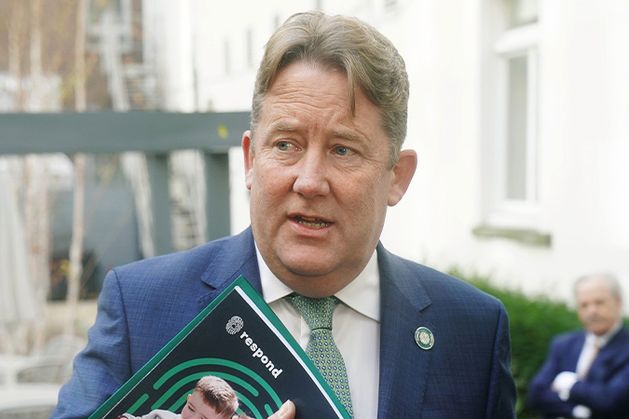
Energy Minister Darragh O’Brien said recently that electricity prices could rise by up to 9pc, a move that would add €150 over a year to the average household bill.
Credit unions said that members of what is called Greenify said huge numbers of their members are borrowing to invest in energy-saving home improvements and electric vehicles.
Loan values range from €20,075 for home to €21,550 for EVs
Greenify is a national green lending initiative made up of 34 credit unions that came together to form what they call Collaborative Finance. It was set up to offer standardised green-loan products with a common rate.
Greenify is a consumer loan product with a 5.5pc rate for people who want to make their homes more efficient or to buy an EV.
The credit unions said there was strong demand for green loans, with loan values ranging from €20,075 for home improvements to €21,550 for electric vehicles.
This is close to twice the average credit union loan outstanding of €11,000.
Read more
Meanwhile, the Banking and Payments Federation said overall annual personal loan activity, including car, home improvement and green loans, reached record highs last year.
Total loan volumes rose by almost 20pc to 272,980 compared with 2024, while loan values also rose by almost 20pc reaching more than €2.9bn over the same period.
Facts Only
Homeowners are taking out green loans from banks and credit unions to finance energy-efficient home improvements and EV purchases
The number of green personal loans issued by banks increased by 26% in 2021 compared to the previous year
The average green loan issued by banks was €23,000 in Q4 2021, more than twice the average for all loans during the same period
Credit unions have reported a hike in demand for energy-saving home improvements and EV financing, with loan values ranging from €20,075 to €21,550
Ireland has some of the most expensive electricity in the European Union, with an average household paying around €480 a year more compared to the EU average
Executive Summary
Full Take
Sentinel — Human
The text exhibits signs consistent with human authorship. It demonstrates variations in sentence length, lacks perfect paragraph structure, and uses colloquial phrases and personal voice. However, it is important to note that these signs are not definitive and human-written content can sometimes show stylometric patterns similar to AI-generated text.