By providing your information, you agree to our Terms of Use and our Privacy Policy. We use vendors that may also process your information to help provide our services. This site is protected by reCAPTCHA Enterprise and the Google Privacy Policy and Terms of Service apply.
For all that filmmaking is a collaborative endeavor — and camera departments especially rely on each other — department heads don’t often get the chance to compare notes about the difficult parts of the job and different practical/philosophical approaches that might help elevate the work. But DP Natasha Braier, who tries to teach as much as she can around her shooting schedule, doesn’t think it has to be that way.
From the boisterous inventiveness of “I Love Boosters” to the ruthless beauty of “The Neon Demon” to the slippery fantasy of “Honey Boy” (and even a brace of Ed Sheeran music videos), Natasha Braier has been there, done that, and bought the t-shirt. When the Argentinian-born cinematographer joined the American Society of Cinematographers, it finally, finally felt like she’d found a community of peers to inspire her and learn from — just not necessarily when she needed them.
“ When I was a student, I knew of three [cinematographer] names that I could see in credits, but I didn’t even know how they looked. So it’s important to reassure people and give them a mirror where they can see themselves in this career and keep going,” Braier told IndieWire.
Over some enforced downtime during the COVID lockdown, though, Braier started organizing a set of workshops, panel discussions, mentorship programs, a worldwide crew recommendation list, and even a Discord for cinematographers at much earlier stages in their careers to learn from working DPs and each other. They’ve come together as Deep Light, a community which Braier oversees (modded by many of her mentees) to give young cinematographers the conceptual tools, as well as the actual ones.
“You have thousands of YouTube accounts and Instagram accounts and online things and publications, and everyone talks about the tools. And there’s new tools every day — new cameras, new light. I felt like [the conversation] was really becoming about the tools and not about the meaning,” Braier said. “What are we doing with these tools? What stories are we telling as filmmakers? Why do we want to be filmmakers? Why do we want to produce images?”
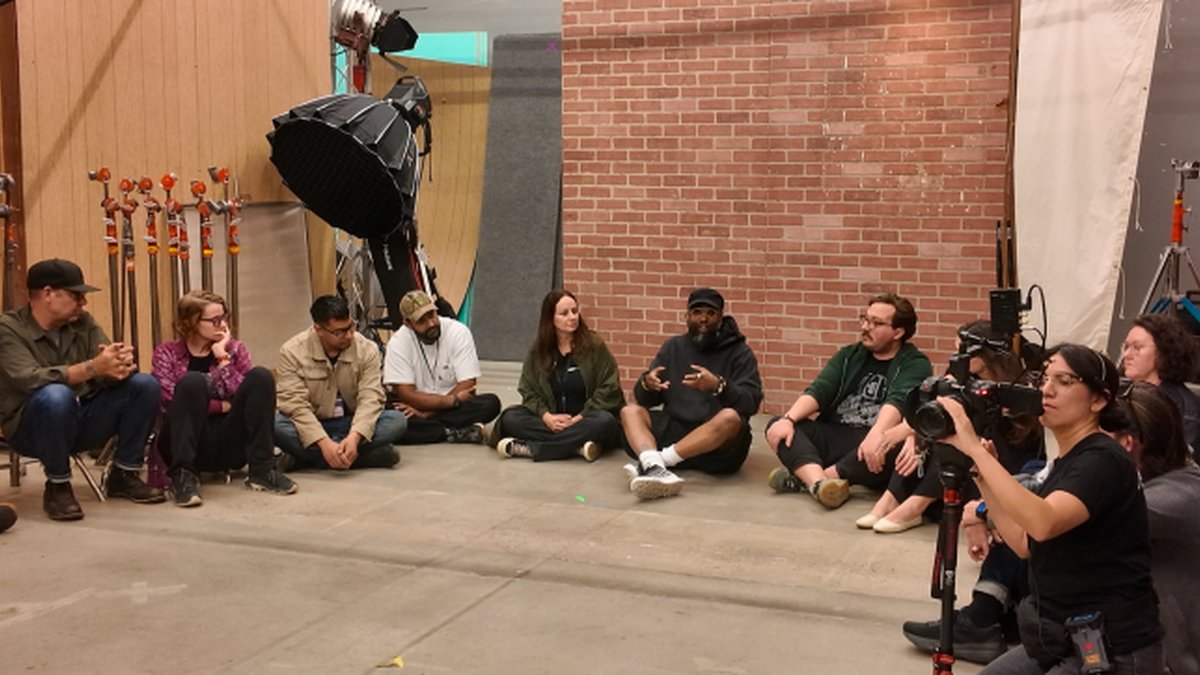
To help cinematographers answer those questions, Deep Light has started running workshops led by filmmakers with a really distinctive point of view (pun unintended) on the art of image creation — with the first being led by Bradford Young at PanaVision. “We had 30 people, and Bradford, for two days, and it was amazing,” Braier said. “We recorded some of it — some parts were off the record so that he could be free to talk as much as possible — and there will be a recorded version we’re editing now and hope to launch around August.”
Braier and her collaborators are also working on an interview series called “Through Their Eyes” with notable cinematographers focusing specifically on the kinds of career challenges that don’t necessarily come up in a piece about the work of a specific film or a gear survey. So far, Braier’s posted wide-ranging talks with Lol Crawley, Michael Bauman, and Autumn Durald Arkapaw.
“We ask them about the 10 films that shaped their DNA, and then based on that, we also do a Cine Club. We started it in May with “Malcolm X,” one of Autumn’s favorite movies. We’re going to be doing the next session of the club in July, as well, probably,” Braier said.
Deep Light is, of course, not the only hub for cinematographers and aspiring cinematographers online. But Braier finds that organizing community and teaching within her community helps keep her perspective fresh and keeps her in love with the work of filmmaking and excited to make the movies that are important to her. Ideally, it will help other cinematographers who make independent films feel less alone, too.
“There’s always this perception that people in this town perceive success as going into studio movies, as getting out of indies to do Marvel,” Braier said. “I don’t want out of indies. I’m here for these kinds of movies. And so I think it’s important — this society gets you very confused, with Instagram and all these things. So for me, it’s like, what’s the idea of success? To me, success is doing movies that we love.”
By providing your information, you agree to our Terms of Use and our Privacy Policy. We use vendors that may also process your information to help provide our services. This site is protected by reCAPTCHA Enterprise and the Google Privacy Policy and Terms of Service apply.
Sentinel — Human
This piece functions as an authentic feature highlighting how community building and philosophical inquiry can redefine professional success in the film industry.