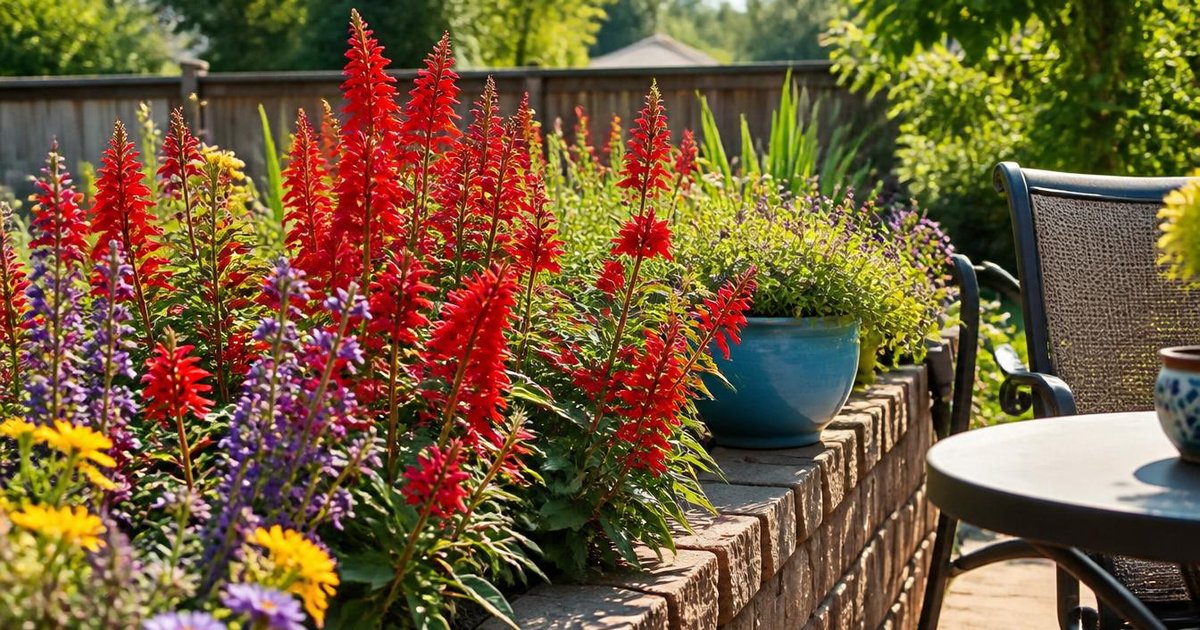
Salvia splendens, commonly known as scarlet sage, is one of the most striking and dependable red-flowering annuals for summer gardens. With its vivid upright spikes of intense red blooms, it brings immediate energy and contrast to containers, borders, and pollinator plantings across Fort Collins and the Front Range.
Where cooler-toned salvias offer subtle structure, Salvia splendens delivers bold, unmistakable color—especially effective in high-sun Colorado landscapes where strong visual impact is often desired.
At [Plantorium.com](https://plantorium.com?utm_source=chatgpt.com scarlet sage is a favorite for gardeners seeking reliable, heat-tolerant color that performs consistently from late spring through frost.
Why Salvia splendens Performs So Well in Northern Colorado
Scarlet sage is originally native to Brazil, which explains its strong preference for warmth, sun, and consistent summer conditions. In Fort Collins and surrounding areas, it adapts very well to the long, bright growing season.
It thrives because:
- It loves full sun and heat
- It tolerates dry air common along the Front Range
- It produces continuous flower spikes through summer
- It maintains strong color intensity in bright light
The signature feature is its dense, upright spikes of brilliant red flowers, which rise above compact green foliage and create a strong vertical accent in any planting design.
When to Plant Salvia splendens in Fort Collins
Salvia splendens is sensitive to cold and should be planted only after the risk of frost has passed, typically around mid-May in Northern Colorado.
Once planted in warm soil, it establishes quickly and begins producing flower spikes early in the season. With steady care, it continues blooming until the first fall frost.
Sunlight Requirements
Full sun is ideal for best flowering and compact growth.
In the Front Range climate:
- Provide at least 6–8 hours of direct sunlight daily
- Ensure open spacing for airflow
- Avoid heavily shaded locations, which reduce bloom production
In full sun, scarlet sage develops dense flower spikes and maintains strong, uniform color throughout the season.
Soil and Growing Conditions
Salvia splendens prefers well-draining, moderately fertile soil.
For best results:
- Amend clay soils with compost before planting
- Avoid poorly drained or compacted areas
- Use quality potting mix for containers
Good drainage is especially important in Colorado, where short bursts of summer rain can temporarily saturate soil before rapid drying.
Watering in a Dry Climate
Scarlet sage performs best with consistent moisture but does not tolerate soggy conditions.
Recommended approach:
- Water deeply during establishment
- Maintain even moisture during active growth
- Allow slight drying between waterings
- Increase watering during hot, windy periods
In containers, daily monitoring may be necessary during peak summer heat in Fort Collins.
Fertilizing for Continuous Bloom
Salvia splendens is a heavy bloomer and benefits from regular feeding.
A balanced fertilizer every few weeks supports:
- Continuous spike production
- Strong foliage development
- Intense flower color
Avoid excessive nitrogen, which can encourage leafy growth at the expense of blooms.
Garden Role and Design Use
Scarlet sage is primarily used as a bold vertical accent in garden design.
It works especially well in:
- Formal bedding displays
- Entryway containers
- Mass planting schemes
- Sunny borders and walkways
- High-impact color blocks in public landscapes
In Fort Collins gardens, it is often used where strong red color is needed to contrast cooler tones or neutral hardscaping.
Pollinator Value
Salvia splendens is highly attractive to hummingbirds, making it one of the most valuable red-flowering annuals for wildlife-friendly gardens.
It also attracts:
- Bees
- Butterflies
Its long bloom season ensures a steady nectar source throughout the summer months.
Handling Colorado Weather
Scarlet sage performs well in Front Range conditions but prefers stable warmth.
It tolerates:
- Heat
- Strong sunlight
- Dry air
- Wind exposure
It is sensitive to:
- Frost (not cold hardy)
- Overwatering
- Poor drainage
Even after weather stress, healthy plants typically continue blooming with minimal recovery time.
Companion Planting
Salvia splendens pairs well with both bold and soft-textured annuals.
Excellent companions include:
- Petunias
- Calibrachoa
- Verbena
- Sweet Potato Vine
- Angelonia
- Rudbeckia
- Ornamental grasses
Its upright red spikes make it especially effective as a focal point in mixed container designs.
A Bold Classic for Summer Color
Salvia splendens remains one of the most recognizable bedding plants in ornamental gardening. Its intense red flowers, dependable performance, and strong vertical form make it a reliable choice for gardeners seeking high-impact color throughout the season.
In Fort Collins and across the Front Range, it continues to earn its place as a classic summer staple—bright, bold, and consistently rewarding.
Explore seasonal availability and additional annuals at [Plantorium.com’s full plant catalog](https://plantorium.com/all-plants/?utm_source=chatgpt.com
Facts Only
Salvia splendens, or scarlet sage, is a red-flowering annual plant.
It is native to Brazil and performs well in Fort Collins and the Front Range.
The plant thrives in full sun, heat, and dry air, producing continuous flower spikes from late spring until frost.
It should be planted after the last frost, typically around mid-May in Northern Colorado.
Scarlet sage requires well-draining, moderately fertile soil and consistent moisture but is sensitive to overwatering.
It attracts pollinators such as hummingbirds, bees, and butterflies.
The plant is used in formal bedding displays, containers, and mass plantings for its bold red color and vertical growth.
It is not cold-hardy and must be replanted annually.
Companion plants include petunias, calibrachoa, verbena, sweet potato vine, angelonia, rudbeckia, and ornamental grasses.
Scarlet sage is available for purchase at Plantorium.com.
Executive Summary
Full Take
This article presents Salvia splendens as an ideal plant for Northern Colorado gardens, emphasizing its adaptability, visual impact, and pollinator benefits. The narrative is straightforward and informative, focusing on practical growing advice and design applications. However, it’s worth noting the subtle promotional tone, as the piece repeatedly references Plantorium.com, suggesting a potential commercial interest. While the facts about the plant’s characteristics and care are verifiable, the absence of alternative perspectives—such as potential drawbacks or comparisons with other drought-tolerant plants—could limit a reader’s ability to make fully informed decisions.
The article’s framing aligns with a broader trend in gardening media that prioritizes aesthetic appeal and ease of care, often overlooking ecological trade-offs or long-term sustainability. For instance, while scarlet sage attracts pollinators, its non-native status and high water needs in a dry climate might raise questions about its ecological suitability compared to native alternatives. The piece also assumes a specific gardening paradigm—one that values bold, high-impact color over subtler, potentially more sustainable options.
A critical reader might ask: How does scarlet sage compare to native salvias in terms of water use and pollinator support? What are the long-term costs of relying on non-native annuals in a region prone to drought? Could the emphasis on visual impact overshadow more resilient or ecologically beneficial choices? These questions invite deeper inquiry into the trade-offs between ornamental gardening and ecological stewardship.
Patterns detected: none
Sentinel — Human
Sentinel analysis incomplete — partial response from fallback model.