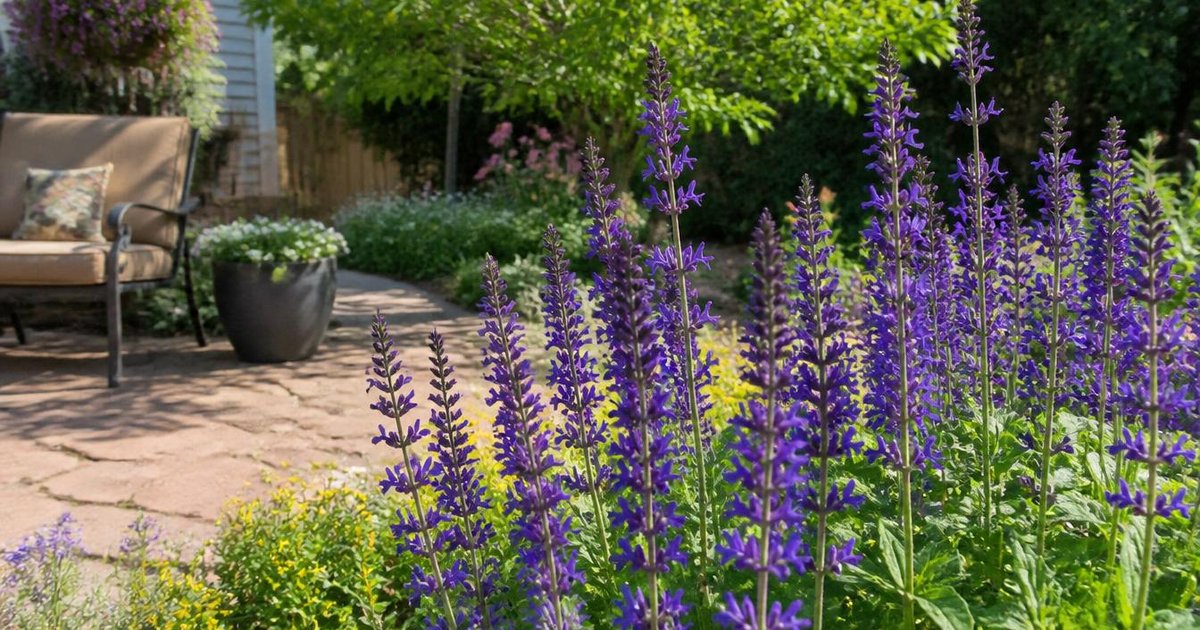
Salvia farinacea, commonly known as mealycup sage, is one of the most reliable blue-flowering annuals for summer gardens in Colorado. With its upright spikes of violet-blue flowers and its ability to thrive in heat and sun, it brings a cool-toned contrast to the warm palettes often seen in Front Range landscapes.
In Fort Collins and surrounding areas, it is especially valued for its long bloom season, drought tolerance, and strong pollinator appeal. It behaves like a refined, structured version of traditional salvia—more uniform, more floriferous, and exceptionally consistent in performance.
At [Plantorium.com](https://plantorium.com?utm_source=chatgpt.com Salvia farinacea is frequently used in mixed containers and landscape beds where dependable blue color and vertical form are needed through the heat of summer.
Why Salvia farinacea Performs So Well in Northern Colorado
Mealycup sage is naturally adapted to warm, open environments. It thrives in conditions that mirror the Front Range: strong sunlight, dry air, and long summer days.
It performs well because:
- It loves full sun and heat
- It tolerates drought once established
- It blooms continuously through summer
- It maintains a neat, upright form without excessive care
The signature flower spikes are typically deep violet-blue, though some varieties may appear lighter blue or white. These spikes rise above tidy green foliage, creating a clean, structured look in both containers and garden beds.
When to Plant Salvia farinacea in Fort Collins
Like other warm-season annuals, Salvia farinacea should be planted after the risk of frost has passed, typically around mid-May in Fort Collins and nearby communities.
Once soil temperatures warm, plants establish quickly and begin producing flower spikes early in the season. With proper care, they continue blooming steadily until the first frost in fall.
Sunlight Requirements
Full sun is essential for the best flowering performance.
In Northern Colorado:
- Provide at least 6–8 hours of direct sunlight daily
- Ensure open spacing for airflow
- Avoid shaded or crowded planting locations
In full sun, Salvia farinacea develops dense flowering spikes and maintains a compact, upright structure throughout the season.
Soil and Growing Conditions
Mealycup sage prefers well-draining soil and is relatively adaptable once established.
For best results:
- Amend clay soils with compost before planting
- Avoid poorly drained or compacted areas
- Use high-quality potting mix in containers
Good drainage is especially important in Colorado, where occasional summer storms can temporarily saturate soil before drying quickly.
Watering in a Front Range Climate
Salvia farinacea is moderately drought tolerant and performs well in Colorado’s dry conditions once established.
Recommended watering approach:
- Water deeply during establishment
- Allow soil to dry slightly between waterings
- Reduce watering frequency once mature
- Increase watering during extended heat or wind events
In containers, more frequent watering may be required due to rapid evaporation in summer heat.
Fertilizing for Continuous Bloom
This salvia benefits from light, consistent feeding to maintain its long bloom cycle.
A balanced fertilizer every few weeks supports:
- Continuous flower spike production
- Healthy, compact growth
- Strong color intensity
Avoid excessive nitrogen, which can lead to leafy growth at the expense of flowers.
Garden Role and Design Use
Salvia farinacea is widely used as a vertical accent and color anchor in summer plantings.
It works especially well in:
- Mixed container arrangements
- Sunny garden borders
- Pollinator gardens
- Entryway plantings
- Mass planting schemes for color rhythm
In Fort Collins landscapes, its cool blue tones are often used to balance hotter colors like red, orange, and yellow in mixed designs.
Pollinator Value
One of the strongest attributes of Salvia farinacea is its appeal to pollinators.
It attracts:
- Bees
- Butterflies
- Hummingbirds (especially in red/blue mixed plantings nearby)
Its long bloom season ensures a steady nectar source throughout summer, making it a valuable addition to ecologically focused gardens.
Handling Colorado Weather
Mealycup sage is well adapted to Front Range conditions and handles summer stress well.
It tolerates:
- Heat
- Dry air
- Strong sunlight
- Wind exposure
It is sensitive to:
- Frost (not cold hardy)
- Poor drainage
- Prolonged overwatering
Even after minor weather stress, plants often continue blooming with minimal intervention.
Companion Planting
Salvia farinacea pairs beautifully with a wide range of sun-loving annuals.
Excellent companions include:
- Petunias
- Calibrachoa
- Verbena
- Lantana
- Rudbeckia
- Angelonia
- Ornamental grasses
Its vertical blue spikes make it especially effective when paired with trailing or mounding plants that soften its structure.
A Reliable Blue Anchor for Summer Gardens
In a garden palette often dominated by warm tones, Salvia farinacea provides something essential: dependable, season-long blue. Its upright form, continuous flowering, and adaptability to Colorado’s climate make it a valuable structural and visual anchor in summer plantings.
For gardeners in Fort Collins and across the Front Range, it remains one of the most consistent and rewarding choices for long-lasting color and pollinator support.
Explore seasonal availability and additional annuals at [Plantorium.com’s full plant catalog](https://plantorium.com/all-plants/?utm_source=chatgpt.com
Facts Only
Salvia farinacea, or mealycup sage, is a blue-flowering annual suited for summer gardens in Colorado.
It thrives in full sun, heat, and dry conditions, making it ideal for the Front Range climate.
The plant blooms continuously from mid-May until the first frost in fall.
It requires well-draining soil and is drought-tolerant once established.
Salvia farinacea attracts pollinators such as bees, butterflies, and hummingbirds.
It is commonly used in mixed containers, garden borders, and pollinator gardens.
Companion plants include petunias, verbena, lantana, and ornamental grasses.
The plant is sensitive to frost, poor drainage, and overwatering.
It is frequently planted in Fort Collins and surrounding areas for its reliability and color.
The article references Plantorium.com as a source for seasonal availability and plant catalogs.
Executive Summary
Full Take
This article presents Salvia farinacea as an ideal plant for Northern Colorado gardens, emphasizing its adaptability, pollinator benefits, and aesthetic value. The narrative is straightforward and informative, focusing on practical gardening advice without overt manipulation. However, it’s worth noting the subtle promotional tone, as the article links to Plantorium.com, a plant retailer, which may influence the framing of the plant’s benefits. The piece assumes that readers prioritize low-maintenance, pollinator-friendly plants, which aligns with broader trends in sustainable gardening but may not account for diverse gardening goals or constraints.
The strongest version of this narrative is that Salvia farinacea is a reliable, ecologically beneficial plant for Colorado’s climate. The article provides clear, actionable guidance for planting and care, which is useful for gardeners. However, it lacks discussion of potential drawbacks beyond basic sensitivities (e.g., frost, overwatering) and doesn’t compare it to alternative plants that might serve similar purposes. The absence of counterpoints or limitations beyond the obvious could be seen as a mild form of confirmation bias, though not necessarily intentional.
Root cause: The narrative reflects a growing emphasis on drought-tolerant, pollinator-friendly plants in gardening media, driven by environmental concerns and regional climate challenges. The assumptions here are that readers value sustainability and ease of care, which may not universally apply.
Implications: For gardeners, this plant offers a practical solution for summer color and pollinator support. However, the lack of comparative analysis means readers might overlook other suitable plants. The promotional link to Plantorium.com raises questions about whether the article is purely educational or subtly commercial.
Bridge questions: What other plants might offer similar benefits with different trade-offs? How does the cost or availability of Salvia farinacea compare to alternatives? Would a more critical discussion of its limitations (e.g., susceptibility to pests, soil preferences) change its perceived value?
Counterstrike scan: If this were part of a coordinated campaign, it might resemble a soft-sell marketing piece for Plantorium.com, using educational content to drive traffic. However, the article’s focus on practical advice and lack of overt sales language suggest it is not part of a manipulative playbook. The content aligns more with genuine gardening guidance than a deceptive strategy.
Patterns detected: none
Sentinel — Likely Human
The text is a highly polished, expertly structured informational guide that demonstrates strong coordination, typical of AI synthesis of domain-specific knowledge.