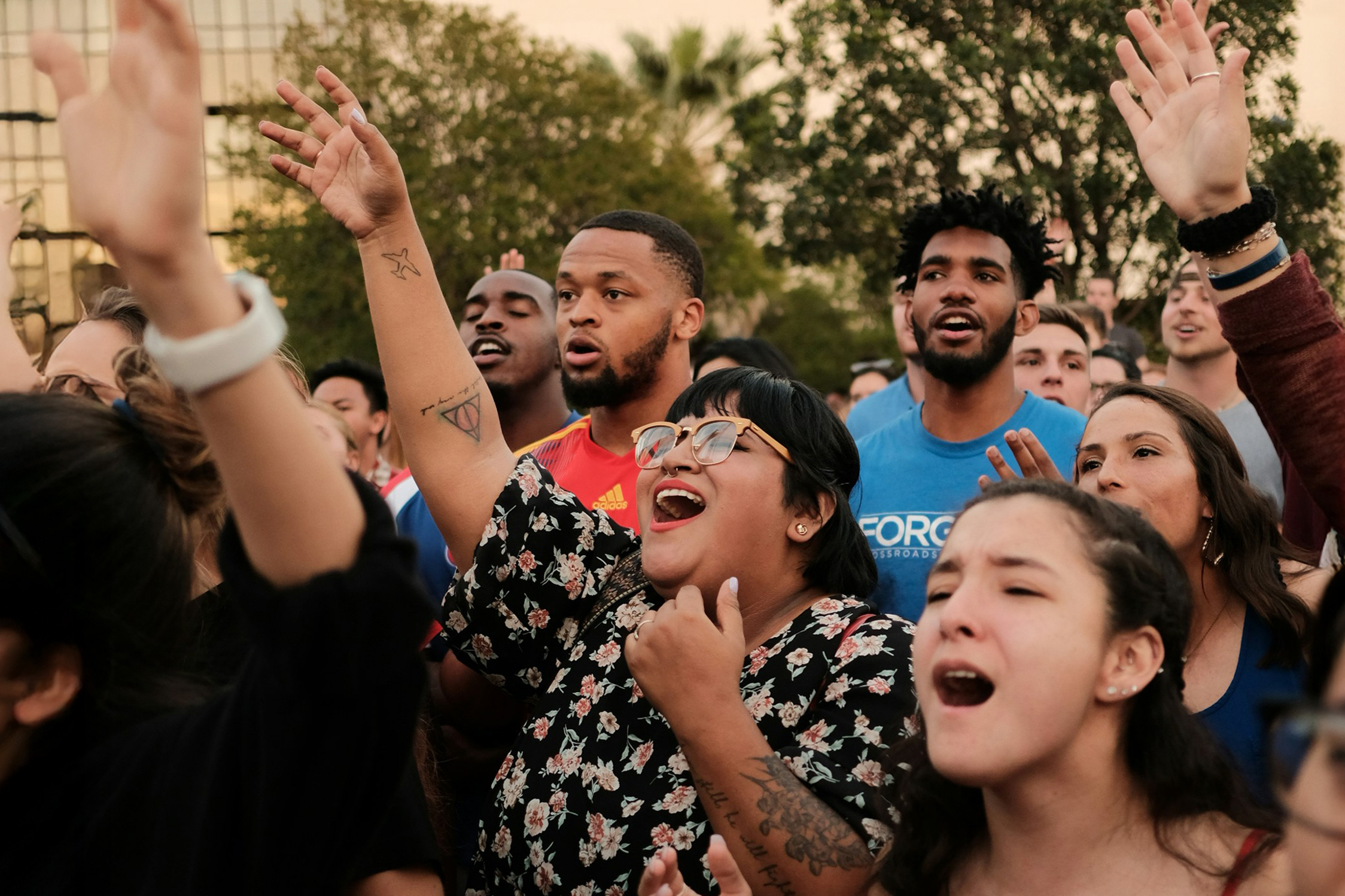
For years, the conversation around Gen Z and church has focused on who isn’t showing up; but a new study from Lifeway Research suggests that’s no longer the biggest issue.
Gen Z churchgoers are actually the most engaged generation when it comes to attendance. They go to church more often than older adults, participate in small groups at the highest rates and are among the most likely to serve, evangelize and invest in spiritual growth.
The disconnect comes after Sunday.
Researchers found Gen Z is the generation least likely to say their faith consistently shapes the way they live throughout the week, raising questions about whether participation is translating into discipleship.
“My biggest concern for Gen Z is not that they are disconnected from the church,” said Chuck Peters, director of NextGen ministries at LifeWay. “Our research shows that Gen Z is deeply involved. The greater concern is that they are not being deeply formed.”
Among Protestant churchgoers, Gen Z attends worship services an average of 6.2 times per month, well above millennials (4.8), Gen X (5.1) and baby boomers and older (4.5). They also average five small-group gatherings each month, nearly double the rate of Gen X and boomers.
They’re serving too. Young adults were among the most likely to feed the hungry, visit the sick, memorize Scripture, fast and invite non-Christians to church. Nearly four in 10 have participated in an international mission trip, and two-thirds say they intentionally build friendships with non-Christians in order to share their faith.
But despite all that activity, LifeWay found signs that faith often isn’t carrying over into everyday life.
More than half of Gen Z churchgoers (52%) said that when they have to choose between their own way and God’s way, they usually choose their own. Nearly half (43%) said reading and studying the Bible has not made a significant difference in how they live. More than a third (36%) admitted they don’t think about God throughout many of their daily activities.
Prayer also lags behind older generations. Just 35% said they set aside time to pray every day, the lowest rate of any generation surveyed.
Researchers also found younger churchgoers were more likely to wrestle with foundational theological beliefs. Nearly half (49%) said the God of the Bible is no different than the gods or spiritual beings described by other religions, and 54% said someone sincerely seeking God could find eternal life through religions other than Christianity.
Scott McConnell, executive director of LifeWay Research, said church leaders shouldn’t mistake participation for spiritual maturity.
“While young adult churchgoers have strong participation, they also have high levels of doubts about God,” McConnell said. “It can be easy for church leaders to assume young people who are present are all in when they may still be deciding if their heart is willing to rest in Jesus Christ alone.”
For Peters, the findings point to a discipleship challenge more than an attendance problem.
“Young adults need to know that being a Christian isn’t about intellectual assent,” he said. “It’s about finding, knowing and following Jesus in relationship.”
In other words, Gen Z isn’t avoiding church; in fact, many are already there. The challenge for many pastors now is helping what happens on Sunday shape what happens the rest of the week.
Sentinel — Likely Human
The article is a high-quality synthesis of research findings. While well-structured and factually grounded, its perfectly smooth flow and balanced tone suggest significant AI assistance in structuring the narrative.