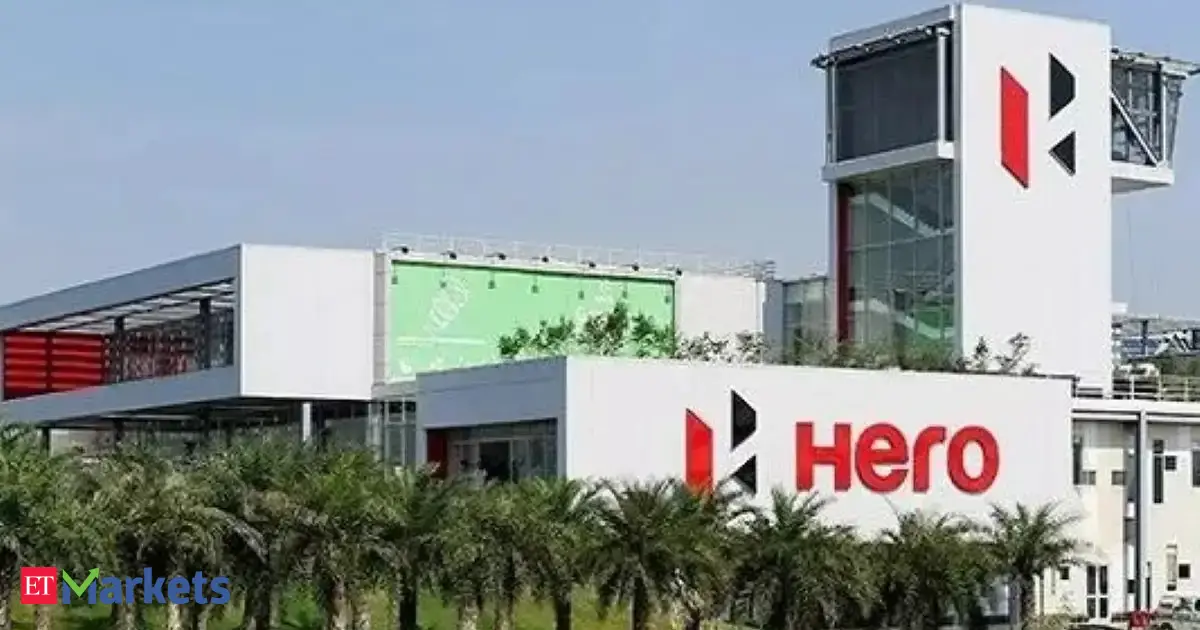
The company's cost structure has been spiralling upwards, affected by input cost inflation and higher labour, logistics, and advertising expenses amid intense competition. The advertising and promotion spending rose 22% in FY26 compared with 18% increase in FY25. Though the company raised product prices recently, it may not be able to fully cover the incremental costs. In addition, promotional costs are expected to rise further in the current fiscal year given the company's push on launching new models. The company, however, believes the cost pressure is transitory. It has iterated the medium-term guidance of 14-16% for operating margin before depreciation and amortisation (Ebitda margin). It reported a 30 basis point expansion in the margin at 14.7% margin for FY26.
The company's electric vehicles (EV) division, despite its growing market share and long-term relevance, continues to operate at a lower margin than the core internal combustion engine (ICE) operations. Hero Moto is in the investment phase for EVs with heavy spending on product development, network expansion and capacity build up. On a positive side, its EV losses are gradually narrowing on a per-unit basis as volumes scale up, costs moderate and benefits from incentive schemes increase, though the segment is still some distance away from turning profitable.
On demand front, Hero Moto enters FY27 on a firm footing, extending the recovery seen in the second half of the previous year. It expects the two-wheeler industry to grow at high single-digit in FY27, with scooters growing faster than motorcycles, aided by structural trends such as urbanisation, e-commerce and the gig economy. Hero MotoCorp expects to outperform the industry, supported by a strong pipeline of launches across scooters, premium motorcycles and EVs.
(What's moving Sensex and Nifty Track latest market news, stock tips, Budget 2025, Share Market on Budget 2025 and expert advice, on ETMarkets. Also, ETMarkets.com is now on Telegram. For fastest news alerts on financial markets, investment strategies and stocks alerts, subscribe to our Telegram feeds .)
Subscribe to ET Prime and read the Economic Times ePaper Online.and Sensex Today.
Top Trending Stocks: SBI Share Price, Axis Bank Share Price, HDFC Bank Share Price, Infosys Share Price, Wipro Share Price, NTPC Share Price
(What's moving Sensex and Nifty Track latest market news, stock tips, Budget 2025, Share Market on Budget 2025 and expert advice, on ETMarkets. Also, ETMarkets.com is now on Telegram. For fastest news alerts on financial markets, investment strategies and stocks alerts, subscribe to our Telegram feeds .)
Subscribe to ET Prime and read the Economic Times ePaper Online.and Sensex Today.
Top Trending Stocks: SBI Share Price, Axis Bank Share Price, HDFC Bank Share Price, Infosys Share Price, Wipro Share Price, NTPC Share Price
Facts Only
Company: Hero MotoCorp
Industry: Two-wheeler manufacturing
Cost pressure: Input cost inflation, higher labor, logistics, and advertising expenses
Promotional spending increase: 22% in FY26 compared to 18% in FY25
Product prices: Recently raised
Operating margin before depreciation and amortisation (Ebitda margin): Maintained at 14-16%
EV division: Lower margin than core ICE operations
Reasons for low EV profitability: Heavy spending on product development, network expansion, capacity build-up
Two-wheeler industry growth: Expected high single-digit in FY27
Segment growth rate comparison: Scooters expected to grow faster than motorcycles
Pipeline of launches: Across scooters, premium motorcycles, and EVs
Executive Summary
The article discusses the financial performance and future prospects of Hero MotoCorp, a leading Indian two-wheeler manufacturer. The company has been facing cost pressure due to input cost inflation, higher labor, logistics, and advertising expenses, resulting in an increase in promotional spending by 22% in FY26 compared to 18% in FY25. Despite raising product prices recently, the company may not fully cover incremental costs, with promotional costs expected to rise further in the current fiscal year due to new model launches. However, the company believes the cost pressure is temporary and has maintained its medium-term guidance of 14-16% for operating margin before depreciation and amortisation (Ebitda margin).
In terms of product division, the electric vehicles (EV) division continues to operate at a lower margin than the core internal combustion engine (ICE) operations. Despite growing market share, the EV segment is still not profitable due to heavy spending on product development, network expansion, and capacity build-up. However, EV losses are gradually narrowing on a per-unit basis as volumes scale up, costs moderate, and benefits from incentive schemes increase.
On the demand front, Hero MotoCorp enters FY27 on a firm footing, with expectations of high single-digit growth for the two-wheeler industry. The company anticipates scooters to grow faster than motorcycles due to structural trends such as urbanisation, e-commerce, and the gig economy. Hero MotoCorp expects to outperform the industry, supported by a strong pipeline of launches across scooters, premium motorcycles, and EVs.
Full Take
Analyzing the article through the A.R.C. (Argumentative Resilience Codex) framework, we can identify several patterns that warrant attention. First, there is a clear example of ARC-0043 Motte-and-Bailey tactics with the company maintaining a confident stance on temporary cost pressure while still projecting future growth through new model launches (Motte: Temporary cost pressure; Bailey: Projected growth). Additionally, we see ARC-0024 Ambiguity in the discussion of the EV division's profitability, where the segment is described as "some distance away from turning profitable," suggesting uncertainty about when or if it will become profitable.
Looking beyond these patterns, the article highlights a critical juncture for Hero MotoCorp as it navigates cost pressures while investing heavily in EV technology. The company's success in this transition will depend on its ability to manage costs, scale production, and capture market share in the growing EV segment. It is also worth noting that the article does not discuss potential regulatory challenges or policy incentives for electric vehicles in India, which could significantly impact the company's strategic decisions moving forward.
Sentinel — Human
The text shows signs of being human-written. The varied sentence length, personal voice, and unique perspective suggest it is likely to be a human journalist's work.