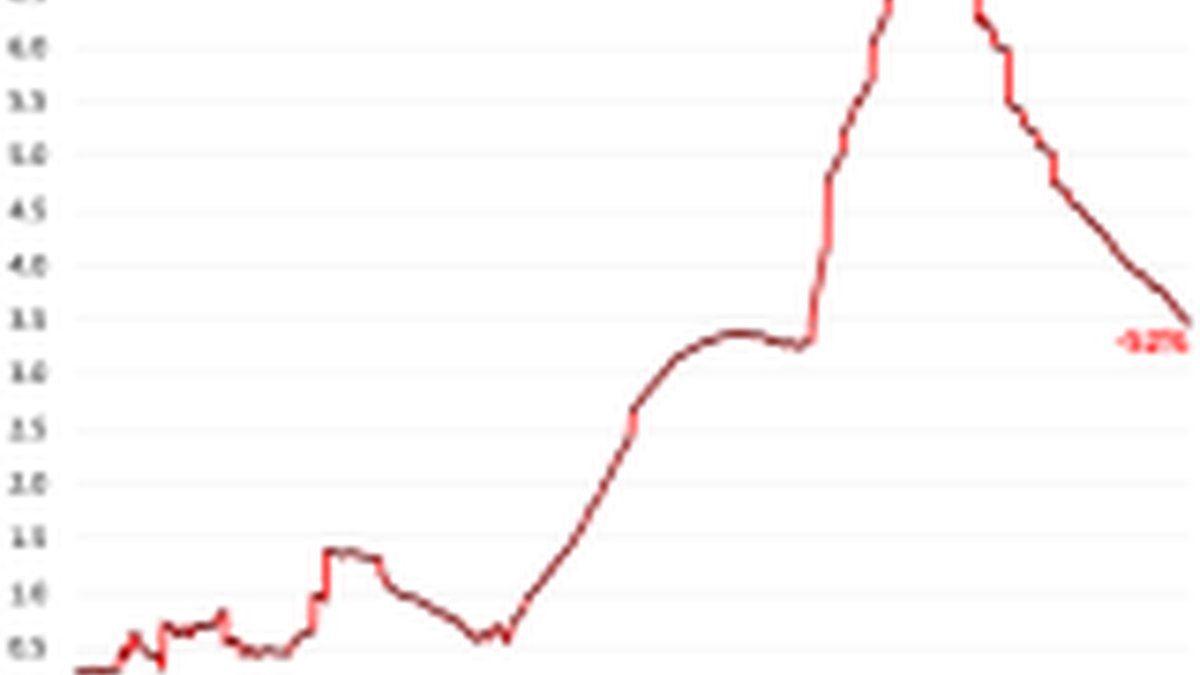
Fed’s anti-QT faction, take a look: ECB shed €3.7 trillion ($4.2 trillion) of its QE assets, nearly double the Fed’s QT, and nothing bad has happened.
By Wolf Richter for WOLF STREET.
The ECB shed €149 billion in Q2 of its bonds and loans that make up its QE assets, according to its quarter-end balance sheet released today.
Since the peak of those QE assets in mid-2022, the ECB has now shed €3.70 trillion ($4.22 trillion), or 52%, of its QE assets, far more than anyone thought the formerly uber-dovish ECB, or any other central bank, could ever shed. Those assets are now down to €3.47 trillion. And nothing bad has happened because of it. The anti-QT faction among the Fed’s FOMC members need to take a look at this.
And while at it, the ECB also hiked its policy rates by 25 basis points at its June 11 meeting, to 2.25%, and raised its inflation projection for the end of 2026 to 3%.
By hiking is policy rates and continuing with the balance sheet reduction, the ECB follows a clear tightening strategy.
Meanwhile, the Bank of Japan has belatedly launched its QT program at the end of 2024, but has since then accelerated the pace fairly aggressively, and has even started selling outright its stock-market traded equity ETFs and J-REITs. Nothing on its balance is sacred sheet anymore.
But the BOJ has only hiked its policy rates in minuscule steps, far apart, to just 1.0%, the highest in decades, but still ridiculously low. It is getting ready for another rate hike, and then eventually maybe another rate hike. It follows a strategy of QT instead of rate hikes – the goal being to put a floor under the plunging yen. And long-term yields have surged from near 0%, with the 30-year JGB yield now over 4% (my analysis here).
Fed Chair Warsh has promised “regime change” at the Fed, and has started to implement the regime change. Included is the balance sheet. Under Powell, the Fed’s QT had reduced the balance sheet by $2.43 trillion through mid-December. But then the anti-QT faction at the FOMC got spooked when liquidity issues caused repo yields to wobble higher.
Since then, to prepare for the Tax Day liquidity drain, the Fed has added $189 billion back to the balance sheet through Reserve Management Purchases of T-bills. After April 15, it tapered the RMPs, and they may end entirely on July 15. That’s still the tail-end of the Powell Fed’s policies.
At the July FOMC meeting, Warsh’s Fed may provide more information about balance sheet policies. He has spoken out for a smaller balance sheet and is forming a “taskforce” to analyze and propose best approaches.
So this is quite a change all around.
The ECB’s two QE assets: Loans and bonds.
The ECB had conducted QE via two methods, bonds and loans, which ballooned from €690 billion in 2015 to €7.16 trillion by mid-2022 at the peak. The bonds were mostly government bonds from the member states, but also included corporate bonds, mortgage bonds, and asset-backed securities that the ECB bought under different programs.
In mid-2022, as inflation was raging, the ECB flipped from QE to QT. Since then, the ECB:
- Shed 99% of all its loans, from €2.2 trillion at the peak to $25 billion now, which is an invisible near-zero amount on its massive balance sheet (blue in the chart below).
- Shed 31% of all its bonds, from €4.96 trillion at the peak to €3.44 trillion now.
To shed the loans, the ECB made the terms unattractive, and the banks paid them back.
Bonds come off the balance sheet as they mature on maturity date. No maturing bonds are replaced with new purchases, whatever matures reduces the balance sheet by that amount. The ECB has exited the bond market. And nothing bad has happened. The Fed should have done that too.
The ECB marks down its gold holdings.
The ECB’s consolidated balance sheet represents the combined assets, liabilities, and capital of the individual central banks of the Euro Area’s member countries, of which the Bundesbank is the largest. When a country becomes a member of the Euro Area, that central bank’s balance sheet is added to the consolidated balance sheet of the ECB. Most recently, Bulgaria joined the Euro Area on January 1, 2026; Croatia had joined on January 1, 2023.
The gold and gold receivables on the ECB’s consolidated balance sheet represent the holdings of the member central banks. About 31% of those holdings are the Bundesbank’s gold.
The ECB marks gold holdings to market prices at the end of every quarter. In Q2, the price of gold expressed in euros plunged, after spiking for years through Q1.
So today, the ECB marked down its gold holdings by €160 billion for Q2, to €1.23 trillion, after having marked up its gold holdings three months ago by €113 billion for Q1. The market value of its gold holdings has fallen below where it had been at the end of the year.
During the gold run-up from mid-2019 through Q1 2026, the ECB had marked up its gold holdings by nearly €1 trillion.
These mark-to-market adjustments are paper adjustments after the end of the quarter and do not involve purchases or sales of gold, or money printing, or QE or QT, or whatever. Just variations in the market price of gold. Other central banks, such as the BOJ, do not mark their gold holdings to market.
All combined, total assets dropped by €270 billion in Q2, to €5.98 trillion, including the €160 billion mark-to-market write-down of its gold holdings.
The huge $1 trillion mark-to-market write-up of gold on paper in prior years, especially in 2025 and Q1 2026, obscured a big portion of the magnitude of QT.
And in case you missed it: The Bank of Japan was late to the QT game, but now it’s even selling its equity holdings outright. Nothing on its balance sheet is sacred anymore: QT instead of Rate Hikes to Put a Floor under Plunging Yen: Bank of Japan Sheds 15.6% of its Massive Assets
Enjoy reading WOLF STREET and want to support it? You can donate. I appreciate it immensely. Click on the mug to find out how:
The Fed should have leaned on QT from the start. The path the Fed chose was all a scam to increase the wealth of the top 10%, exactly the ones who didn’t need it. The K shaped economy lays that fact bare.
Wolf-
What is the Fed’s reasoning behind not marking gold (certificates?) to market, as opposed to how the ECB values its gold. And how do other major central banks handle the shifting valuation of their gold related assets?
Thanks
It’s unusual and maybe silly for a central bank to mark its gold to market every quarter. None of the major central banks do that, except for the ECB.
The Fed does not actually own the gold, ownership was transferred to the US Treasury via the Gold Reserve Act of 1934. In exchange for the transferred gold, the Fed got the gold certificates. The price was set by law (Congress) at $42.22 per fine troy ounce.
If Congress passes a law to mark those gold holdings to market, it could do that, but it just serves no purpose at all.
Sentinel — Human
The text reads as an opinion-driven analysis blending specific financial data from central banks with strongly held personal conclusions about monetary policy and asset management.