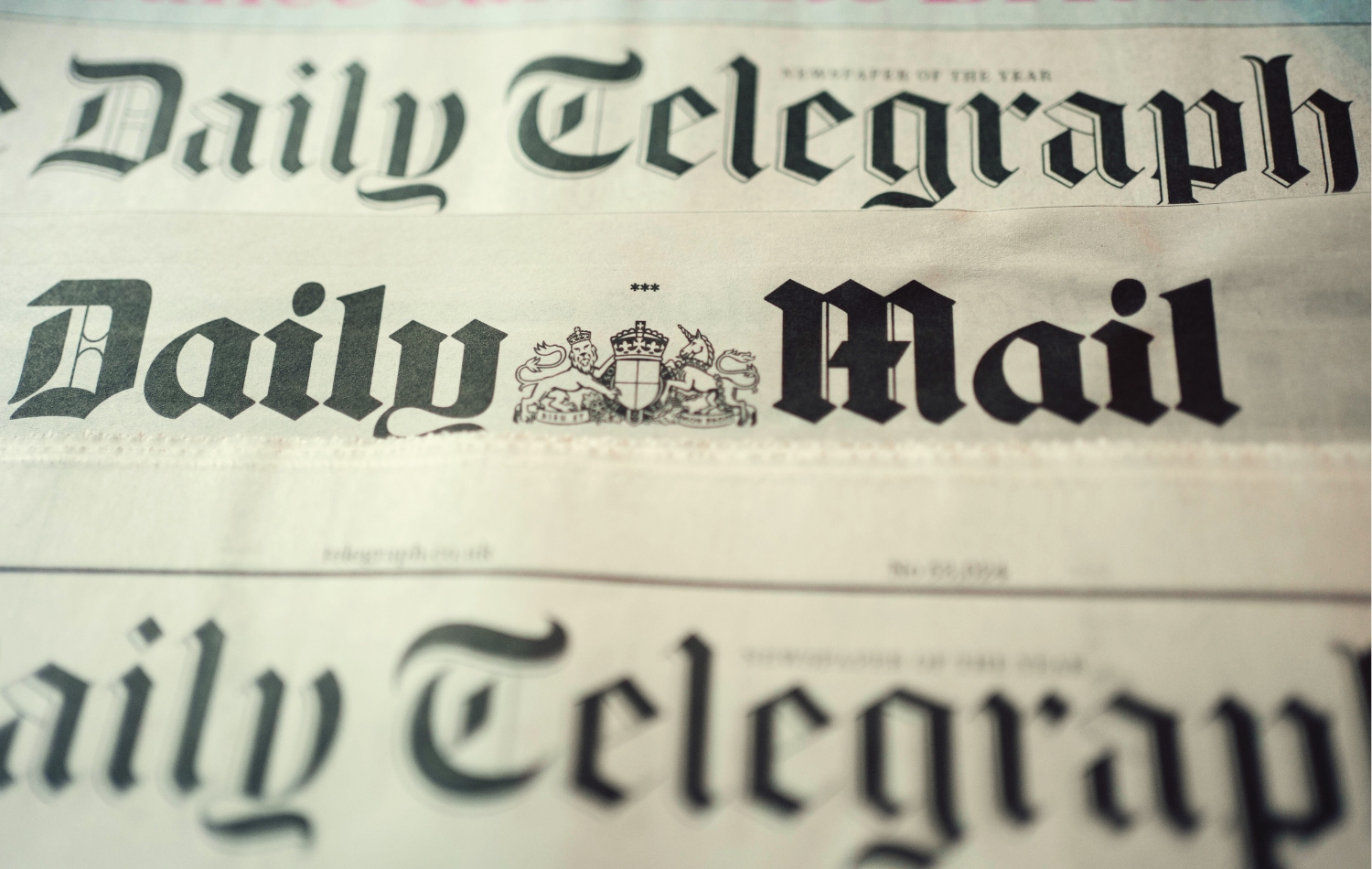
The Daily Mail’s parent company (DMGT), which is attempting to buy The Telegraph newspaper, makes a quarter of its money hosting events in Middle East petrostates.
DMGT has made a £500 million bid to purchase the Telegraph Media Group. A previous offer backed by the United Arab Emirates (UAE) was blocked by the UK government in 2024 over fears of foreign state influence in the British press.
The sale was also opposed by Telegraph staff including former editor Charles Moore, who said it would be “unforgivable” for the paper to be “controlled by a foreign power”, calling the UAE “a country which does not have press freedom”.
However, DMGT also has a significant financial stake in the UAE.
The latest DMGT accounts published on 17 February show the company made £259 million in the year to September 2025 from its events and exhibition business, which has its headquarters in the UAE.
Most of this revenue came from running high-profile energy and construction industry events in the UAE, Saudi Arabia, and Egypt, including several with ties to host governments.
This amounted to 24 percent of DMGT’s total revenue – more than it makes from print and digital advertising (23 percent), or from selling newspapers (22 percent).
Geoff Dickinson, the CEO of DMG Events, is also on the advisory board of the Dubai International Chamber – a trade body representing the Emirate. Dickinson was appointed to the position by Sheikh Mohammed bin Rashid Al Maktoum, Prime Minister of the UAE and ruler of Dubai, in 2021.
Subscribe to our newsletter
Stay up to date with DeSmog news and alerts
Culture Secretary Lisa Nandy has referred DMGT’s Telegraph bid to the Competition and Markets Authority, and media regulator Ofcom, which will advise the government on whether the deal should go ahead.
A DMGT spokesperson told The Guardian in December: “DMGT reiterates that the acquisition will be completely free from any prohibited foreign state influence, and that The Telegraph will remain editorially independent, while benefiting from significant investment to accelerate its international growth.”
However, DMGT’s Middle East events business is growing, while its newspaper revenues are in decline. Its latest accounts state that while consumer media revenues fell by two percent in the year to September 2025, its events business “continued to grow, benefitting from increases in exhibitor demand and visitor attendance.”
DMGT’s total events revenue has increased by 59 percent since 2023, and by 160 percent since 2022.
“If DMGT’s takeover bid for the Telegraph goes through, it’ll be like one Death Star swallowing another,” said Mic Wright, author of Breaking: How the Media Works, When it Doesn’t and Why it Matters. “And the fact that oil and gas events are as profitable to DMGT as its entire advertising business suggests to me that it will be rather inclined to go gently on Gulf petrostates in the long term.”
The Telegraph and the Daily Mail consistently publish editorials hostile to climate action and the transition from fossil fuels to renewable energy.
Oil and Gas Events
DMGT describes the “core business” of its events arm as the hosting of five large annual exhibitions in the Middle East.
These are the Abu Dhabi International Petroleum Exhibition (ADIPEC) energy show, reportedly the world’s largest energy exhibition; the EGYPES energy event in Egypt; two ‘Big 5’ construction sector events in Dubai and Riyadh; and the Saudi Food Show.
Several of these events have ties to the host country governments. ADIPEC is hosted by Adnoc, the UAE’s state oil company. EGYPES is “held under the patronage” of Egyptian president Abdel Fattah el-Sisi. And the Big 5 events are backed by the UAE Ministry of Energy and Infrastructure, and the Saudi Ministry for Municipal, Rural Affairs and Housing.
The new DMGT accounts note another significant earner, Gastech, an annual energy trade show that focuses on “natural gas, LNG and hydrogen”, held last year in Milan, Italy.
On top of these five big events, DMGT also ran events “on behalf of third parties”, including the official Blue Zone at the COP28 climate summit in Dubai in December 2023, and the Green Zone at the COP29 summit in Azerbaijan – also a petrostate – in 2024.
The UAE and Saudi Arabia derive most of their wealth from oil production. Saudi Arabia is the world’s second biggest oil producer after the United States as of 2023. Oil and gas dominate Egypt’s exports and imports.
The UAE doesn’t hold popular elections. There are no political parties, critics of the government are often jailed, women face unequal treatment, and its penal code allows for the arrest of lesbian, gay, bisexual, and transgender (LGBT) campaigners.
Daily Mail owner Jonathan Rothermere accompanied U.S. President Donald Trump on a visit to Doha, Qatar, another Gulf petrostate, in May 2025.
Rothermere’s previous bid for The Telegraph in 2023 reportedly involved backers from Qatar.
As DeSmog has reported, Nigel Farage’s pro-fossil fuel party Reform UK – which is leading polls at 29 percent ahead of May’s elections – is also building ties to the UAE through business deals, funded trips, and meetings with government ministers.
Claudia Rothermere, wife of Jonathan Rothermere, donated £50,000 to Reform UK in September.
DMGT and DCMS were approached for comment.
A version of this article was published by Private Eye.
Subscribe to our newsletter
Stay up to date with DeSmog news and alerts
Facts Only
DMGT, parent company of the Daily Mail, has bid £500 million to acquire the Telegraph Media Group.
A previous UAE-backed bid for the Telegraph was blocked by the UK government in 2024 over foreign influence concerns.
DMGT generated £259 million (24% of total revenue) from its events business in the year to September 2025.
The events business is headquartered in the UAE and includes major energy and construction exhibitions in the UAE, Saudi Arabia, and Egypt.
Key events include ADIPEC (hosted by UAE state oil company Adnoc), EGYPES (under Egyptian presidential patronage), and the Big 5 construction events (backed by UAE and Saudi ministries).
DMGT also managed the Blue Zone at COP28 in Dubai and the Green Zone at COP29 in Azerbaijan.
Geoff Dickinson, CEO of DMG Events, sits on the advisory board of the Dubai International Chamber, appointed by UAE Prime Minister Sheikh Mohammed bin Rashid Al Maktoum in 2021.
UK Culture Secretary Lisa Nandy has referred DMGT’s bid to the Competition and Markets Authority and Ofcom for review.
DMGT’s newspaper revenues declined by 2% in the same period, while events revenue grew by 59% since 2023 and 160% since 2022.
The Telegraph and Daily Mail have a history of publishing editorials hostile to climate action and renewable energy transitions.
Jonathan Rothermere, DMGT owner, accompanied Donald Trump on a visit to Qatar in May 2025 and previously sought Qatari backing for a Telegraph bid.
Claudia Rothermere donated £50,000 to Reform UK, a pro-fossil fuel party with ties to the UAE.
Executive Summary
Full Take
The strongest version of this narrative highlights legitimate concerns about media independence and foreign influence. DMGT’s financial reliance on Middle Eastern petrostates—where press freedom is restricted—raises questions about whether its acquisition of the Telegraph could lead to softened criticism of those regimes or their fossil fuel industries. The UK government’s prior blocking of a UAE-backed bid underscores these concerns, and DMGT’s deepening ties to authoritarian states (e.g., Dickinson’s advisory role, Rothermere’s Qatar connections) add weight to the argument. The pattern of media outlets with climate-skeptical stances benefiting from fossil fuel-aligned revenue streams is well-documented, and DMGT’s case fits this trend.
However, the narrative could also be framed as an overreach—DMGT’s events business is distinct from its editorial operations, and the company has pledged editorial independence. The focus on Middle Eastern ties might also obscure broader industry trends, such as the decline of print media and the rise of event-driven revenue models across global publishers. Still, the alignment between DMGT’s financial interests and its media outlets’ climate skepticism invites scrutiny. The UAE and Saudi Arabia’s authoritarianism and fossil fuel dependence are undeniable, and their influence over Western media—direct or indirect—could erode public trust in journalism.
Root cause: This reflects the tension between media as a public good and media as a profit-driven enterprise. The decline of traditional revenue streams forces outlets to seek alternative funding, often from industries or states with vested interests. The pattern echoes historical cases where media ownership shaped editorial lines, from oil magnates to tech billionaires.
Implications: If the bid succeeds, the Telegraph’s coverage of climate policy, human rights in the Gulf, and energy transitions could face subtle or overt pressure. The broader risk is normalization of petrostate influence in Western media, undermining democratic discourse. Second-order effects include potential regulatory overreach if governments use foreign influence concerns to stifle media consolidation.
Bridge questions: How can media outlets balance financial survival with editorial integrity? What safeguards could prevent indirect foreign influence without overregulating press freedom? Would DMGT’s acquisition differ meaningfully from other corporate media consolidations?
Counterstrike scan: A coordinated influence campaign would amplify fears of foreign control while downplaying DMGT’s commercial autonomy, using emotional appeals about press freedom to obscure financial realities. The actual content aligns partially—it highlights legitimate concerns but stops short of demonizing DMGT without evidence. No clear manipulation pattern detected.
Patterns detected: none
Sentinel — Human
The article exhibits strong human-authored traits, including stylistic idiosyncrasies, specific sourcing, and a clear editorial voice, with no significant indicators of synthetic generation.