Skip to content
Chimera readability score 56 out of 100, Graduate reading level.

Africa
To display this content from YouTube, you must enable advertisement tracking and audience measurement.
One of your browser extensions seems to be blocking the video player from loading. To watch this content, you may need to disable it on this site.
Issued on:
13:01 min
From the show
Reading time
1 min
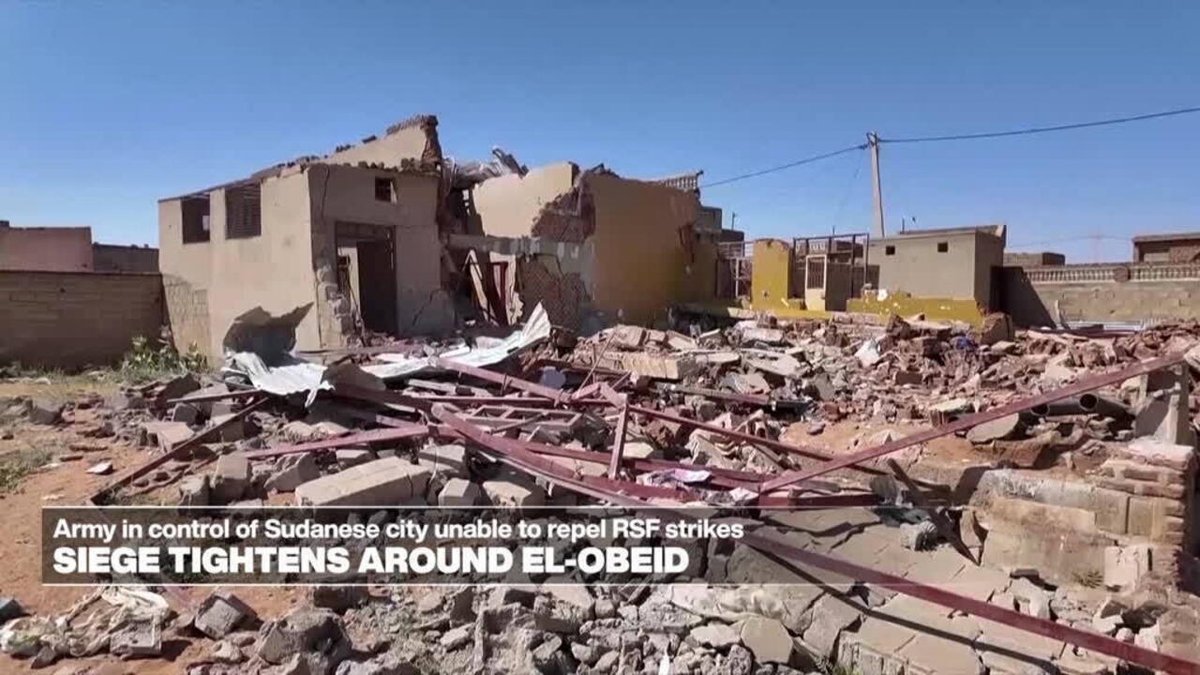
In tonight's edition, the ICC is laying down the groundwork for investigations into some of the atrocities of Sudan's brutal war. Also, rights workers, politicians, developers, and more are currently in Geneva for the AI for Good Summit. And South African artist Credo V. Daniel's music is removed from Apple after a performance divides fans, some accuse him of relying too much on AI for his vocals.
Advertising
Related keywords

Facts Only

The ICC is laying groundwork for investigations into atrocities in Sudan's war. Rights workers, politicians, and developers are in Geneva for the AI for Good Summit. South African artist Credo V. Daniel's music was removed from Apple after a performance caused division among fans regarding alleged reliance on AI vocals.

Executive Summary

The International Criminal Court is establishing investigations into alleged atrocities from Sudan's war. Additionally, rights workers, politicians, and developers are currently in Geneva for the AI for Good Summit. A South African artist, Credo V. Daniel, had his music removed from Apple following a performance that caused division among fans, with some attributing this to the use of AI for vocals.

Full Take

The juxtaposition of high-level international judicial work concerning conflict in Sudan alongside contemporary discussions surrounding technology ethics and artistic expression reveals a layered focus on accountability, technological influence, and cultural valuation. The theme shifts from documenting historical human suffering to navigating the immediate implications of emerging technologies, such as AI, which is being invoked in both geopolitical awareness and personal creative disputes. This structure suggests an underlying pattern where large-scale systemic failures (the Sudanese conflict) are processed concurrently with smaller, personalized struggles over authenticity and attribution (the artist's vocals). The implication is that the frameworks for accountability—whether legal, political, or artistic—are being tested under dual pressures: confronting brutal historical realities while simultaneously grappling with the complex, often nebulous, forces of artificial intelligence. Who benefits from framing these narratives in parallel? How does the focus on large geopolitical crises serve as a distraction or context for the smaller debates about digital provenance and creative ownership? What are the unseen connections between institutional mechanisms designed for justice and the emerging technologies that challenge established concepts of authorship and truth?

Sentinel — Human

Confidence

This text appears to be a fragmented collection of disparate news items rather than a cohesive analytical article, suggesting an aggregation or summary function.

Signals Detected
low severity: Sentence structure is short and fragmented; abrupt topic shifts are present.
medium severity: The text jumps abruptly between three disparate, unrelated topics (ICC investigation, AI Summit attendees, music removal) without explicit connective tissue.
low severity: No discernible argumentative skeleton or pattern; it reads like a collection of news headlines stitched together rather than an analytical piece.
Human Indicators
The shift in subject matter is jarring and lacks the smooth, logical flow typical of AI-generated summaries.
The inclusion of highly specific, seemingly unrelated details (Credo V. Daniel's music removal) suggests a narrative assembly common in short news snippets.
UN 'deeply concerned' by ongoing drone attack in Sudan — Arc Codex