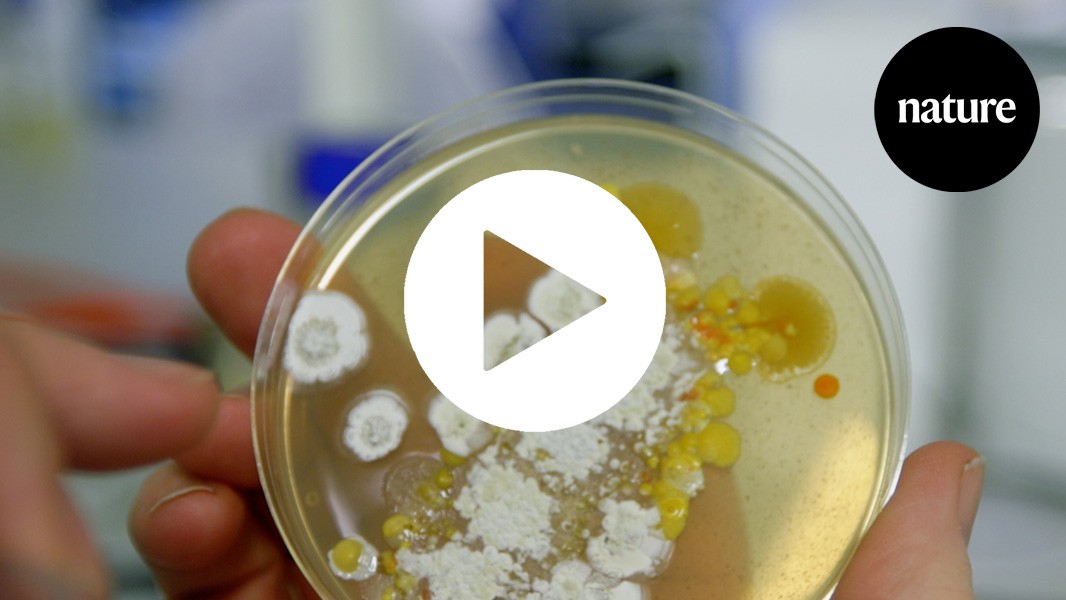
Antibiotics are losing their effectiveness. With the growth of antimicrobial resistance, routine treatments could become impossible owing to the risk of infection. Cancer treatments, care of newborns and routine surgeries are all in danger if this trend isn’t curbed. Millions of people are already dying from infections by antibiotic-resistant bacteria. In 2023, the World Bank estimated that antimicrobial resistance could increase health-care costs by US$1 trillion by 2050. So, researchers are urgently looking for solutions.
Some of these might come from surprising places, and this has led researchers to investigate organisms at the planet's extremes. Other scientists, however, have discovered a source of antibiotic-producing bacteria closer to home — at the grave of a faith healer.
Although some researchers have turned to traditional folk stories for clues in the search for new medicines, others have been using artificial intelligence to speed up the discovery process for antibiotics, to help deliver drugs into bacteria and to help physicians decide when to prescribe antibiotics to help prevent their overuse.
Together, this research could unlock new antibiotics and find ways to make them last longer, avoiding a future in which bacterial infections make a resurgence.
Facts Only
* Antimicrobial resistance is causing antibiotics to lose effectiveness.
* The trend endangers cancer treatments, newborn care, and routine surgeries.
* Millions of people are dying from infections by antibiotic-resistant bacteria.
* The World Bank estimated that antimicrobial resistance could increase health-care costs by US$1 trillion by 2050.
* Researchers are looking for solutions to the resistance problem.
* Some research involves investigating organisms at the planet's extremes.
* Other research involves discovering antibiotic-producing bacteria closer to home.
* Some researchers have used artificial intelligence to speed up the discovery process for antibiotics.
* AI is used to help deliver drugs into bacteria.
* AI is used to help physicians decide when to prescribe antibiotics to prevent overuse.
Executive Summary
Full Take
The narrative frames a critical global public health crisis—antimicrobial resistance—using dramatic stakes (trillion-dollar costs, mass death) to motivate urgent action. The structure pivots between high-level existential threats and highly specific, anecdotal research sources (extremophiles and the grave of a faith healer). This technique uses fear appeals and the promise of 'surprising' solutions to draw attention to the scientific work, potentially diverting focus from the systemic policy and economic drivers of resistance. The juxtaposition of abstract, global threat and localized, seemingly esoteric sources (e.g., a faith healer's grave) risks reducing complex microbiological challenges to sensationalized, easily digestible narratives. The focus on AI and traditional methods suggests a broad, multi-pronged approach, but the presented text does not specify the efficacy or limitations of these methods, which raises questions about the actual scientific rigor behind the claims of rapid discovery or successful implementation. The implied urgency (avoiding a future in which bacterial infections make a resurgence) functions as a powerful, albeit generalized, call for resource allocation.
Patterns detected: ARC-0011 Emotional exploitation, ARC-0043 Motte-and-Bailey, ARC-0024 Ambiguity
Sentinel — Human
The text exhibits strong human authorship, characterized by a sophisticated synthesis of scientific necessity and anecdotal exploration, rather than the sterile uniformity typical of pure machine generation.