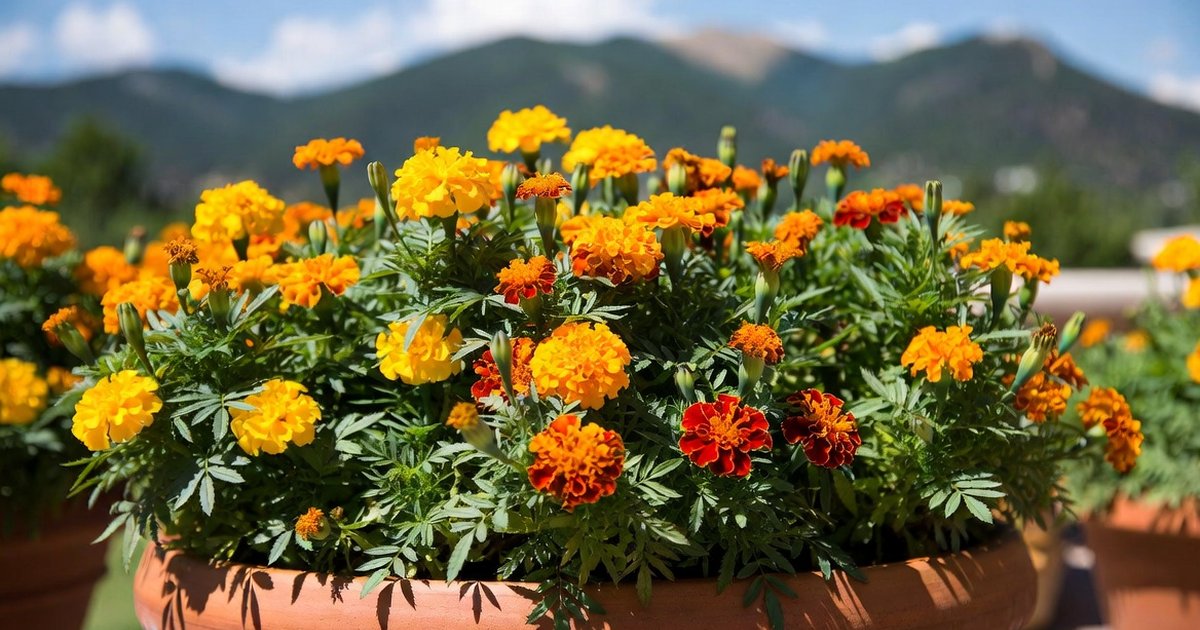
Marigold (Tagetes species and hybrids) is one of the most popular, cheerful, and easy-to-grow annual flowers. Known for their bright yellow, orange, gold, red, and bicolor pom-pom or daisy-like flowers, they bring strong color and a distinctive spicy scent to gardens. They are excellent for containers, borders, and pollinator gardens.
Marigolds pair excellently with your current lineup: their warm tones complement Lantana, contrast beautifully with the cool blues of Lobelia and Alyssum, and look striking next to the trailing foliage of Sweet Potato Vine, Creeping Jenny, and upright Juncus.
Growing Conditions in Fort Collins
Marigolds are heat-loving champions that thrive in Colorado’s sunny, dry summers.
- Hardiness: Grown as annuals in Zone 5b. They are killed by the first hard frost (usually mid-to-late September).
- Planting time: Late May to early June, after all danger of frost has passed and soil has warmed.
- Sun: Full sun (6–8+ hours) is ideal. They love intense Colorado sunlight and perform best with maximum exposure.
- Soil: Well-draining, average to fertile soil. They tolerate poor soils well but bloom heaviest in decent conditions. Great in containers or ground beds.
- Water: Moderate. Allow the soil to dry slightly between waterings. They are quite drought-tolerant once established but appreciate regular watering in containers during hot, dry spells.
Care Tips
- Growth habit: Varies by type:
- French Marigolds (Tagetes patula): Compact, 6–12 inches, great for pots and edging.
- African Marigolds (Tagetes erecta): Taller, 1–3 feet, big bold flowers.
- Triploid and Signet types: Various sizes and finer foliage.
- Bloom time: Continuous from early summer until frost — one of the longest blooming annuals.
- Maintenance: Deadhead spent flowers to keep them tidy and encourage more blooms (though many modern varieties are self-cleaning). Pinch young plants for bushier growth.
- Fertilizer: Light to moderate. A balanced fertilizer every 4–6 weeks keeps them blooming strong.
- Benefits: Famous for repelling aphids, nematodes, and other pests — fantastic companion plants for vegetables. Deer and rabbit resistant due to their scent.
- Pests/Diseases: Very tough. Occasional spider mites or powdery mildew in humid conditions, but generally problem-free in dry Colorado air.
Fort Collins Pro Tip: Marigolds are perfect for “thriller” or “filler” roles in large pots. Plant them with trailing Alyssum, Lobelia, Creeping Jenny, and Sweet Potato Vine for a vibrant, low-maintenance, pollinator-friendly container that looks great all summer.
Would you like recommendations for specific varieties (e.g., ‘Durango’, ‘Inca’, or ‘Gem’ series) or companion planting suggestions?
Facts Only
* Marigolds (*Tagetes* species and hybrids) are popular annual flowers.
* They produce bright yellow, orange, gold, red, and bicolor flowers and a spicy scent.
* They are suitable for containers, borders, and pollinator gardens.
* In Zone 5b, they are grown as annuals.
* Planting time is late May to early June, following the end of frost.
* Full sun (6–8+ hours) is ideal for marigolds.
* Soil should be well-draining, average to fertile.
* Watering is moderate; the soil should be allowed to dry slightly between waterings.
* French Marigolds are compact, 6–12 inches.
* African Marigolds are taller, 1–3 feet.
* Marigolds are famous for repelling aphids, nematodes, and other pests.
Executive Summary
Marigolds are popular annual flowers known for their bright yellow, orange, gold, red, and bicolor pom-pom or daisy-like blooms and spicy scent. They are effective for use in containers, borders, and pollinator gardens. They complement other plants like Lantana and contrast with Lobelia and Alyssum.
Growing marigolds in Fort Collins requires full sun (6–8+ hours) and thrives in sunny, dry summers. They are classified as annuals in Zone 5b, requiring planting in late May to early June after the danger of frost has passed. Optimal soil conditions are well-draining, average to fertile soil, though they tolerate poor soils. Watering should be moderate, allowing the soil to dry slightly between waterings.
Marigold varieties differ in growth habit; French Marigolds are compact (6–12 inches), African Marigolds are taller (1–3 feet), and Triploid and Signet types vary in size and foliage. They are continuous bloomers from early summer until frost. Marigolds offer benefits by repelling pests such as aphids and nematodes, and they are resistant to deer and rabbits due to their scent.
Full Take
The presentation of marigolds emphasizes their ease of care, heat tolerance, and pest-repellent qualities, positioning them as ideal companions and low-maintenance annuals. This framing establishes marigolds not merely as ornamental plants but as functional, resilient elements within a specific regional gardening context (Colorado). The focus on "heat-loving champions" and "maximum exposure" appeals directly to the gardener's desire for high-yield, minimal-effort results.
The narrative utilizes authority games by associating marigolds with proven benefits—pest repulsion and deer resistance—which shifts the focus from the biological reality of the plant to its perceived utility. This pattern seeks to create an implicit sense of trust: if the information is true, the resulting garden experience will be successful and effortless. The suggestion to use marigolds as "thriller" or "filler" in containers, combined with specific companion planting suggestions, functions as a cohesive, pre-packaged solution.
The underlying assumption is that the complexity of ecological interaction and variable microclimates is secondary to the easily quantifiable facts of growing conditions and aesthetic outcome. By presenting the growth habits and care tips as straightforward, universally applicable mandates, the text minimizes the need for the reader to engage in critical inquiry about why these specific conditions matter or what ecological trade-offs are being made. The call to action—offering specific varieties and pairing suggestions—further reinforces this structure, guiding the reader toward a specific, predictable outcome rather than fostering independent, contextualized observation of their garden environment.
Sentinel — Human
The text reads like a knowledgeable gardener or horticultural writer, grounding general information in specific regional facts and practical experience.