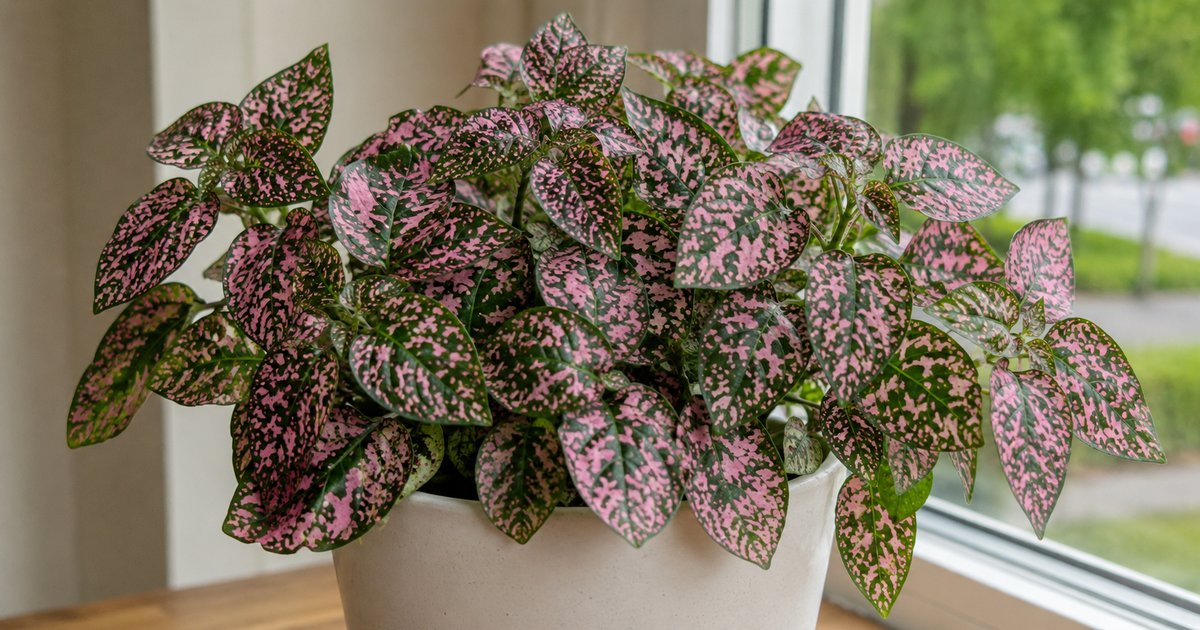
If you are looking to add a splash of whimsical color to the shadier corners of your landscape, Hypoestes phyllostachya—popularly known as the Polka Dot Plant—is your go-to choice. While many Front Range favorites rely on blooms for impact, this charming plant offers year-round visual interest through its uniquely splattered and spotted foliage.
Why Hypoestes is a High-Plains Hidden Gem
In the intense light of Fort Collins, Hypoestes serves as a versatile problem-solver for the garden. It is particularly valued by local gardeners for several reasons:
- Shade-Loving Vibrancy: While much of our local gardening focus is on heat-resilient varieties for full sun, Hypoestes thrives in the dappled light or partial shade found under our mature cottonwoods and maples.
- Visual Cooling Effect: The bright pink, white, or red "polka dots" on deep green leaves provide a cooling visual contrast to the parched summer landscape.
- Controlled Growth: With its tidy, mounding habit, it stays well-behaved in both garden beds and mixed containers.
- High-Altitude Adaptation: It handles our dry air remarkably well, provided it has consistent moisture and protection from the drying afternoon winds.
Designing with the Polka Dot Plant
To achieve a professional "Better Homes" look, use Hypoestes to draw the eye into quieter parts of the garden. It is an ideal candidate for:
- Lush Container Fillers: Use it as the "filler" in shady pots to provide a constant pop of color that doesn't rely on a flowering cycle.
- Edging for Shaded Borders: Plant it along the edges of north-facing flower beds to create a bright, colorful "ribbon" that guides the eye.
- Indoor-Outdoor Versatility: Because it transitions easily to an indoor environment, it’s perfect for patio tables that move inside once the first Colorado frost arrives.
Perfect Front Range Pairings
Hypoestes looks its best when paired with plants that offer solid colors and broader textures to highlight its delicate spotting. Consider these local companions:
- Angelonia: In areas with partial sun, the upright, elegant "Summer Snapdragon" provides a beautiful vertical contrast to the mounding Hypoestes.
- Gomphrena: For a playful, textural mix, the button-like globes of Gomphrena offer a whimsical shape that echoes the "dots" on the Hypoestes foliage.
- Coleus: Pair pink Hypoestes with deep burgundy Coleus for a sophisticated, high-contrast look in the shade.
- Ferns: The delicate fronds of a painted fern or Boston fern provide a soft, green backdrop that makes the white-spotted varieties of Polka Dot Plant truly shine.
A Pro-Tip for Local Success
In the Fort Collins area, the secret to a lush Hypoestes is "pinching". To prevent the plant from becoming leggy in our high-altitude light, simply pinch back the top two leaves of each stem every few weeks. This encourages the plant to grow outward rather than upward, resulting in a dense, colorful carpet of foliage.
Are you looking for ways to brighten up a specific shaded patio or a north-facing garden bed this season?
Facts Only
* The plant is Hypoestes phyllostachya, commonly known as the Polka Dot Plant.
* It offers year-round visual interest through splattered and spotted foliage.
* It thrives in dappled light or partial shade.
* It handles dry air well, provided it has consistent moisture and wind protection.
* It has a tidy, mounding habit suitable for garden beds and mixed containers.
* It is recommended for use as a filler in shady pots.
* Pinching back the top two leaves of each stem every few weeks is recommended for local success.
* Suggested pairings include Angelonia, Gomphrena, Coleus, and Ferns.
* The plant is associated with the Fort Collins and Front Range area.
Executive Summary
Full Take
Sentinel — Human
The text is highly coherent and well-structured, characterized by practical, localized advice. While the style is very smooth, the specificity of the context and application leans toward human expertise rather than generic synthetic output.