From the cold snap this winter to the U.S.’s war with Iran, rising energy bills are making headlines. But there’s a larger story behind spikes in gas-utility costs, one decades in the making.
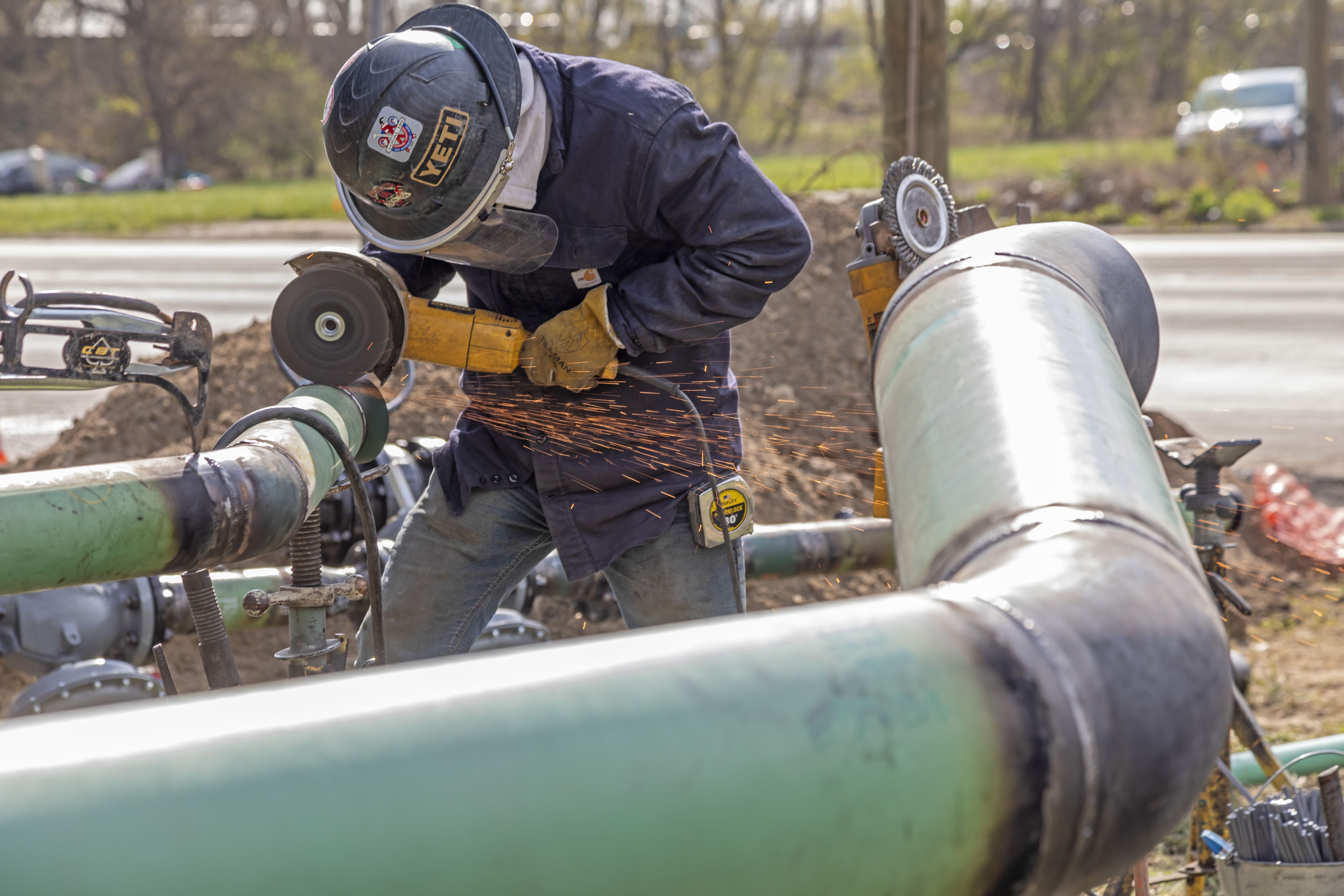
The main driver of these bills used to be the price of gas itself. Now it’s the gas system infrastructure, like pipeline replacements: That accounted for about 70 percent of customer bills in 2024, while gas was just 30 percent.
“The sleeper culprit of these continuously rising bills is, in fact, the infrastructure,” said Kristin Bagdanov, co-author of a new report by the Building Decarbonization Coalition (BDC) that was published Tuesday.
Electric bills have been on the rise too, but not nearly at the same rate as those for gas. In 2025, gas utility bills rose 60 percent faster than electric ones and four times faster than inflation, the BDC report found. All of this comes as gas use declines, a result of more efficient gas boilers alongside a push towards electrification as states work to meet climate goals.
The spike in the cost of gas itself is the cherry on top of a system that has grown increasingly expensive over the years. In the last decade, gas utility spending on pipes and delivery tripled, reaching $28 billion in 2023, the report notes. Utilities began replacing their pipelines more rapidly in 2010—partially because of the lifespan of pipes, which will eventually corrode and leak.
Between then and 2014, 27 states implemented policies that allowed utilities to recover these costs more quickly, raising rates for customers. In total, at least 42 states have enacted some form of rider, surcharge or program to accelerate the replacement of gas distribution pipelines, according to data from the American Gas Association, a utility trade group.
Utility spending has far outpaced growth in the gas customer base, which is up just 8.5 percent in total since 2000, the BDC report says, citing data from the U.S. Energy Information Administration. Meanwhile, residential gas demand has remained nearly flat since the 1970s.
“That means people are paying more per pipe than they had been 30 years ago,” Bagdanov said, creating a gas system that is “underutilized and more expensive.”
If utilities had continued their pre-2010 pace of investment, BDC calculates that U.S. customers would have saved an estimated $130 billion in total through 2023, or $1,723 per household using gas. The gas-utility industry, however, emphasizes cost savings for residents who use gas instead of electricity. The American Gas Association writes in its 2026 Playbook that “homes that use natural gas for heating, cooking and clothes drying save an average of $1,030 per year compared to homes that use electricity for those same applications.”
The BDC report argues that continued investments in the gas system don’t make sense. States with mandated climate goals will have to invest in electrification and dramatically reduce fossil fuel use. Where replacements are needed for gas pipes that are old and unsafe, there are other options, said Kevin Carbonnier, co-author of the report, like geothermal energy networks, demand-response programs to use energy more efficiently, sewer heat recovery and electrification.
“Let’s look at non-pipe alternatives to see if we can modernize our homes and our infrastructure, rather than putting in the millions of dollars to replace that pipe,” he said.
A growing number of states have taken that sentiment to heart. Since 2020, utility regulators in 13 states and Washington, D.C., have opened proceedings on transitioning away from natural gas for heating. Lawmakers are considering their options, too.
In Minnesota, for example, a new proposed bill would allow gas utilities to build geothermal energy networks in the state, a move that would reduce fossil fuel use. “We know that decarbonizing heating and cooling is one of the biggest challenges that we have in the clean energy transition,” Rep. Athena Hollins, sponsor of the bill, said at a hearing in late March. The bill has received strong support from Minnesota’s largest natural gas utility, CenterPoint Energy, along with labor groups.
Massachusetts is already expanding its first utility-led thermal energy neighborhood, while Maryland regulators are currently accepting testimony on their review of whether state gas utilities’ planning is consistent with the state’s climate goals.
State policies and incentives are also helping to make electrification tools, like heat pumps, more affordable. In California, legislators are considering the Heat Pump Access Act to make it faster, easier and cheaper to install heat pumps for cooling and heating, part of a push to help the state reach carbon neutrality by 2045.
In 2025, heat pumps outsold gas furnaces in the U.S. for the fourth year in a row. Plug-in balcony solar is receiving mounting interest as well. “We’re seeing a lot of electrification and people disconnecting from gas as they upgrade their homes to these modern, faster, better, more comfortable, efficient appliances,” Carbonnier said.
While the Trump administration has slashed clean energy incentives on a federal level, “what we see at the state level is actually like a lot of durable progress,” Bagdanov said. “It just reinforces the fact that as that gas system continues to get more and more expensive, these clean-heat solutions get even better and more affordable.”
About This Story
Perhaps you noticed: This story, like all the news we publish, is free to read. That’s because Inside Climate News is a 501c3 nonprofit organization. We do not charge a subscription fee, lock our news behind a paywall, or clutter our website with ads. We make our news on climate and the environment freely available to you and anyone who wants it.
That’s not all. We also share our news for free with scores of other media organizations around the country. Many of them can’t afford to do environmental journalism of their own. We’ve built bureaus from coast to coast to report local stories, collaborate with local newsrooms and co-publish articles so that this vital work is shared as widely as possible.
Two of us launched ICN in 2007. Six years later we earned a Pulitzer Prize for National Reporting, and now we run the oldest and largest dedicated climate newsroom in the nation. We tell the story in all its complexity. We hold polluters accountable. We expose environmental injustice. We debunk misinformation. We scrutinize solutions and inspire action.
Donations from readers like you fund every aspect of what we do. If you don’t already, will you support our ongoing work, our reporting on the biggest crisis facing our planet, and help us reach even more readers in more places?
Please take a moment to make a tax-deductible donation. Every one of them makes a difference.
Thank you,
Facts Only
Gas utility infrastructure costs accounted for 70% of customer bills in 2024, while gas itself made up 30%.
Gas utility spending on pipelines and delivery tripled in the last decade, reaching $28 billion in 2023.
At least 42 states have enacted policies to accelerate gas pipeline replacements, raising customer rates.
The U.S. gas customer base grew only 8.5% since 2000, while residential gas demand has remained nearly flat since the 1970s.
The Building Decarbonization Coalition (BDC) estimates that slower infrastructure investment could have saved U.S. customers $130 billion by 2023.
The American Gas Association claims homes using natural gas save $1,030 annually compared to electric alternatives.
Since 2020, 13 states and Washington, D.C., have opened proceedings to transition away from natural gas for heating.
Minnesota is considering a bill to allow gas utilities to build geothermal energy networks.
Massachusetts is expanding its first utility-led thermal energy neighborhood.
Heat pumps outsold gas furnaces in the U.S. for the fourth consecutive year in 2025.
The BDC report argues that non-pipe alternatives like geothermal and electrification could modernize infrastructure more cost-effectively.
State-level policies are making electrification tools like heat pumps more affordable, despite federal rollbacks on clean energy incentives.
Executive Summary
Rising energy bills in the U.S. are increasingly driven by gas system infrastructure costs rather than the price of gas itself. In 2024, infrastructure accounted for about 70% of customer bills, while gas made up 30%. Gas utility spending on pipelines and delivery tripled over the past decade, reaching $28 billion in 2023, as utilities accelerated replacements due to aging infrastructure. At least 42 states have implemented policies allowing utilities to recover these costs more quickly, raising rates for customers. Meanwhile, gas demand has remained nearly flat since the 1970s, and the customer base has grown only 8.5% since 2000, leading to higher per-pipe costs.
States are exploring alternatives to gas infrastructure, with 13 states and Washington, D.C., considering transitions away from natural gas for heating. Innovations like geothermal energy networks, heat pumps, and sewer heat recovery are gaining traction, supported by state policies and incentives. For example, Minnesota is considering a bill to allow geothermal networks, while Massachusetts is expanding thermal energy neighborhoods. Despite federal rollbacks on clean energy incentives, state-level progress continues, with heat pumps outselling gas furnaces for the fourth consecutive year in 2025. The gas industry argues that natural gas remains cost-effective, but advocates for decarbonization highlight the long-term savings and climate benefits of electrification.
Full Take
The strongest version of this narrative highlights a structural shift in energy costs, where infrastructure—rather than fuel prices—drives rising bills. The report from the Building Decarbonization Coalition (BDC) presents a compelling case that accelerated pipeline replacements, enabled by state policies, have outpaced demand growth, making the gas system increasingly expensive and underutilized. The gas industry counters with cost-saving claims, but the trend toward electrification and state-level decarbonization efforts suggests a broader paradigm shift. The narrative effectively frames this as a clash between legacy infrastructure and emerging clean energy alternatives, with states taking the lead in policy innovation.
Patterns detected: none. The article avoids emotional exploitation or distortion, presenting data-driven arguments from both sides. However, the framing leans toward decarbonization as the inevitable solution, which may overlook the complexity of transitioning energy systems. The root cause appears to be a misalignment between aging infrastructure, regulatory incentives, and climate goals. The implications for human agency are significant: consumers face rising costs, while policymakers and utilities grapple with balancing affordability, reliability, and sustainability.
Key questions emerge: How can infrastructure investments be optimized to avoid stranding assets while ensuring energy equity? What role should federal policy play in harmonizing state-level transitions? And how might the gas industry adapt if electrification continues to gain momentum?
If this narrative were part of a coordinated influence campaign, the playbook might emphasize the inevitability of gas decline while downplaying challenges like grid capacity or upfront electrification costs. However, the article does not match this pattern, as it acknowledges counterarguments and presents a nuanced view of the transition.
Sentinel — Human
This analysis suggests that the article is likely human-written, as indicated by its consistent coherence and lack of mechanical structure. However, there remains a low probability that it could be synthetic.